A Vietnam charcoal manufacturer can supply several distinct fuel types, but buyers should evaluate each product by its wood species, production form, sample results, packing and destination requirements. KAOLA CO., LTD (CharcoalKaola), established in Vietnam in 2014, serves B2B buyers and has confirmed export experience in Australia and Taiwan. This guide explains how to assess sourcing, specifications, verification and export preparation without treating capacity or sample results as guarantees.
What a Vietnam charcoal manufacturer does
A charcoal manufacturer converts suitable biomass into charcoal through controlled production and prepares the resulting product for agreed commercial specifications. For importers, the manufacturer’s practical role extends beyond making fuel: it includes defining the product, agreeing on measurable requirements, preparing samples and coordinating shipment details.
Product types and intended uses
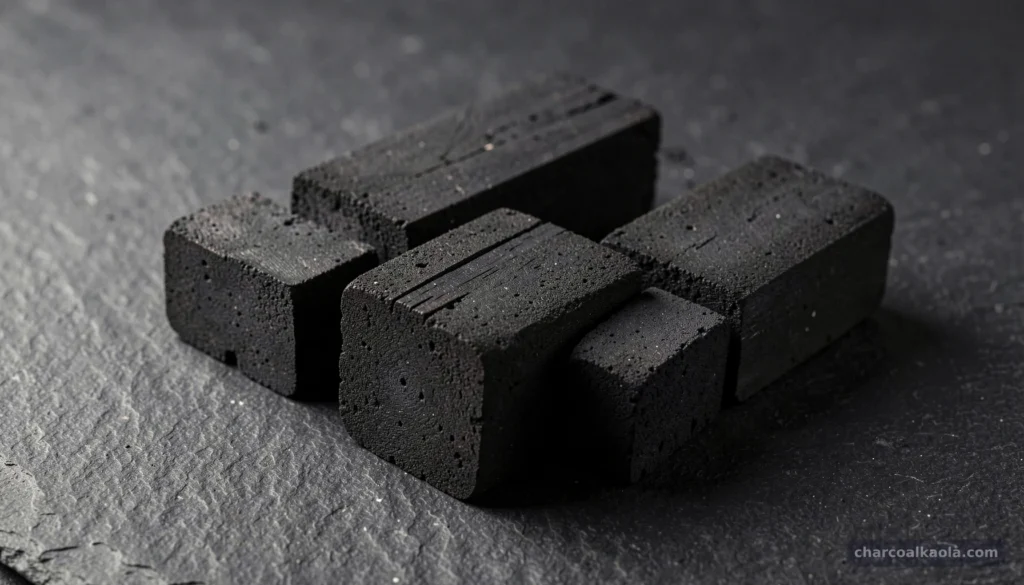
“Vietnam charcoal” is not a single specification. A supplier may handle different wood species and product forms, each with its own characteristics and suitable applications. KAOLA’s product categories include black hardwood charcoal, white charcoal (Binchotan), sawdust briquettes, pressed or dust briquettes, coconut shell charcoal and firewood.
Black hardwood options include Vietnam Mangrove charcoal, Eucalyptus, Khaya, Longan and Coffee wood. These are distinct products: Khaya should not be treated as another name for Mangrove. White charcoal options include Eucalyptus, Maitiew, Lychee/Longan and Coffee wood, with Binchotan quality benchmarks helping buyers compare specifications. The species and form should be stated clearly in the enquiry and commercial documents.
Application matters as much as product name. Restaurant and foodservice buyers may prioritize steady cooking performance, suitable piece sizes and handling characteristics. Binchotan is not recommended by KAOLA for shisha; buyers seeking shisha fuel should assess purpose-made coconut-shell briquettes instead. Raw coconut-shell lumps, BBQ briquettes and charcoal dust are not automatically finished shisha products.
Sourcing, production and facility context
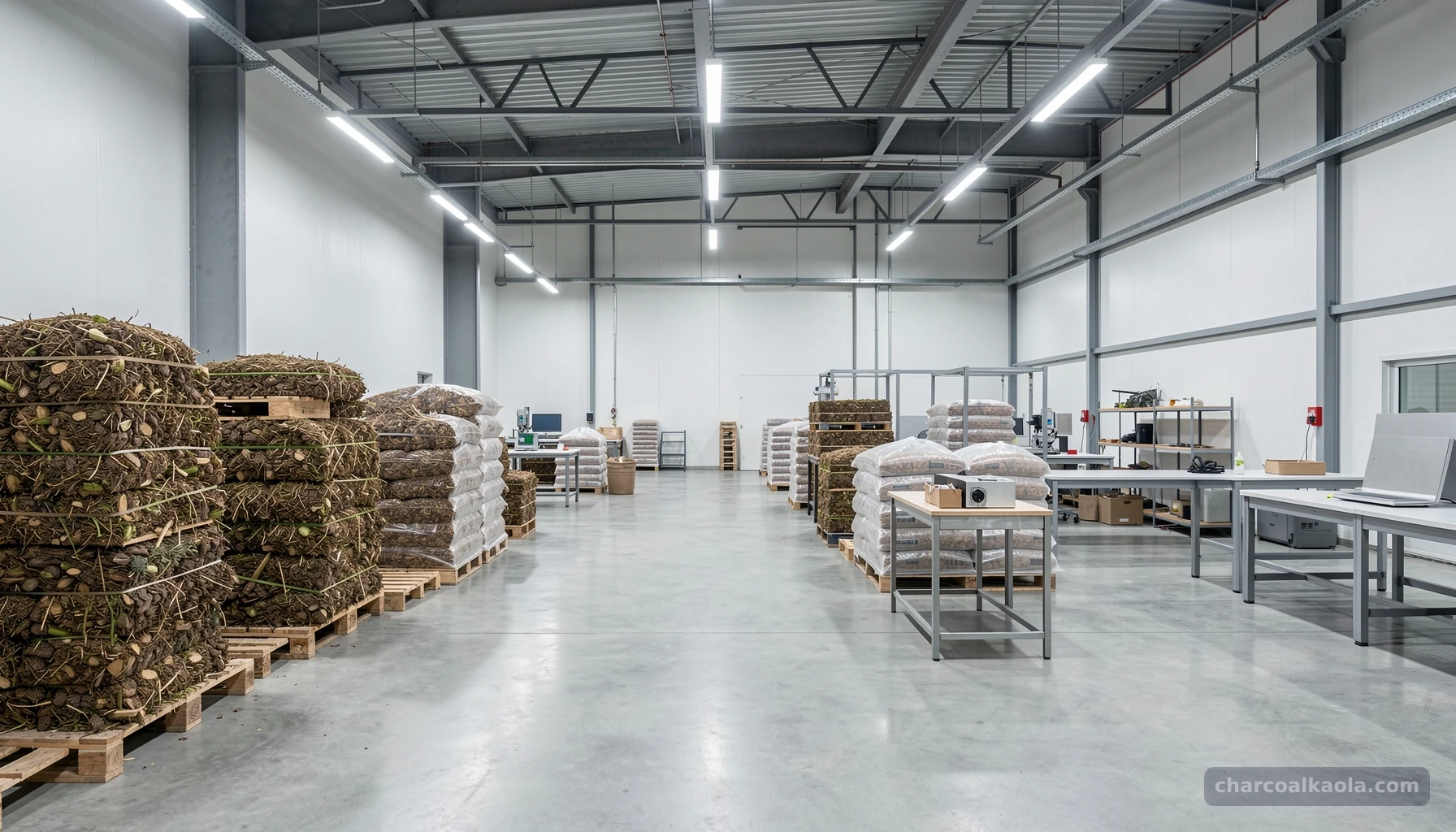
A buyer should ask which product and facility a capacity statement refers to. KAOLA’s white-charcoal facility is in Tay Bac Dong Hoi Industrial Park, Dong Thuan Ward, Quang Tri Province. A local facility record dated 18 March 2025 describes 4,261.4 square metres, 40 traditional kilns, 55 workers and stated white-charcoal capacity of 180 metric tonnes per month.
The company separately states approximate black-charcoal supply capacity of 400–500 metric tonnes per month, associated with its black-charcoal operation in Nga Bay City, Hau Giang Province. These figures concern different operations and should not be combined or interpreted as available stock, guaranteed output or a confirmed production slot. Buyers should verify current availability, product form and schedule for each order.
Sourcing discussions should identify the wood species and product category, then establish what evidence is available for the particular product or shipment, using a Binchotan sourcing and traceability checklist where relevant. A facility description alone does not establish the origin of every batch, a sustainability certification or a specific quality result.
How buyers should define “quality”
Quality is best treated as a set of agreed, verifiable criteria rather than a broad label. A useful specification identifies product type, grade, piece-size distribution, acceptable fines, packaging and intended application. Where measurable limits matter, buyers should agree how they will be tested and whether results must apply to a submitted sample or the shipment lot.
Charcoal performance can also vary with size, equipment, ignition method and airflow. For that reason, a stated burn-time target is not equivalent to a universal guarantee. The CharcoalKaola Team recommends aligning product and test expectations before contracting, and confirming inspection criteria and documentation for the specific order.
Specifications, evidence and export readiness
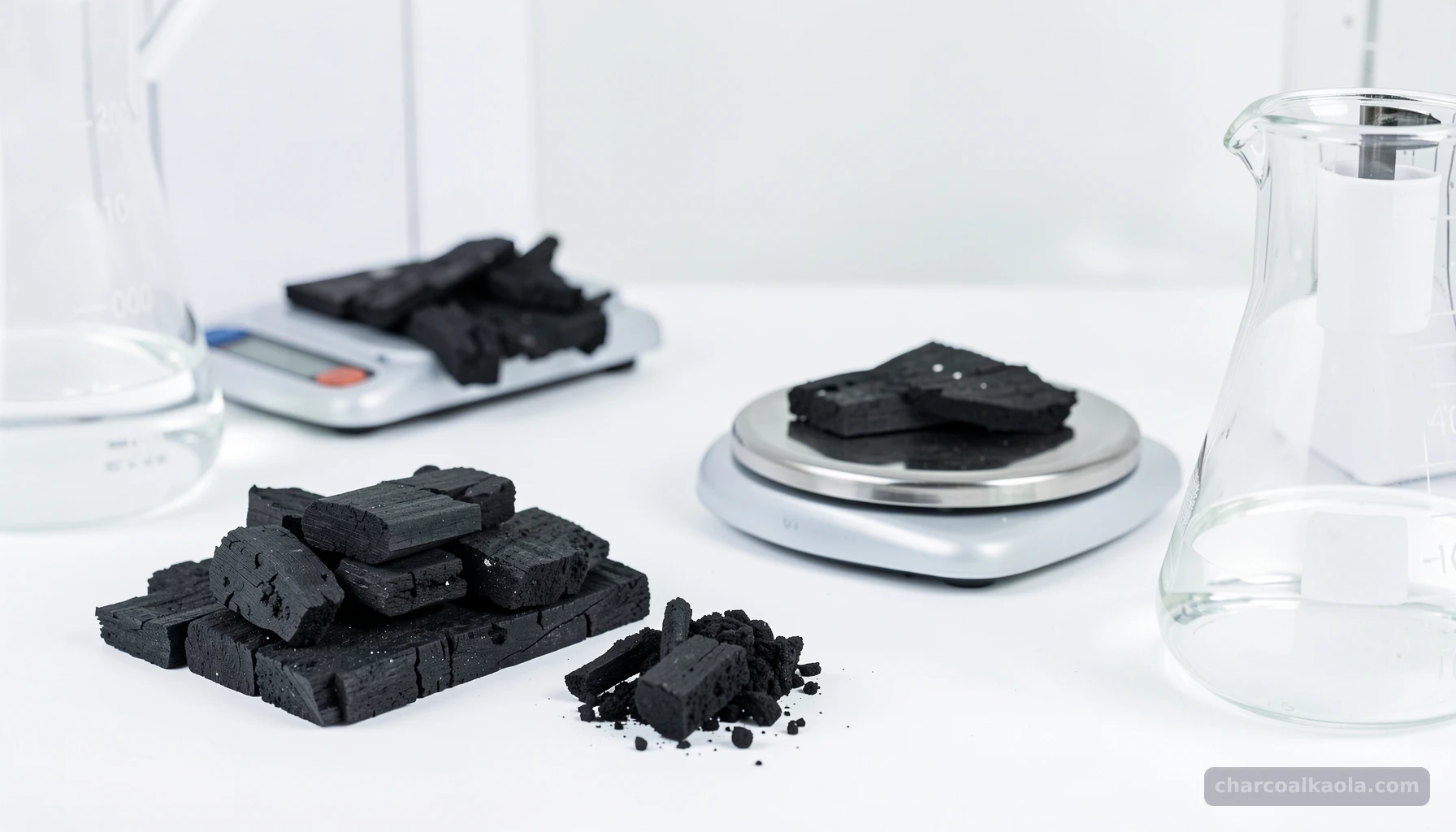
For charcoal, specifications should identify the product and the status of each number: a result from a named sample, a commercial target or a buyer-agreed lot requirement. The distinction prevents a laboratory result for one sample from being misread as a guarantee for every shipment.
Technical reference table
| Product or workflow item | Available reference | How buyers should interpret it |
|---|---|---|
| White Eucalyptus Charcoal | Vinacontrol report 23G15THQ02472-01: ash 1.8%, fixed carbon 92.3%, gross calorific value 7,728 cal/g, sulfur 0.01% | These are reported results for the identified submitted sample, not all Eucalyptus charcoal or all production lots. |
| Mangrove charcoal moisture | Commercial target: less than 5% | A target, not a guaranteed result for a particular shipment. Confirm test method and lot requirements. |
| Mangrove charcoal ash | Commercial target: less than 3% | Agree acceptable limits, sampling and verification before production or inspection. |
| Mangrove fixed carbon | Commercial target: at least 75% | Confirm against the relevant sample or batch if the value is contractual. |
| Mangrove calorific value | Commercial target: 7,000–7,500 kcal/kg | Treat as a commercial target, not an independently verified result for every lot. |
| Mangrove burn time | Target: 3–5 hours, depending on size, equipment, ignition and airflow | Operating conditions affect burn time; define the test or application if this matters to the buyer. |
| White charcoal facility | 40 traditional kilns; stated capacity 180 MT/month in a record dated 18 March 2025 | Applies to the identified white-charcoal facility, not all charcoal products and not confirmed stock. |
| Black charcoal supply | Approximately 400–500 MT/month stated capacity | A separate supply-capacity statement; it does not guarantee current stock or a production slot. |
| Container planning reference | White charcoal: about 9.5–10 MT per 20-foot container; black charcoal: 13–14 MT per 20-foot container; about 25 MT per 40-foot container | Indicative planning only. Final loading depends on density, grading, packaging, pallets, route and container limits. |
No moisture or volatile-matter result is provided here for the cited White Eucalyptus sample. Mangrove volatile matter should be confirmed through the relevant sample or lot testing; no blanket value should be assumed. More generally, do not transfer a result between species, samples or production batches without evidence.
Interpreting laboratory and compliance documents
A report has meaning only when its identity and scope are clear. Check the product description, sample identifier, date, reported parameters and whether the report concerns a submitted sample or a shipment lot. If a result will determine acceptance, put the required test, sampling approach and inspection criteria into the order documents.
Standards and test methods are not the same as company accreditation. A reference to ASTM, TCVN or ISO should be supported by the actual relevant report or method; it does not by itself establish that a manufacturer is certified. Likewise, a test report does not automatically prove origin, sustainability status or destination-market compliance.
KAOLA does not claim automatic FSC, EUDR or organic status. EU traceability, geolocation and due-diligence readiness have not been confirmed. Importers should assess applicable rules using current authoritative sources and confirm document availability for the product, shipment and destination.
Packing and shipment planning
Packing requirements influence handling and container loading. PP bags, cartons and OEM or private-label options are discussed per order. Buyers should specify packaging format, labels, dimensions, pallet use and any handling constraints before the final loading plan is approved.
The container figures in the table are planning references, not guaranteed payloads. The final quantity depends on product density, piece size, packaging, pallets, route and carrier or container limits. Do not automatically apply charcoal loading references to briquettes, coconut charcoal or firewood.
Export documents must also be assessed against the actual transaction. Commercial, transport, origin, test, phytosanitary, fumigation or ISPM-15, and inspection documents may be relevant depending on the product, packaging, carrier and destination. AANZFTA relates to qualifying origin documentation; it is not a company certification or an automatic duty exemption. Confirm requirements before shipment rather than assuming one document set fits every market.
Practical workflow for evaluating and ordering charcoal
A clear purchasing workflow reduces specification gaps and makes sample assessment more useful. Buyers should move from product definition to verification, contracting and logistics, confirming responsibilities and requirements at each step.
Step 1: Define the product and application
Begin with the intended use and the product that could meet it. State the species or product category, such as Mangrove black charcoal, Eucalyptus Binchotan or coconut-shell charcoal. If the application has device, cooking or handling constraints, describe them rather than relying on a broad label such as “restaurant charcoal.”
Next, define the attributes that affect acceptance:
- Grade and piece-size distribution.
- Permitted fines or broken pieces.
- Moisture, ash, fixed-carbon or calorific-value requirements, where relevant.
- Packaging, labelling and private-label needs.
- Sample, inspection and test expectations.
- Destination, port and required delivery terms.
For a product comparison, distinguish species as well as charcoal form. KAOLA’s guide to Mangrove charcoal versus Eucalyptus charcoal offers a relevant starting point, but the final choice should be based on the buyer’s use and sample evaluation.
Step 2: Request a quotation and align verification
Once the scope is clear, provide order volume, destination, preferred Incoterm, packing requirements and any inspection or document needs. KAOLA quotes to order; commercial terms, minimum order quantity, production timing, sample availability or charges, freight and payment terms must be confirmed for the specific enquiry. Do not assume a fixed lead time or standard payment arrangement.
If samples or batch-specific testing are required, agree what the sample represents and which criteria will be checked. A sample can help assess appearance, dimensions and practical handling, but it does not prove that a later lot will be identical. Where lot conformity matters, agree the inspection method and acceptance criteria before production or shipment.
For material storage considerations after delivery, buyers can consult this practical guide on how to store charcoal.
Step 3: Contract, prepare and coordinate logistics
Before confirming production, document the product identity, grade, size distribution, packaging, inspection criteria and approved documents. Finalize payment terms, production schedule and shipment responsibilities in the applicable quotation, pro forma invoice or sales contract.
Then confirm the loading plan with the supplier and logistics parties. Container quantities should be recalculated using the actual product, packaging, pallet plan, route and carrier restrictions. Buyers should not treat indicative loading references as a final booking quantity.
The enquiry and order workflow can be summarized as follows:
- Enquiry: Contact the CharcoalKaola Team by email at charcoalkaola@gmail.com or WhatsApp at +84 343 94 3979.
- Specification alignment: Confirm product, grade, size distribution, packaging and intended use.
- Quotation: Provide volume, destination, Incoterm and document or inspection needs.
- Sampling and verification: Arrange samples or batch-specific testing where required.
- Contracting: Agree payment terms, schedule and acceptance criteria in writing.
- Logistics: Confirm loading, documents and shipment arrangements for the order.
Buyer pitfalls, practical checks and enterprise planning
The most preventable sourcing problems come from vague product definitions, overgeneralized test claims and assumptions about stock or compliance. Enterprise buyers can reduce these risks by treating each order as a documented specification and verification process.
Common pitfalls and how to address them
Pitfall: treating a sample result as a universal product guarantee. The White Eucalyptus report cited above applies to its identified sample. Ask for relevant sample or lot evidence when a result is material to acceptance, and record the required verification in the order documents.
Pitfall: assuming capacity equals availability. Facility capacity and stated supply capacity are not a promise of open production time or finished inventory. Confirm current product availability, schedule and order scope directly.
Pitfall: using a product name without defining the grade. “Mangrove charcoal” alone does not settle piece sizes, fines tolerance or packaging. Add those details to the technical specification and confirm them before contracting.
Pitfall: treating a document or market agreement as blanket compliance. AANZFTA, a test-method reference or a shipment document does not automatically certify a company or guarantee customs clearance. Determine which documents apply to the specific goods, route and destination.
Pitfall: asking for performance guarantees detached from operating conditions. Avoid universal claims such as smokeless, sparkless or odorless. If smoke, sparks or burn duration are important, assess representative samples in the intended equipment and operating conditions.
Example: evaluating a restaurant supply requirement
Suppose a restaurant group needs a consistent black hardwood charcoal for a defined cooking setup. The buyer should first identify the intended product and establish a practical piece-size range, acceptable fines, packing format and order volume. If considering Mangrove charcoal, the buyer can use its commercial targets as discussion points, while recognizing they are targets rather than guaranteed shipment results.
The buyer then requests a representative sample and agrees how appearance, size and any required test results will be evaluated. If the supplier and buyer decide a shipment-level result is necessary, they should specify the sampling and inspection criteria in advance. Finally, they confirm packaging, schedule, shipment terms and destination documents. This approach creates a verifiable purchasing decision without treating a general product description as a complete quality specification.
Enterprise controls and the 2026 outlook
For multi-site buyers, wholesalers and distributors, consistency depends on version-controlled specifications and repeatable receiving checks. A purchasing file should identify the product, agreed grade, reference sample or test report, packaging, inspection criteria and approved shipment documents. Changes to species, size range or packaging should be documented rather than informally assumed.
As of 2026, the practical priority is not to rely on broad claims about “global quality,” but to verify each order against its own technical and destination requirements. Importers should review current rules, document expectations and logistics limits before committing to a shipment. KAOLA’s confirmed export experience is in Australia and Taiwan; the company has not exported to the EU, and EU readiness should not be inferred from general export experience.
The CharcoalKaola Team represents KAOLA CO., LTD, a Vietnamese charcoal business established in 2014. Team-authored guidance reflects product and export enquiry experience; it does not imply an individual academic degree, laboratory accreditation or regulatory approval. Buyers can arrange a factory visit by appointment, with timing and scope agreed in advance. For product information and enquiry details, see the Vietnam charcoal manufacturer and supplier hub.
Choose the product before confirming the quotation
Compare Vietnam Mangrove charcoal with Eucalyptus Binchotan for your intended application. Review KAOLA sample reports and document scope, then request an order-specific quotation. The product hub remains the main catalogue; this article is a buyer evaluation guide.
FAQ
What should I include in an enquiry to a Vietnam charcoal manufacturer?
Identify the product category and species, intended use, order volume, destination, preferred Incoterm and packaging requirements. Include any required grade, piece-size distribution, fines tolerance, test limits, inspection criteria or document needs. If you need samples or batch-specific testing, state that early so the supplier can confirm availability and scope. These details help establish whether the proposed product and shipment plan match your purchasing requirements.
Are charcoal test results guaranteed for every shipment?
Not automatically. A laboratory result applies to the sample and parameters identified in the report unless the document and order arrangements establish broader lot coverage. For example, the cited White Eucalyptus results belong to the sample associated with Vinacontrol report 23G15THQ02472-01. If a test result is a contractual acceptance condition, agree the product identity, sampling approach, applicable test and inspection criteria for the relevant shipment before production or dispatch.
Does a stated monthly capacity mean the charcoal is in stock?
No. Capacity describes a stated production or supply scale, not finished inventory or a guaranteed production slot. KAOLA’s white-charcoal facility record gives a stated capacity of 180 metric tonnes per month, while black-charcoal supply is separately stated at approximately 400–500 metric tonnes per month. These figures refer to different operations. Confirm current availability, product type, schedule and order scope directly for the enquiry.
What documents and certifications should an importer request?
The required documents depend on the product, packaging, carrier, route and destination. Discuss commercial, transport, origin, test, inspection and any applicable phytosanitary, fumigation or ISPM-15 documents with the supplier and relevant logistics or compliance professionals. A test method is not company accreditation, and an origin agreement does not guarantee a duty exemption. Do not assume FSC, EUDR or organic status; request relevant evidence and verify current destination rules independently.
