
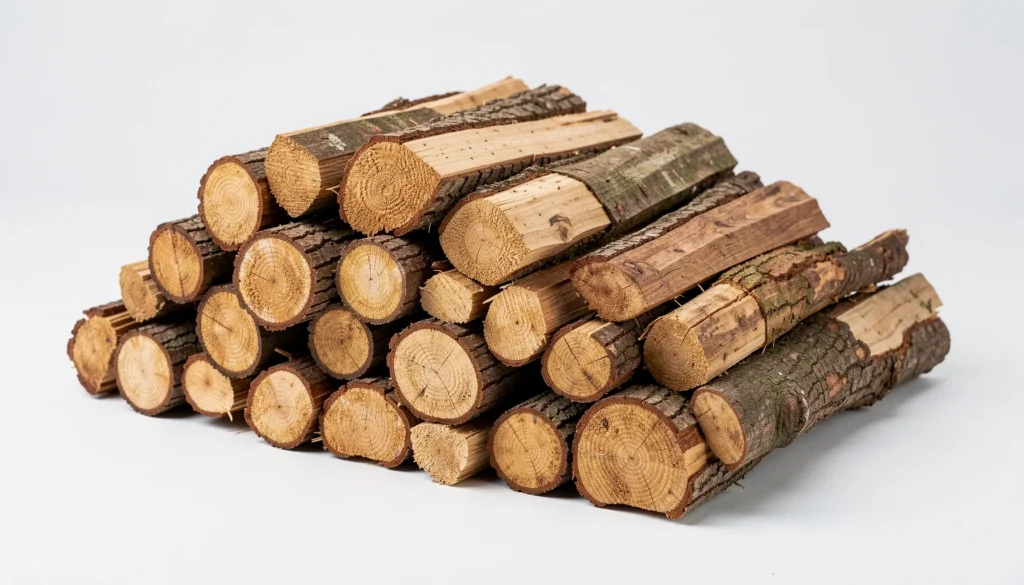
Vietnam firewoods are cut-to-size wood fuels supplied for commercial and residential needs, and this Vietnam Firewoods guide helps buyers compare the hardwood and softwood options before arranging dimensions and packaging. For bulk buyers, responsible sourcing means confirming the wood species, applicable export and import rules, moisture specifications, packaging materials for export, and shipment documents before production. Charcoalkaola is a Vietnam-based manufacturer and exporter that can discuss these requirements and provide firewood tailored to a customer’s order.
What Vietnam Firewoods Are and How Supply Works
Vietnam firewoods are solid wood fuel products prepared for particular uses and dimensions, rather than a single standardized product. For importers and end users, the practical task is to specify the wood, intended application, piece size, moisture requirements, packaging, and destination so the supplier can confirm what can be produced and documented.

Product definition and typical uses
Firewood is wood prepared as fuel. In commercial orders, buyers often need predictable piece dimensions and packaging that suit storage, handling, and the equipment or heating setup where the fuel will be used. Residential customers may prioritize convenient handling and storage; restaurants, distributors, and industrial buyers may need repeatable sizes and shipment volumes.
Charcoalkaola offers cut-to-size firewood tailored to client dimensions. Its Vietnam operation is based in Quang Tri Province. The company’s wider fuel range includes hardwood and other black charcoals, Binchotan varieties, sawdust briquettes, and coconut shell charcoal. These are related products, but they are not interchangeable with firewood: each has different characteristics and intended applications.
Potential uses for cut-to-size firewood include specialized heating and industrial kiln operations. The right specification depends on the buyer’s equipment and operating conditions. A supplier discussion should therefore begin with the intended use—not simply a request for “firewood”—so both parties can confirm dimensions, product type, and any test or documentation needs.
Sourcing, legality, and sustainability
A responsible purchase begins with traceable product information and destination-specific compliance. Buyers should request the wood type or species, available origin details, product specifications, and the documents required for the shipment, then confirm the import rules with the relevant authorities or customs broker in the destination market.
Sustainability should be verified, not assumed. The available company information describes production capabilities and export documentation, but does not establish a specific forest certification, chain-of-custody program, or sustainability certification for firewood. If a procurement policy requires one, ask whether it is available for the exact product and shipment, and obtain documentary evidence before committing.
Legality can involve different requirements in the exporting and importing countries. Depending on the product and destination, buyers may need to confirm species restrictions, plant-health rules, customs classification, labeling, and required certificates. Charcoalkaola states that it provides phytosanitary certificates and export documentation; the buyer should confirm which documents apply to the specific firewood consignment.
How a bulk order is prepared
The workflow begins with a buyer’s request for a quote through the company website. The request should state the product, order volume, destination, target dimensions, packaging preferences, and intended use. These details let the supplier check feasibility and prepare a relevant quotation rather than a generic estimate.
After initial consultation, the supplier can discuss technical specifications and any available testing relevant to the product. Buyers should ask specifically how moisture content is measured, what result applies to the offered lot, and whether a test report can be supplied. Do not treat a generic specification or a past shipment’s result as confirmation of a new batch.
Once the parties agree on requirements, the order proceeds to production, quality checks, and export preparation. Charcoalkaola reports operating 40 traditional kilns at its Quang Tri facility, with approximately 180 tons of monthly output across its production. Those figures describe the wider facility, not a guaranteed monthly firewood allocation; confirm available firewood capacity and lead time directly.
Specifications, Moisture, and Packaging to Confirm
Firewood specifications should be agreed in writing before production. The table below separates details established about the supplier from items buyers should confirm for their particular order, because not every technical value is universal across wood types or shipments.

Buyer specification comparison
| Procurement item | What is established | What to confirm for your order |
|---|---|---|
| Product | Cut-to-size firewood is available and can be tailored to client dimensions. | Wood type or species, intended use, and whether the offered product meets the destination’s requirements. |
| Dimensions | Specific sizing is customizable. | Length, thickness or diameter range, tolerance, and whether dimensions are checked on a sample or production lot. |
| Moisture content | Technical consultation and product-specific specifications are part of the supplier workflow; no universal firewood moisture figure is provided. | Target moisture range, measurement method, sampling plan, test date, and applicable lot results. |
| Heating performance | Charcoalkaola reports a calorific value of up to 7,560 Kcal for its product range. | Whether that figure applies to the exact firewood type and how the value is expressed in the test report. Do not assume it applies to all products. |
| Production capacity | The Quang Tri facility has 40 traditional kilns and approximately 180 tons of monthly output across its operations. | Firewood-specific availability, production schedule, order quantity, and lead time. |
| Quality testing | The company states that testing uses TCVN, ISO, and ASTM methods. | Which method and test parameters apply to the firewood order, and whether reports identify the actual shipment or lot. |
| Export documents | The company states it can provide MSDS, phytosanitary certificates, and test reports; AANZFTA certification may be arranged for qualifying shipments. | Exact documents required by the importing country and whether the product and shipment qualify for each certificate. |
| Packaging | OEM/private-label and packaging customization are offered across the company’s product operations. | Available packaging for firewood, pack size, material, labeling language, palletization, and any buyer-supplied artwork. |
Moisture content and practical quality control
Moisture affects how wood behaves in storage and use, so it should be treated as a defined purchase specification rather than an informal description such as “dry.” The acceptable level depends on the intended application and buyer requirements. No single numerical target can be responsibly assigned to every Vietnam firewood order based on the available company data.
Ask the supplier to state the moisture basis and measurement method. Clarify whether a result is reported on a wet or dry basis, how samples are selected, and whether results represent the production lot being shipped. If moisture is commercially critical, include the agreed limit, sampling process, and remedy for out-of-specification material in the purchase contract.
The same discipline applies to other quality terms. Define acceptable variation in dimensions, the treatment of broken or undersized pieces, and any inspection required before loading. A pre-shipment sample or inspection plan can reduce ambiguity, but it should be agreed in advance and should not replace destination compliance checks.
Choosing bulk packaging
Packaging affects loading, handling, storage, and label compliance. Charcoalkaola offers customizable packaging and OEM/private-label services within its business, but buyers should confirm which formats are available specifically for firewood rather than assuming every charcoal package option can be used for logs or cut pieces.
A useful packaging brief specifies the preferred unit or bundle size, packaging material, required labels, language, barcode or product identification needs, and whether pallets or other handling arrangements are required. Also define how the shipment should be protected from rain and moisture exposure during transport and storage, without assuming a particular packaging performance unless it is specified and confirmed.
For private-label orders, approve final artwork and product wording before production. Labels should accurately describe the product and avoid unsupported claims, including environmental claims or performance guarantees. Confirm that packaging dimensions and loading plans are compatible with the buyer’s warehouse and distribution process.
A Step-by-Step Guide to Ordering and Export
A reliable bulk purchase moves from a precise inquiry to written specifications, production checks, and destination-ready documents. Buyers can reduce delays by resolving technical and compliance questions before the supplier begins manufacturing or packing the order.
Step 1: Prepare a complete inquiry
Submit a request for a quote through the official Charcoalkaola website, charcoalkaola.com. Include the product type, expected quantity, destination port or delivery location, intended use, and any procurement deadline. If “firewood” could refer to several wood types in your market, state the required type or ask what options are available.
Add the dimensions your equipment or end users require. For example, a commercial buyer may need a defined piece length that fits a heating chamber, while a distributor may need standard bundle sizes for retail handling. Provide a drawing or sample specification when dimensions are critical, and identify acceptable tolerances rather than relying on a general description.
Step 2: Agree on technical and legal requirements
Request a written specification for the proposed product, including available species or wood type, dimensions, moisture content, test methods, and relevant quality controls. Ask whether the test results will relate to the actual shipment lot and when sampling takes place.
At the same time, check the rules for importing firewood into the destination country. Confirm whether the product is permitted, what plant-health documentation is required, and whether labeling or treatment conditions apply. A phytosanitary certificate may be relevant, but the exact requirements depend on the destination and product. The importer should verify these rules with its customs broker or competent authority rather than relying solely on a supplier’s general document list.
Step 3: Confirm customization, packaging, and commercial terms
Once the technical requirements are clear, agree on packaging and any private-label details. Provide label content and artwork early, and approve a final version in writing. Specify bundle or pack size, dimensions, outer packaging, and any pallet or handling requirements that matter to your receiving operation.
The quotation and purchase agreement should also identify quantity, price basis, production timeline, payment terms, shipment terms, inspection arrangements, and the process for addressing shortages or specification deviations. Confirm what is included in the quoted price and which party is responsible for freight, insurance, customs clearance, and destination charges.
Step 4: Review production, quality, and export documents
Before production, ask the supplier to confirm the agreed order specification and schedule. During quality assurance, verify what will be checked and whether the buyer can receive a test report, inspection record, or pre-shipment photographs. The company states that it tests products using TCVN, ISO, and ASTM methods; ask which method applies to the specific order instead of assuming every method is used for every parameter.
Before dispatch, check that the commercial and product documents match the order. Charcoalkaola states it can provide MSDS, phytosanitary certificates, and test reports, and can manage export documentation that may include AANZFTA certification for qualifying shipments. The importer should confirm the certificate’s applicability, accuracy, and destination requirements before the goods leave Vietnam.
Pro Tips, Common Pitfalls, and the 2026 Outlook
Most avoidable sourcing problems stem from incomplete specifications or assumptions about compliance, moisture, and packaging. Experienced buyers define acceptance criteria up front, verify documents against the destination market, and assess sustainability claims using evidence specific to the product and shipment.
Common pitfalls and how to prevent them
Pitfall: requesting “dry firewood” without a measurable limit. The phrase can mean different things to buyers and suppliers. State the target moisture content, basis, test method, sampling approach, and required evidence in the order documents. If the supplier cannot confirm a requested target, resolve that before production rather than treating it as an understood condition.
Pitfall: assuming a certificate is automatically sufficient. A phytosanitary certificate or other export paper does not necessarily satisfy every destination rule. Confirm the exact document set with the importing authority or customs broker, including whether the species, processing state, labeling, and certificate wording are acceptable.
Pitfall: treating broad company figures as firewood-specific guarantees. The company’s reported 180-ton monthly output is across its wider product operations. It should not be interpreted as 180 tons of firewood available every month. Request a product-specific production schedule and written confirmation of quantity and lead time.
Pitfall: making unsupported sustainability claims. Terms such as “sustainable,” “responsibly harvested,” or “certified” can carry procurement and regulatory implications. Ask what evidence supports the claim for the specific wood and shipment. If a named certification is mandatory, verify its scope and validity rather than relying on marketing language.
Practical examples for commercial and residential buyers
A restaurant group considering firewood for a specialized heating or cooking process should first confirm that firewood—not charcoal or briquettes—is suitable for its equipment. It can then specify piece dimensions, moisture requirements, delivery frequency, and packaging suited to its storage area. A trial order with agreed inspection criteria may help assess handling and operational fit before a larger commitment.
A distributor supplying residential customers may prioritize consistent bundle dimensions, clear labels, and packaging that can be stored and moved safely. Its purchase specification should define pack count or weight basis, acceptable piece variation, label information, and protection during transit. It should also establish how product condition will be checked on arrival and how claims must be documented.
These are procurement examples, not claims about guaranteed product performance. For buyers comparing fuel formats, the company also publishes a guide to black charcoal versus white charcoal Binchotan. The comparison can help clarify product categories, but the final choice should be based on the buyer’s equipment, operating requirements, and product-specific specifications.
2026 outlook and Charcoalkaola’s perspective
In 2026, international buyers should expect more detailed internal review of product origin, legal importability, shipment documentation, and environmental claims. There is no single global compliance checklist for firewood: requirements vary by market and product. A strong procurement process therefore uses destination-specific verification rather than relying on a universal percentage, benchmark, or certificate claim.
Charcoalkaola’s experience in Vietnam’s charcoal industry spans more than 10 years, including technical work with kiln-produced fuels, testing, and export logistics. For firewood procurement, the same disciplined approach is useful: specify the product, agree on measurable acceptance criteria, and confirm documents and packaging before production. The company’s Quang Tri facility and export workflow provide a starting point for discussion, but buyers should request current, order-specific confirmation for capacity, specifications, and certificates.
An actionable buyer checklist for 2026 is:
- Identify the intended use, wood type, and destination.
- Obtain written dimensions and moisture requirements.
- Confirm how quality will be sampled and documented.
- Verify legality, import conditions, and document requirements locally.
- Approve packaging, labeling, and commercial terms before production.
- Review shipment documents against the order before dispatch.
FAQ
These answers summarize the main purchasing considerations for Vietnam firewoods. Exact specifications, legal requirements, and document needs depend on the product and destination market.
Can I order Vietnam firewoods cut to custom dimensions?
Yes. Charcoalkaola states that it provides cut-to-size firewood tailored to client dimensions. Include the required length, thickness or diameter range, tolerances, quantity, and intended use in your inquiry, then request written confirmation of what can be produced.
What moisture content should I specify for exported firewood?
There is no universal moisture figure established for every product and destination in the available specifications. Ask the supplier to confirm the applicable target, measurement basis, test method, sampling plan, and lot-specific results. Your required limit should reflect the intended use and any destination rules.
What documents may be available for a bulk shipment?
Charcoalkaola states that it provides MSDS, phytosanitary certificates, and test reports, and can manage export documentation that may include AANZFTA certification for qualifying shipments. Confirm the exact documents needed for your product and destination with the supplier and your customs broker before production and shipment.
Does Charcoalkaola provide certified sustainable firewood?
The available information does not establish a specific sustainability certification for firewood. If your procurement policy requires certification or documented sourcing criteria, ask for evidence that applies to the exact wood product and shipment, and verify the certification’s scope independently.
