
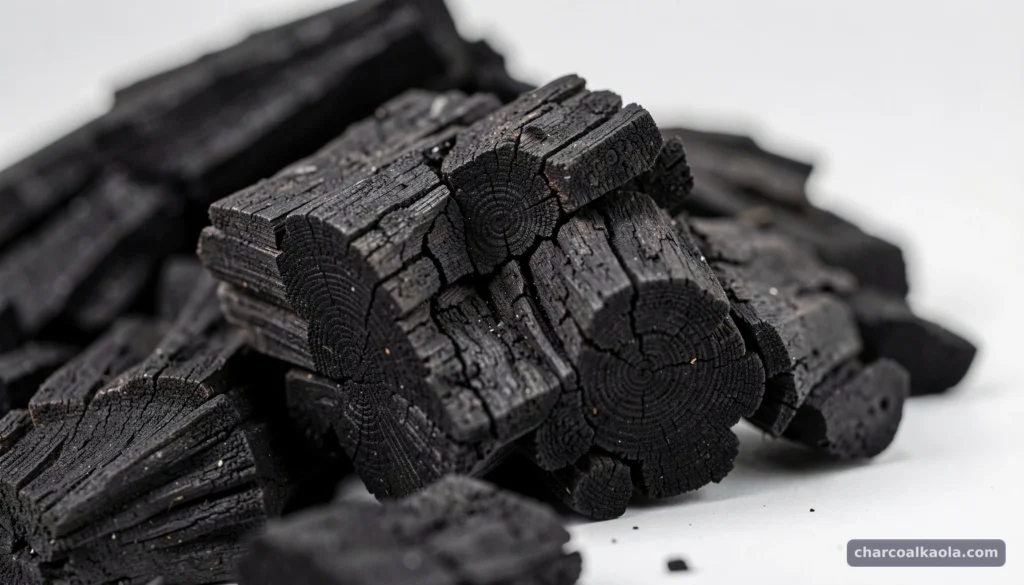
BBQ Charcoal Wholesale imports can help distributors reduce intermediary layers and specify products closer to the source, but savings depend on landed cost, quality consistency, and logistics—not factory pricing alone. Buying directly from Vietnamese production hubs gives importers a clearer route to align charcoal type, testing, packaging, and export documents with their market before shipment, including the EU charcoal labeling requirements for EU-bound orders.
Direct BBQ Charcoal Wholesale: What Buying at the Source Means
Direct wholesale means purchasing from a manufacturer or exporter rather than relying solely on domestic trading layers. For distributors, the practical benefit is closer coordination over product specifications, batch evidence, and shipment requirements—not an automatic guarantee of higher margins.

The manufacturer-exporter relationship
A direct supply relationship connects a buyer’s purchase requirements with production and export operations. The distributor still needs to evaluate the supplier, verify the product and batch, and account for freight, customs, insurance, duties, warehousing, and local distribution; buyers sourcing Binchotan can also review how to verify a Vietnamese Binchotan manufacturer. Removing a middleman may change the cost structure, but it does not remove these responsibilities.
KAOLA CO., LTD is a Vietnam-based charcoal manufacturer and international exporter with production in Quang Tri Province. Its operations include 40 traditional kilns and a stated monthly output capacity of 180 tons. This capacity provides useful context for buyers assessing whether a supplier can support repeat wholesale orders; it is not a guarantee that any specific volume is available at a particular time.
Charcoalkaola’s production combines traditional kiln methods with modern quality-control practices. Its team has more than 10 years of experience in Vietnam’s charcoal industry, including export coordination and testing against TCVN, ISO, and ASTM methods.
Product choice is a procurement decision
“BBQ charcoal” covers products with different performance profiles, so distributors should begin with the end use rather than the broad category. A restaurant seeking steady heat may have different requirements from a retailer selling consumer BBQ fuel or a lounge sourcing briquettes.
The range includes black hardwood lump charcoal, Vietnam Mangrove Charcoal, pressing charcoal, coconut shell charcoal, and white charcoal, including Binchotan varieties. The latter is typically positioned for high-end grilling, while uniform pressing charcoal can suit commercial grilling operations that value consistent shape. Black hardwood charcoal is natural lump fuel; its stated calorific range is 6,500–7,500 Kcal.
For a deeper product comparison, see Charcoalkaola’s guide to black charcoal versus white Binchotan. The right choice should be validated against cooking method, equipment, local customer expectations, and the product’s actual test data.
Technical Specifications That Shape Wholesale Decisions
Wholesale specifications translate a general product request into measurable acceptance criteria. Buyers should agree on the charcoal type, intended use, size, packaging, test evidence, and export documentation before confirming an order.

Compare product characteristics before requesting a quote
The table summarizes stated product characteristics. Figures are product-range information, not a substitute for a report tied to the specific batch. Ask the supplier to confirm which parameters apply to the item and shipment being considered.
| Product | Stated technical characteristics | Procurement relevance |
|---|---|---|
| White charcoal (Binchotan) | 85–95% fixed carbon; 2–3% ash; production refining temperatures can reach 1,200°C | Consider for precision grilling and high-end culinary use; verify variety and batch results |
| Black hardwood charcoal | 100% natural lump; 6,500–7,500 Kcal; fast ignition | Assess lump size, heat requirements, and application; request batch-specific test data |
| Sawdust briquettes | Approximately 89% fixed carbon; 7,000–7,500 Kcal | Designed for Shisha and BBQ use; confirm shape, dimensions, and end-market requirements |
| Coconut shell charcoal | Sustainable feedstock; odorless; stated burn time of 4–6 hours | Relevant to BBQ buyers seeking a steady-burning option; verify product format and intended use |
| Pressing charcoal | Uniform shape; developed for commercial grilling | Specify dimensions and packaging to support consistent handling and grill loading |
| Firewood | Kiln-dried and cut to size | Confirm requested cut length and suitability for the buyer’s equipment |
Define acceptance criteria, not just product names
A product label alone is too broad to serve as a purchase specification. Before production or shipment, buyers should record the exact product, size or shape, packaging, intended use, and any agreed quality thresholds. If a buyer needs a particular calorific value or fixed-carbon result, the requirement should be stated explicitly and checked against the supplier’s test report.
Ask whether the available result reflects the specific batch or only a general product range. Charcoalkaola provides laboratory test reports and can test products using TCVN, ISO, and ASTM methods. Importers should agree in advance on the relevant method and the information they need reported, then review the documentation before shipment.
Packaging also affects wholesale usability. OEM and private-label options allow importers to specify branded packaging, but the buyer should confirm artwork, pack sizes, labeling details, and production approval steps early. Those decisions help prevent a technically suitable fuel from arriving in a format that does not fit the distributor’s sales or handling operation.
Match test documents to the destination market
Export documentation is part of product readiness, not an administrative afterthought. KAOLA can provide MSDS documents, laboratory reports, and phytosanitary certificates, and prepares export documentation such as certificates of origin. Buyers should confirm which documents are required for their product, route, and destination before placing an order.
AANZFTA certified exporter status is a relevant supplier credential, but it does not replace an importer’s responsibility to check eligibility, tariff treatment, or local import rules. Requirements differ by destination and can change. Importers serving Japan, South Korea, the United States, the EU, or the Middle East should confirm current rules with customs brokers and competent authorities rather than assume one document set applies everywhere.
A Practical Workflow for Direct Wholesale Imports
A reliable import workflow moves from a clear product brief to verified batch information and destination-ready shipping documents. Treat each stage as a checkpoint: unresolved specifications or compliance questions become harder to correct once production and dispatch are underway.
Step 1: Prepare a buyer specification
Start by defining the commercial use and technical needs. Identify whether the charcoal is for restaurant grilling, retail BBQ, Shisha, or another approved application. Then state product type, preferred size or shape, packaging format, private-label requirements, expected order volume, and destination port.
If the use case is still open, compare product families before requesting a quote. For example, coconut shell charcoal is described as odorless with a 4–6 hour burn time, while black hardwood charcoal is listed as fast-igniting natural lump fuel. These are different characteristics; they should not be treated as interchangeable without practical testing.
A detailed brief reduces ambiguity in supplier responses. It also gives the manufacturer a basis for checking production feasibility and clarifying which quality measurements or documents are available for the requested product.
Step 2: Request a quote and align specifications
Submit a Request for Quote through the supplier’s official website and provide the specification brief. Use the discussion to confirm product availability, order requirements, size tolerances, packaging, OEM details, lead-time expectations, and shipment terms. Do not infer these details from general product pages.
Record the agreed requirements in a written product specification or order confirmation. Include the test method and acceptance criteria where relevant. Clarify whether each numerical value is a target, a typical range, or a contractual threshold, and agree how a discrepancy will be handled.
Importers should also establish the commercial basis for comparing suppliers. Evaluate the full cost to the destination—not just the product quotation—including transport, insurance where applicable, customs charges, handling, and local delivery. This landed-cost view is essential to determine whether direct sourcing supports the intended distribution economics.
Step 3: Verify the batch and document set
Before shipment, review the test report for the specific batch when available and confirm that it corresponds to the ordered product. Check that the reported metrics and testing methods match what was agreed. If the report does not answer a critical question, resolve it before dispatch rather than relying on a broad product description.
Create a destination-specific document checklist. Depending on the shipment and applicable rules, this may include MSDS, test reports, phytosanitary certificates, and certificates of origin. The supplier can prepare export documentation, but the importer should verify required forms and information with its customs broker or local authority.
Step 4: Coordinate dispatch and receiving
Confirm the final packaging, labels, shipment details, and document copies before cargo dispatch. Agree who will handle each logistics task, who receives shipping updates, and how discrepancies or damage will be documented. Provide the broker with the paperwork early enough to identify gaps before arrival.
At receipt, compare the delivered product and packaging with the order specification. Record damage, unusual variation, or documentation issues promptly, and retain batch records for future reorders. This closes the quality loop and gives both buyer and supplier a clearer basis for corrective action.
Protect Margins with Better Controls and 2026 Planning
Direct sourcing can improve control over specification and supplier communication, but margin outcomes depend on execution across the entire supply chain. In 2026, distributors should prioritize verifiable quality, landed-cost discipline, and destination-specific compliance rather than rely on assumed savings or unverified market statistics.
Avoid common sourcing and quality pitfalls
Pitfall: comparing unlike products. Two suppliers may both quote “BBQ charcoal” while offering different wood, shape, size, or performance characteristics. Compare like-for-like specifications and confirm intended use before judging the offers.
Pitfall: treating a typical range as a batch guarantee. Product figures such as 6,500–7,500 Kcal for black hardwood charcoal describe a stated range. Ask for the relevant batch report and agree acceptance criteria rather than assuming every shipment has an identical result.
Pitfall: calculating margin from the factory quotation alone. Build a landed-cost model that includes freight, customs charges, insurance if applicable, port and handling costs, storage, and local distribution. Use scenario analysis for changes in shipping time or logistics costs; do not treat an unverified estimate as a fixed outcome.
Pitfall: postponing packaging and compliance decisions. Private-label artwork, pack sizes, and import documentation can delay a shipment if left until late in the process. Align these details during specification review and confirm destination requirements with a broker.
Use trial orders and receiving data to build confidence
A distributor evaluating a new source can structure an initial order around a clearly defined product and practical receiving checks. For instance, a BBQ chain might assess whether a specified charcoal size works with its grills, whether the packaging is suitable for kitchen storage, and whether the test report aligns with the purchase specification. A retailer considering coconut shell charcoal could assess whether the stated burn-time profile fits customer expectations and its own product positioning.
These examples are evaluation approaches, not claims of guaranteed performance. Buyers should document feedback from users, record lot and batch references, and compare subsequent deliveries against the same agreed criteria. Where an application is sensitive to heat profile or handling characteristics, test the product in the actual operating environment before expanding distribution.
Use trial results to refine purchase specifications. If the product is suitable but the format is not, revise packaging or size requirements. If documentation is incomplete, improve the pre-shipment checklist. A repeatable review process helps turn a one-off import into a more predictable supply program.
Enterprise considerations and the 2026 outlook
Larger buyers should assess capacity, continuity, quality controls, and export readiness together. KAOLA reports 40 traditional kilns in Quang Tri Province and a monthly output capacity of 180 tons. Enterprise procurement teams should still confirm current allocation, lead times, product mix, and the capacity available for their specific order rather than equating stated facility capacity with guaranteed supply.
A supplier’s ability to support recurring orders also depends on specification discipline and communication. Agree on change notification, batch documentation, packaging approval, and shipment coordination. Maintain records of approved samples, test reports, product specifications, and corrective actions so procurement, quality, and logistics teams can work from the same requirements.
From Charcoalkaola’s perspective, the strongest 2026 sourcing strategy is evidence-led: choose products by application, verify batches with agreed methods, and plan documents around the destination market. Vietnam’s traditional kiln expertise and export infrastructure can serve diverse buyer needs, but the importer’s own compliance review and landed-cost analysis remain essential. Direct purchasing is a route to closer operational control—not a substitute for due diligence.
FAQ
Can direct BBQ charcoal wholesale imports improve distributor margins?
They can reduce reliance on intermediary layers, but that alone does not establish a better margin. Compare suppliers using a full landed-cost calculation that includes freight, customs, handling, storage, and local delivery. Then assess quality consistency, documentation, packaging, and order suitability. A lower quoted product cost may not be advantageous if the shipment does not meet specifications or creates avoidable delays and downstream costs.
Which Vietnamese charcoal type should a BBQ distributor consider?
It depends on the customer and cooking application. Black hardwood charcoal is natural lump fuel with a stated calorific range of 6,500–7,500 Kcal and fast ignition. Pressing charcoal offers uniform shape for commercial grilling, while coconut shell charcoal is described as odorless with a 4–6 hour burn time. Compare actual specifications and batch data, then validate the product in the intended equipment before committing to repeat orders.
What documents should an importer request before shipment?
The relevant set depends on the product, destination, and applicable regulations. KAOLA can provide MSDS documents, laboratory test reports, and phytosanitary certificates, and can prepare export paperwork such as certificates of origin. Ask for documents relevant to the specific order and confirm requirements with a customs broker or destination authority. Review the test report against the agreed specification and confirm document details before cargo dispatch.
How can a buyer verify wholesale charcoal quality before import?
Define the product and acceptance criteria in writing, including relevant metrics, sizes, packaging, and test methods. Request batch-specific laboratory data when available and confirm that the report relates to the shipment being considered. Charcoalkaola uses TCVN, ISO, and ASTM methods; buyers should agree which method applies to their requirements. For application-sensitive orders, evaluate a sample or trial shipment and retain receiving records for comparison with future batches.
