
Vietnam mangrove charcoal is made by selecting dense mangrove wood, drying it, carbonizing it in a low-oxygen kiln, then cooling, sorting, and packing the finished charcoal. If you need dependable heat, long burn time, and low smoke for grilling or commercial use, this guide explains every production stage, the quality signals to check, and why careful kiln control makes such a difference.
Mangrove Wood Selection and Responsible Sourcing
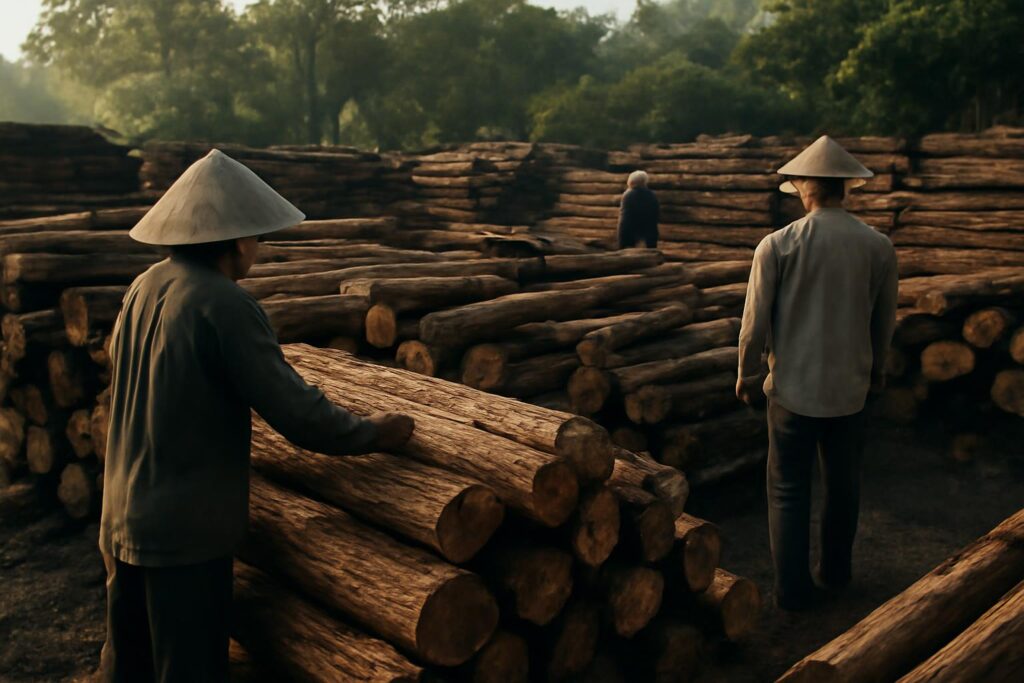
The process begins long before a kiln is lit. High-quality Vietnam mangrove charcoal depends on dense hardwood with an even structure, controlled moisture, and suitable piece size. Producers generally use legally sourced wood from managed supply chains, with a focus on traceability and responsible material selection.
Choosing dense mangrove hardwood
Mangrove wood is valued because its dense fibers can produce charcoal with a firm structure and strong heat output. Suitable logs are inspected for excessive rot, mud contamination, insect damage, and overly wet sections. Cleaner, denser feedstock supports a more consistent charcoal carbonization process and reduces fragile pieces after firing.
Wood dimensions also matter. Logs are commonly cut into manageable lengths so heat can circulate more evenly inside the kiln. When pieces are too large, the core may not carbonize fully; when they are too small, they may burn too quickly or create excessive fines during handling.
Drying before the kiln
Before carbonization, the wood is air-dried or pre-dried to lower moisture content. This step improves kiln efficiency because less energy is spent evaporating water. Drier feedstock also helps create a more stable firing cycle and supports the dense, clean-burning characteristics expected from premium charcoal.
For a wider view of material grades, performance expectations, and end uses, consult this Vietnam mangrove charcoal buying guide. It helps buyers connect raw-material quality with practical grilling and distribution requirements.
Carbonization: Turning Mangrove Wood Into Charcoal
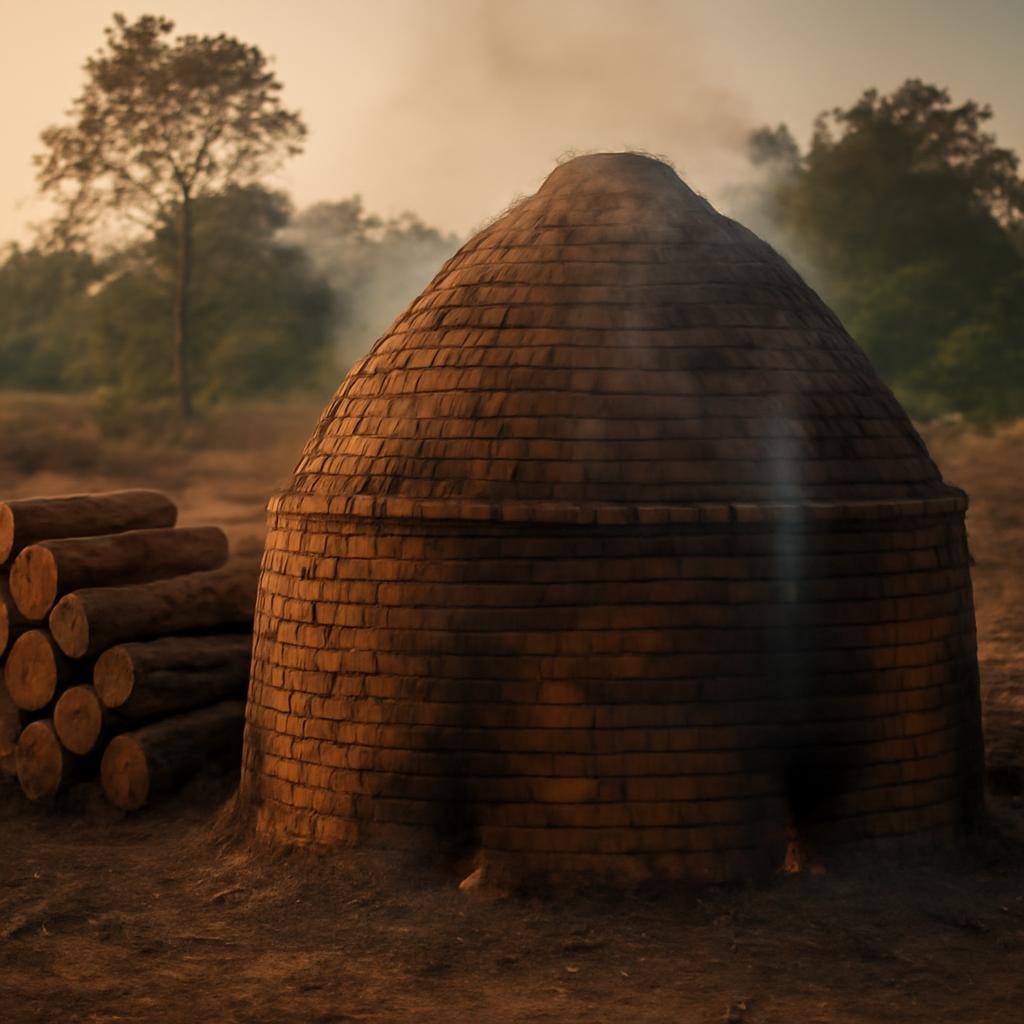
Carbonization is the defining stage in how Vietnam mangrove charcoal is made. The prepared wood is heated in a kiln with carefully restricted oxygen, causing water, volatile compounds, and gases to leave the wood while much of the fixed carbon remains.
Loading and sealing the charcoal kiln
Workers arrange the wood inside a charcoal kiln to allow controlled heat movement through the load. Once filled, the kiln is sealed or nearly sealed, leaving only regulated vents. The goal is not to burn the wood into ash; it is to heat it under limited oxygen so it transforms into carbon-rich charcoal.
Traditional brick kilns and more controlled kiln systems can both be used, but results depend on operating discipline. Airflow must be adjusted gradually. Too much oxygen can ignite the wood and waste usable carbon, while too little heat can leave brown, partially carbonized pieces with high smoke and unstable performance.
Managing temperature and airflow
During the firing cycle, kiln operators monitor smoke color, vent behavior, heat progression, and the timing of each phase. In general, the wood first loses moisture, then releases volatile compounds, and finally develops the brittle, black structure associated with finished charcoal. This is where experienced control determines Vietnam mangrove charcoal production quality.
- Early firing removes remaining moisture.
- Mid-cycle heating drives off gases and tars.
- Final carbonization builds a higher fixed-carbon structure.
- Controlled airflow prevents excessive burning and ash formation.
A properly managed batch commonly delivers more uniform pieces, steadier heat, and less visible smoke after lighting. These traits are important for restaurants, barbecue distributors, and exporters seeking repeatable product performance rather than an inconsistent mixed load.
Cooling, Sorting, and Quality Control
After carbonization, the charcoal cannot simply be removed from the kiln while hot. It must cool in a low-oxygen environment. Premature exposure to air can cause re-ignition, reducing yield and creating avoidable ash.
Cooling without re-ignition
The kiln remains closed until the charcoal has cooled sufficiently. This slow cooling period protects the carbonized material and helps preserve its structure. Opening a hot kiln too early allows oxygen to reach hot charcoal, which can turn valuable product into ash within a short time.
Once safely cooled, the charcoal is unloaded and handled carefully to limit breakage. Dense mangrove charcoal is naturally hard, but rough loading, throwing, or poorly designed transport can still create small fragments. These fragments may be separated for alternative applications or lower-grade packing formats.
Grading charcoal by size and condition
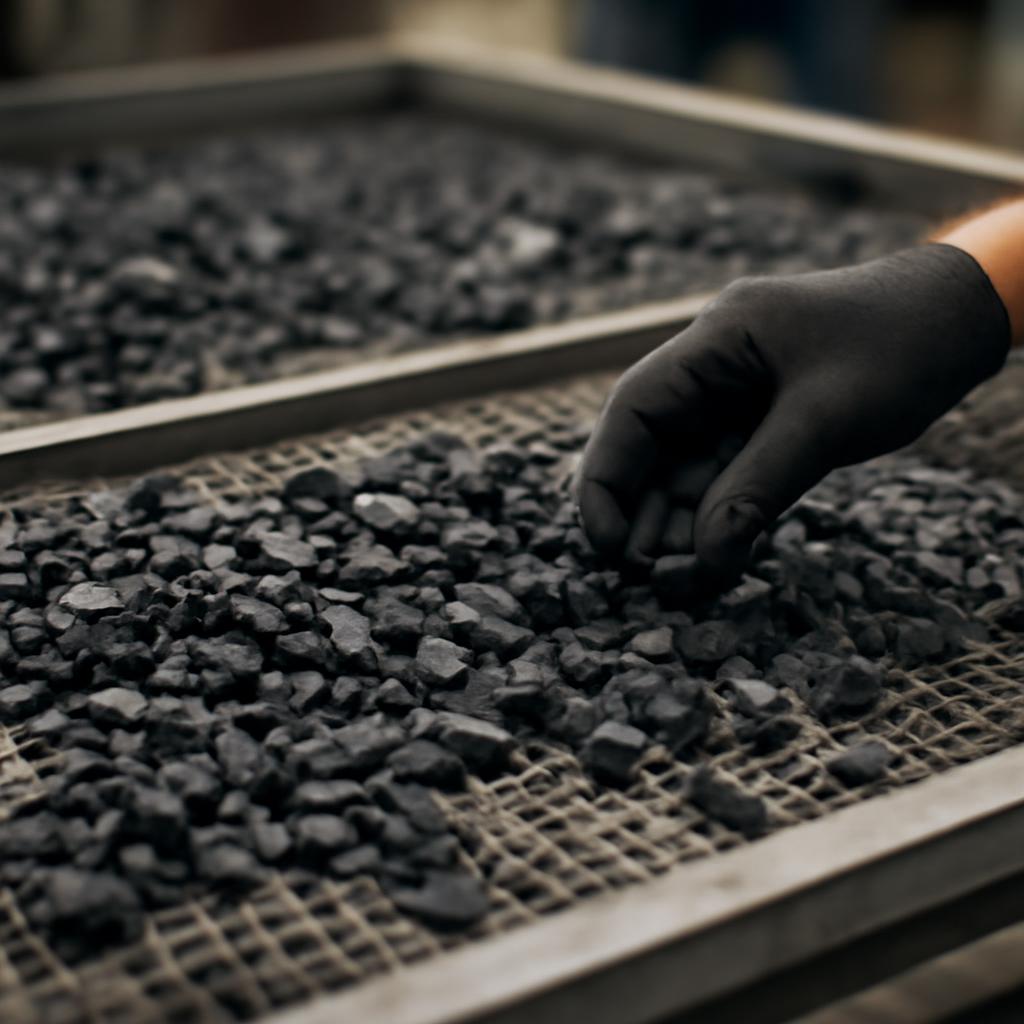
Sorting is essential for consistent orders. Finished material is screened into size ranges, while under-carbonized pieces, excessive ash, stones, and damaged pieces are removed. A reliable supplier may grade product for household grilling, restaurant operations, shisha applications, or industrial fuel needs.
Common quality checks include:
- Piece size consistency and low levels of fines
- Dark, thoroughly carbonized interior color
- Low moisture and low ash content
- Firm texture with minimal cracks or brown cores
- Stable burn behavior and suitable heat output
Packing for transport and storage
After grading, charcoal is packed in moisture-resistant bags or cartons according to the destination market. Storage should remain dry, ventilated, and away from ignition sources. Proper packing protects the long-burning charcoal from moisture pickup and helps maintain a clean presentation during export handling.
Buyers comparing grades should review the broader mangrove charcoal quality standards alongside samples, specifications, and packaging details. The best choice is not only the lowest price; it is the grade that reliably fits the intended fuel application.
Why the Production Method Matters for Buyers
Every stage of production affects the final result. Well-selected wood, even drying, careful oxygen restriction, complete cooling, and strict sorting are what make charcoal easier to light, more stable during use, and more predictable from shipment to shipment.
Heat, burn time, and smoke performance
Properly carbonized mangrove charcoal generally offers strong heat and a long burn because dense wood leaves behind a robust carbon structure. Incomplete carbonization may create unpleasant smoke and inconsistent flame behavior, while over-firing can make pieces brittle and raise ash levels.
For grilling, the goal is steady heat with minimal interruptions. For food-service operations, consistency matters even more because uneven fuel can slow cooking, affect workflow, and increase waste. That is why product specifications should include size range, moisture, ash, and fixed-carbon expectations where possible.
Questions to ask a supplier
Before placing a commercial order, request a representative sample and ask how the charcoal was carbonized, cooled, sorted, and packed. Confirm whether the supplier can maintain the same grade across repeat orders, especially when buying container-scale volumes.
- What is the declared size range and tolerated fines percentage?
- How is moisture controlled before shipment?
- Are brown cores and partially carbonized pieces screened out?
- What packaging options protect the product during transit?
- Can the supplier provide samples from the intended production grade?
Using charcoal responsibly
Charcoal should only be used outdoors or in properly ventilated commercial equipment designed for solid fuel. Never burn it in enclosed spaces because combustion can produce carbon monoxide. Store bags in a dry area and keep them away from open flames, sparks, and children.
Understanding the manufacturing route makes it easier to select fuel with the right balance of heat, durability, and cleanliness. For product selection beyond the production line, use this complete guide to Vietnam mangrove charcoal to evaluate applications, grades, and purchasing considerations.
After reviewing the manufacturing stages, use the Vietnam Mangrove Charcoal quality-control guide to build a sampling, inspection, and shipment-acceptance plan.
Buyers who need commercial grades, export packing, and ordering support can explore KAOLA’s mangrove charcoal specifications before requesting samples or a quotation.
Frequently Asked Questions
Is Vietnam mangrove charcoal made by burning wood?
Is Vietnam mangrove charcoal made by burning wood? It is made by heating mangrove wood in a low-oxygen kiln, not by fully burning it. The restricted oxygen preserves carbon and prevents most of the wood from becoming ash.
How long does the carbonization process take?
How long does the carbonization process take? Timing varies by kiln type, wood moisture, load size, and weather conditions. The full firing and cooling cycle may take several days because slow cooling is necessary to prevent re-ignition.
Why is cooling important after carbonization?
Why is cooling important after carbonization? Hot charcoal can catch fire when exposed to oxygen. Controlled cooling protects the finished product, reduces ash loss, and improves handling safety.
What makes mangrove charcoal suitable for grilling?
What makes mangrove charcoal suitable for grilling? Its dense structure can provide strong, stable heat and a relatively long burn time when it is properly carbonized and graded.
How can buyers identify poorly made charcoal?
How can buyers identify poorly made charcoal? Warning signs include many brown cores, excessive dust, high moisture, weak pieces, strong unpleasant smoke, uneven size, and unusually high ash after burning.
