Private-label charcoal packaging for retail brands starts with the right charcoal, a suitable bag or carton, clear label information and approved artwork. KAOLA CO., LTD handles wholesale and OEM packaging enquiries from importers, distributors and brand owners sourcing charcoal from Vietnam. Product, pack format, printing, minimum order quantity and delivery terms are confirmed in the quotation—not assumed from a design mockup. This guide explains how to prepare a packaging brief and approve a retail pack before production.
Private-Label Charcoal Packaging: Define the Product First
Charcoal packaging is both a physical barrier and a retail communication system. It must contain dust, resist moisture as appropriate to the chosen material, withstand the product’s weight and present essential information clearly; its graphics should reinforce the product identity without implying performance or compliance that has not been verified.

Start with the product, buyer and use case
Packaging decisions should follow the product, not precede it. Hardwood charcoal for barbecue, Binchotan white charcoal for suitable grilling equipment, coconut shell charcoal and briquettes can differ in form, density, intended use and handling requirements. Confirm the actual product and grade with the supplier rather than assuming that every product shown online is currently available or suitable for the same pack.
Define the intended customer and channel, too. A bag for a foodservice buyer may prioritize handling and legibility, while a consumer-facing pack needs a retail-ready hierarchy that makes the product type and intended use easy to identify. These are design considerations, not proof that a charcoal product is suitable for a particular use. Suitability should be confirmed separately.
For a private-label enquiry, record:
- Product type, form and intended application.
- Target buyer and retail or distribution channel.
- Desired pack size and any handling constraints.
- Countries of sale and applicable label requirements.
- Brand elements, language needs and required product claims.
This brief gives the importer and supplier a common starting point for discussing packaging.
Treat the pack as a system, not just a printed bag
A retail pack has three connected layers: the packaging material, the closure and pack construction, and the printed information and graphics. A weakness in one can undermine the others. An attractive design cannot compensate for a pack that leaks dust, fails under the load or provides inadequate moisture protection for the shipment conditions.
The choice of charcoal packaging materials for export should reflect the product, storage conditions, shipping route and target market. Eco-friendly charcoal packaging in the EU can use kraft paper to support an organic, natural-looking visual direction, while a high-barrier pouch can be considered where moisture protection is a priority. These are design options, not universal performance guarantees: suitability depends on the specific construction and should be agreed and evaluated for the order.
Plan the information hierarchy at the same time as the visual identity. Product name, intended use, net contents, handling information and required safety warnings for charcoal bags in Europe may need to be prominent, subject to local rules and the actual product. Keep decorative claims separate from verified specifications. A flame image, for example, can communicate a high-heat visual mood, but it does not establish a burn time or calorific value.
Use design language to signal identity, not unverified facts
Packaging style influences how shoppers interpret a product. A raw industrial direction can use kraft-like textures to suggest a straightforward, natural aesthetic. A cinematic heat concept can pair a dark background with red or orange accents and ember imagery. A minimalist design can use a light background and geometric framing to create a restrained, premium impression.
These visual strategies are design conventions, not technical evidence about the charcoal. Avoid presenting an aesthetic as a factual product attribute. Terms such as “premium,” “fast-lighting” or “long-burning” should be used only when the product and supporting evidence justify them and the wording is appropriate for the destination market.
The brand system should also work beyond a single bag. A consistent logo, color palette, type style and product-name structure can help customers distinguish variants. Modular elements—such as a seasonal badge or a temporary campaign panel—can be added without redesigning the core pack. Keep these additions subordinate to required product information and the main brand identity.
Charcoal Bags, Cartons and Retail Artwork: What to Compare
There is no single best charcoal pack for every retail brand. Compare material and design directions against dust containment, moisture protection, load handling, communication needs and order-specific requirements; then confirm the actual construction with the supplier.
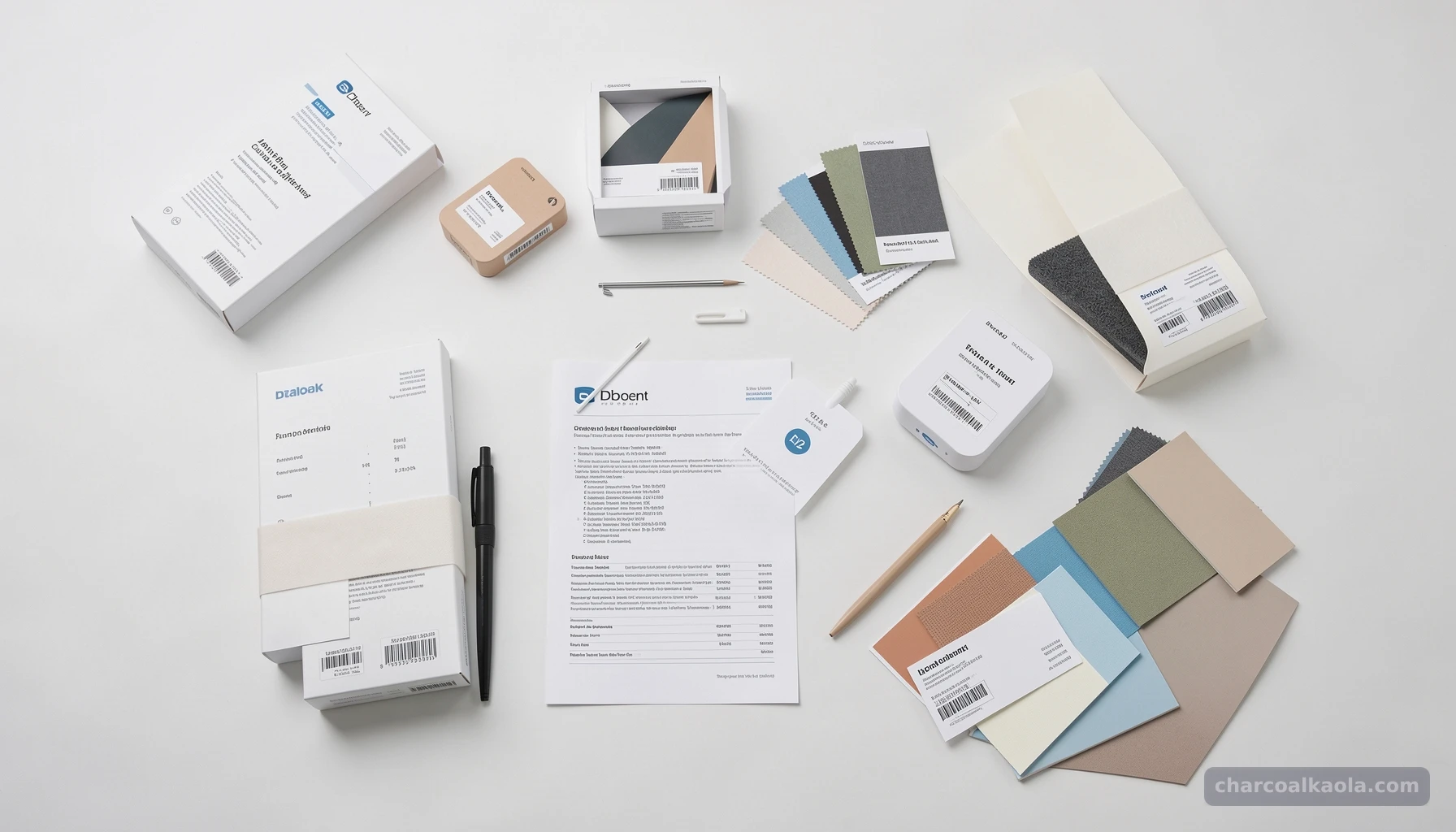
A practical comparison of pack directions
The table compares common design approaches at a planning level. It does not specify a guaranteed barrier rating, weight capacity or regulatory suitability. Those details depend on the selected packaging construction, product and destination and must be confirmed for the order.
| Packaging direction | Potential design role | Key checks before approval |
|---|---|---|
| Kraft-paper appearance | Supports a raw, industrial or natural-looking brand identity | Confirm the actual material structure, dust containment, moisture protection and load suitability |
| High-barrier pouch | Can be considered when moisture protection is an important requirement | Confirm barrier properties, closure, pack size and performance for the product and shipping conditions |
| Dark, high-contrast graphics | Creates a bold visual platform for heat-oriented imagery | Maintain legible product information; do not treat ember imagery as evidence of burn performance |
| Light, minimalist graphics | Creates a clean, restrained presentation | Ensure product identity and mandatory information remain prominent and readable |
| Modular campaign elements | Allows seasonal or promotional artwork to sit within a consistent brand system | Keep temporary claims accurate and confirm artwork, languages and placement before production |
The options are not mutually exclusive. For example, a pack could use a high-barrier structure with a minimalist design, or a paper-forward appearance with a bold, high-contrast label. Specify the required physical performance separately from the desired visual effect.
Separate confirmed specifications from design assumptions
A packaging brief often mixes three kinds of information: product facts, packaging requirements and creative choices. Keeping them separate makes review more reliable. Product facts include the exact charcoal type and any lot-specific test results. Packaging requirements include pack construction, size, labeling and handling needs. Creative choices include colors, textures and imagery.
Do not copy a result from one charcoal sample onto another product or every future lot. For example, KAOLA’s reported White Eucalyptus charcoal results relate to a specific submitted sample, not to all charcoal products or all production lots. Likewise, commercial targets for Mangrove charcoal are not guaranteed results for every shipment. If a label will state a technical value, agree the evidence, product identity, lot relevance and wording before artwork approval.
Destination-market requirements also need separate verification. Safety symbols, warnings, language, origin statements and other label elements may depend on the product and market. Do not assume a design is compliant simply because it looks complete or has been used in another country.
Build a specification sheet that suppliers can act on
A useful specification sheet translates a brand concept into items that can be quoted, reviewed and agreed. Include the product type, intended use, proposed pack format, information hierarchy, artwork files, language versions and any inspection requirements. Identify which fields are final and which are placeholders pending confirmation.
For physical packaging, request confirmation of the proposed material and construction, closure, pack dimensions and expected handling conditions. If the pack must contain dust or resist moisture, state that as a requirement and ask how the proposed structure addresses it. Do not insert unsupported numeric targets: set performance criteria with the supplier based on the product, pack design and evaluation method.
Finally, record who approves each element. The importer should sign off brand assets and market copy; the supplier should confirm production feasibility and agreed pack details; and any independent inspector or laboratory should be engaged only when the parties have specified the scope. A written, version-controlled specification reduces the chance of artwork and production instructions drifting apart.
OEM Charcoal Packaging: From Enquiry to Artwork Approval
A reliable private-label workflow moves from product definition to written requirements, sample evaluation and final approval. Each step resolves a different risk: product mismatch, packaging inadequacy, inaccurate claims or production confusion.
Step 1: Define the product and packaging brief
Start by identifying the charcoal type, form and intended use. Specify whether the enquiry concerns Mangrove, Eucalyptus, Khaya, Longan or Coffee hardwood charcoal, white charcoal, coconut shell charcoal or a briquette product. Similar-looking products should not be treated as interchangeable; confirm the actual product and intended application with the supplier.
Then document the retail objective. Note target pack size, desired visual direction, destination market, label languages and any retailer or distributor requirements. Separate mandatory information from optional brand messaging. For any proposed claim about burn time, heat, ignition or composition, ask what product-specific evidence is available and whether it applies to the intended lot.
The brief should identify open questions rather than conceal them. For instance, if the market’s warning-label requirements are not yet established, mark them for review instead of placing unverified symbols on the artwork. This creates a clear decision list for the importer, supplier and any compliance adviser.
Step 2: Request a quotation and agree the scope
Send the brief to the supplier and request a quotation covering the product and packaging requirements. Discuss MOQ, packing specifications, inspection requirements and Incoterms, along with production and shipment timing, port and other order-specific terms. The applicable details must be confirmed for each order; a general product page is not a stock commitment or final specification.
KAOLA CO., LTD (CharcoalKaola) handles private-label packaging enquiries as part of its B2B service. Its team reviews proposed packing, label and material requirements during quotation; feasibility and the final scope must be agreed for the order. Importers can use the BBQ charcoal wholesale and OEM packaging guide to understand the kinds of packaging questions to raise, then confirm the actual scope in a written quotation.
Keep commercial terms and design decisions connected but distinct. Agree the product and pack configuration first; then ensure the final quotation, artwork and order documents describe the same requirements. Any changes should be recorded in writing.
Step 3: Review a sample and evaluate the pack
Where samples are available, evaluate the charcoal for the buyer’s intended use and inspect the proposed packaging separately. A charcoal sample can help assess characteristics such as ignition behavior, burn performance and ash under the buyer’s own defined conditions. A sample pack can be inspected for closure, dust containment, readability and handling. One test does not prove every lot will perform identically.
Agree how samples will be provided, what they represent and who will assess them. Free samples are not guaranteed. If laboratory testing is needed, identify the product, sample and requested parameters; do not assume that an existing report covers a different species, lot or pack configuration.
Record observations and acceptance criteria. For example, the buyer may document whether the pack remains closed during routine handling and whether important text can be read at normal retail viewing distance. These are practical checks, not a substitute for destination-specific compliance review or agreed quality-control procedures.
Step 4: Approve artwork and lock the production version
Before production, confirm the final artwork against the approved product and pack specification. Check brand name, product identity, language, net contents, directions, warnings and claims. Ensure that the design does not confuse one charcoal type with another or imply an unverified certification, environmental attribute or performance result.
Use a controlled file name and revision number. Keep a record of the approved artwork, pack construction and quotation version. If a translation, label change or seasonal badge is introduced later, review it against the same requirements instead of assuming the earlier approval automatically applies.
The final written agreement should align product, packaging, quality checks, payment terms and production timing. Buyers who want to inspect a facility can arrange a visit in advance with the CharcoalKaola Team; timing and scope should be agreed, and filming is permitted. A visit can inform supplier evaluation, but it does not replace product testing or order-specific documentation.
Avoid Common Packaging Mistakes and Improve the Design
The most effective improvements usually come from resolving mismatches early: between product and pack, visual promise and evidence, or artwork and destination requirements. A disciplined review prevents avoidable revisions and misleading retail communication.
Pitfalls that create rework
Designing before identifying the product can produce a polished pack for the wrong charcoal form or use case. Confirm the product with the supplier before finalizing product names, imagery or directions. In particular, do not treat all hardwood charcoal as one interchangeable category or relabel Khaya as Mangrove.
Choosing material by appearance alone ignores dust, moisture and weight-bearing requirements. A kraft look does not prove that the actual pack is paper, moisture-resistant or suitable for the product’s load. A high-barrier appearance does not establish a particular barrier performance. Ask for the actual construction and agree how its suitability will be assessed.
Overloading the front panel makes the pack harder to scan. Prioritize brand, product identity and intended use, then organize secondary details clearly. Avoid tiny type over photographic backgrounds; strong contrast helps legibility, but it should not come at the expense of accurate product information.
Using unsupported claims can create compliance and trust problems. Do not add certification logos, “organic” or sustainability claims, safety assurances or fixed performance promises without evidence that applies to the product and market. Packaging artwork itself is not proof of certification or regulatory approval.
Example design scenarios for a private-label importer
Consider an importer planning a natural-looking barbecue charcoal line. The team could begin with a kraft-inspired visual direction, a restrained palette and clear product naming. Before committing to a paper pack, it would separately confirm the material construction, dust containment, moisture needs and load suitability with the supplier. The visual concept and technical pack decision are related, but they are not the same decision.
A second importer may prefer a dramatic, dark pack with glowing ember imagery. The design can communicate a high-heat mood without stating an unverified burn duration or temperature. If the brand wants a performance claim, it should define the claim, the testing method and the relevant product or lot before including it on the label.
A third brand may need one identity across multiple products. It can preserve a common logo, typography and layout while using distinct product names and visual cues for each confirmed charcoal type. This reduces the risk of shoppers mistaking one product for another and allows seasonal promotional elements to change without rebuilding the entire brand system.
Make the artwork easier to read, verify and adapt
Treat the front panel as a hierarchy, not a poster. A shopper should be able to identify the brand and product quickly; secondary text can explain intended use and relevant details. The back or side panels can carry fuller directions and required information, subject to the market’s rules and the final pack format.
Use high contrast and adequate spacing. Test the layout at the actual intended pack size, not only on a large monitor. Review the printed or physical sample under ordinary retail lighting, checking small text, color reproduction, image clarity and how the package looks when filled and handled.
Build flexibility through a stable brand framework. Maintain approved master artwork and separate editable areas for product variant, language or time-limited promotion. Every adaptation still needs review: translation can affect meaning, and a campaign badge can crowd out required information. Change control is more useful than assuming that modular artwork is automatically safe to reuse.
Repeat Orders and Retail Packaging Quality Control
For larger or repeat orders, packaging governance matters as much as graphic design. A clear approval trail, order-specific evidence and controlled artwork help importers coordinate suppliers, inspection and market review without treating capacity, certifications or previous samples as guarantees for a new order.
Plan governance around the order, not assumptions
Enterprise buyers should identify decision owners for product selection, brand approval, packaging, quality checks, compliance review and logistics. Record the agreed specification and link it to the quotation, approved artwork and purchase documents. That traceability helps teams identify which version is intended for a particular order.
Confirm operational details each time. Product availability, packing, labeling, production timing, inspection, shipping documents and destination requirements are order-specific. Facility capacity is not current stock or a guaranteed production slot. Confirm the proposed production slot and package format for the actual order rather than treating facility capacity as a delivery promise.
Evidence must remain product- and sample-specific. A laboratory report for a submitted sample does not establish the results for every lot. Similarly, references to testing methods or standards are not proof of company accreditation. Ask which documents are available for the actual product and shipment, and confirm applicability with the relevant authorities, carrier or inspection provider.
Review Design Options Without Assuming Market Trends
Possible design directions include kraft-paper aesthetics, high-barrier constructions where appropriate, and minimalist or high-contrast graphics. These are options to evaluate, not measured market trends, confirmed KAOLA inventory or universal technical solutions. An importer should choose based on product, route, handling, market rules and brand positioning rather than adopting a trend by default.
Sustainability language requires particular care. A material choice or natural-looking design does not, by itself, prove environmental certification, recyclability in a destination market or compliance with a specific regulation. Before adding such claims, establish the evidence and check current requirements for the intended market. The same principle applies to safety symbols and warnings: confirm which elements apply to the product and destination instead of copying another brand’s label.
The CharcoalKaola Team’s practical recommendation is to treat packaging as a documented part of sourcing. Define the product, state pack requirements, assess samples where appropriate and approve final artwork against the order. KAOLA CO., LTD is a Vietnamese charcoal manufacturer and supplier with confirmed export experience in Australia and Taiwan; its team can discuss private-label requirements through an order-specific enquiry. That experience is not a claim of export history in other markets or automatic compliance with their rules.
Private-Label Charcoal Packaging FAQ
What should a private-label charcoal packaging brief include?
Include the confirmed charcoal type and intended use, target market, proposed pack size and format, material or performance requirements, brand assets, languages, label content and inspection needs. Mark any open questions, especially market-specific warnings or claims requiring verification. Ask the supplier to confirm what can be produced and how the pack requirements will be handled. The brief should be consistent with the quotation and final order documents, not treated as a substitute for either.
Is kraft paper suitable for every charcoal retail pack?
No. Kraft paper can support a natural or industrial visual identity, but appearance alone does not establish dust containment, moisture resistance or weight-bearing suitability. The actual material structure, closure, product and shipping conditions matter. Ask the supplier to confirm the proposed construction and agree how it will be evaluated for the order. If moisture protection is a priority, compare suitable alternatives, including high-barrier constructions, without assuming that any material guarantees a specific performance.
Can a charcoal package state burn time or heat performance?
Only when the wording is supported by relevant evidence and appropriate to the product and destination market. Performance can depend on the charcoal, size, equipment, ignition and airflow, so a claim should not be copied from a different product or sample. Define the test conditions and confirm that the evidence applies to the product being sold. Visual cues such as flames or embers may establish a design mood, but they do not substantiate technical claims.
How can an importer confirm that packaging artwork is ready for production?
Compare the final artwork with the agreed product and packaging specification, quotation and destination-market review. Check product identity, brand details, language, net contents, directions, warnings and any claims; then confirm the final pack construction and artwork revision in writing. Where possible, inspect a physical sample at intended pack size. Keep approved files version-controlled and document later changes so that the supplier and buyer are working from the same production version.
Request Private-Label Charcoal Packaging from KAOLA
Start with the fuel you intend to sell. Review Mangrove charcoal for BBQ wholesale, Eucalyptus black charcoal or Eucalyptus Binchotan, then discuss the grade, dimensions, fines tolerance and proposed retail pack. Mangrove is a commercial priority for KAOLA; it is not interchangeable with Khaya or a different charcoal species.
- Product and intended use; size or grade and sample requirements.
- Order quantity and target net weight per bag or carton.
- Proposed material, dimensions, liner and closure requirements.
- Your brand assets, artwork files, label languages and country of sale.
- Destination port, preferred Incoterm, timing and inspection needs.
PP bags, cartons and private-label options are discussed per order. Paper-looking packs, pouches or specialist printing shown as design examples are not promises of current availability. Confirm packing samples, printing feasibility, MOQ, setup costs and sample charges through KAOLA wholesale and OEM enquiries. Do not infer a price or production lead time from this guide.
Packaging also has to work after artwork approval. Review the black charcoal storage and handling checklist and container loading and breakage-prevention guide when defining handling requirements. Final transport packaging and declarations must follow the applicable shipment requirements and carrier acceptance; attractive retail artwork is not transport approval.
Send your product and retail packaging brief to the CharcoalKaola Team. Payment terms are negotiable based on the customer and order. Final terms are agreed in the quotation, pro forma invoice or sales contract.
