
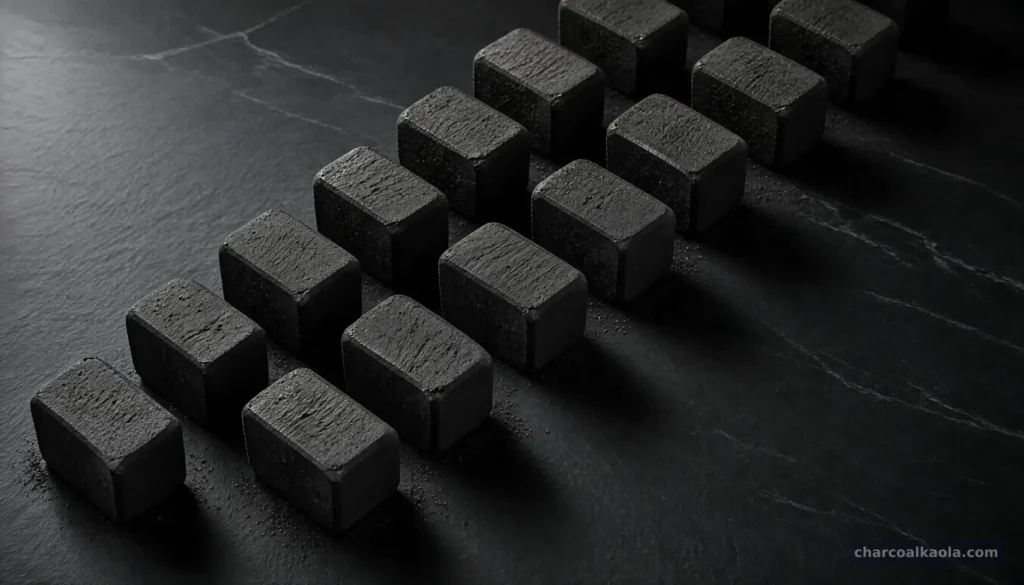
Comparing Vietnam charcoal vs Indonesian charcoal starts with the product offered, not a country-wide quality verdict. Ask both suppliers for the same feedstock description, form, grading, test basis, packaging and delivery terms. A comparison between hardwood lump charcoal and coconut-shell briquettes is a comparison of different products—not proof that one country makes better charcoal.
Compare equivalent products before comparing origins
Write the application first: restaurant grilling, wholesale distribution or private-label retail. Then identify whether each offer is black hardwood lump charcoal, white Binchotan-style charcoal or a purpose-made briquette. Confirm wood species or feedstock and any binder in a briquette. Country of origin alone does not establish ash, useful heat, burn duration or suitability.
For Vietnamese hardwood options, review KAOLA’s black charcoal range, including Eucalyptus black charcoal, Mangrove charcoal and Khaya charcoal. White-charcoal requirements belong in the separate Binchotan range. Availability and specifications are confirmed for the order.
A comparison worksheet for two supplier offers
| Compare | Ask both suppliers for |
|---|---|
| Product identity | Feedstock/species, lump or briquette form, intended application and binder where relevant |
| Grading | Size distribution, permitted fines, inspection method and agreed tolerances |
| Quality evidence | Report identity, sample/lot, test method, units and reporting basis |
| Practical performance | Representative samples tested under comparable equipment and operating conditions |
| Packing | Net weight, package dimensions, protection, artwork and transport suitability |
| Commercial scope | Quantity, Incoterm and named place, currency, quote validity and excluded charges |
| Shipment feasibility | Carrier acceptance, document responsibilities and destination requirements |
This worksheet deliberately contains no invented Indonesian specification or national ranking. Enter actual supplier evidence in both columns of your purchasing file; missing information is a question to resolve, not a zero score or proof of inferior quality.
Read sample results on the same basis
A number is useful only when the product, method and reporting basis are clear. Do not compare a dry-basis figure with an as-received figure without appropriate technical review. Gross and net calorific values are not interchangeable. One sample report does not certify every shipment or every wood species.
KAOLA’s available White Eucalyptus sample report is not a benchmark for all Vietnamese charcoal or for Indonesian products. Use the charcoal test-report verification guide for report checks, then agree any additional testing needed for the offered product.
Test suitability rather than assuming a national winner
Use representative samples in the intended grill. Record fuel mass, usable piece distribution, operating conditions, useful cooking output, additions during service and residue. A calorific-value result alone does not determine a fixed session length. The restaurant fuel-trial worksheet explains a structured trial; adapt the product identity and trial conditions to the offers being assessed.
For shisha, assess purpose-made coconut-shell briquettes and the intended device separately. KAOLA does not recommend Binchotan for shisha; a coconut-shell raw-lump photograph does not establish a finished shisha SKU.
Compare landed cost with the same boundaries
A lower quoted price per tonne may exclude freight, inspection, destination charges or a different packing format. Compare the same quantity, named delivery point and responsibilities. Include sorting losses and useful output only where measured; do not invent savings percentages.
Payment terms are negotiable based on the customer and order. Final terms are agreed in the quotation, pro forma invoice or sales contract. Stock, MOQ, sample charges and delivery timing also require confirmation.
Check the supplier separately from the country
Verify the business identity, actual production/sourcing role and contact details. Ask how the offered lot connects to approved samples, packing records and inspection. A factory visit can support that review, but it does not replace product acceptance or transport checks.
KAOLA has confirmed export experience in Australia and Taiwan. That does not establish prior shipments to other markets. B2B visits and filming can be arranged with the CharcoalKaola Team; schedule and access are agreed in advance. See the factory-visit checklist.
Keep sourcing comparison separate from shipping approval
After selecting a potential supplier, use the hardwood-charcoal booking handover guide for the next stage. Carrier and destination requirements must be reviewed for the actual consignment. A supplier comparison is not a dangerous-goods approval or customs guarantee.

FAQ
Is Vietnamese charcoal better than Indonesian charcoal?
There is no defensible universal answer from the country name alone. Compare equivalent products, identified reports and representative trials. This guide does not present independent head-to-head laboratory results.
Can I compare hardwood lumps directly with coconut briquettes?
You can evaluate which suits your application, but identify the different feedstock, form and operating needs. Do not attribute all observed differences to country of origin.
What should I send KAOLA for a comparable quotation?
Send intended use, product/species, size or grading, acceptance requirements, quantity, packing, destination and requested delivery basis. Review the wholesale options or send your sourcing brief.
