
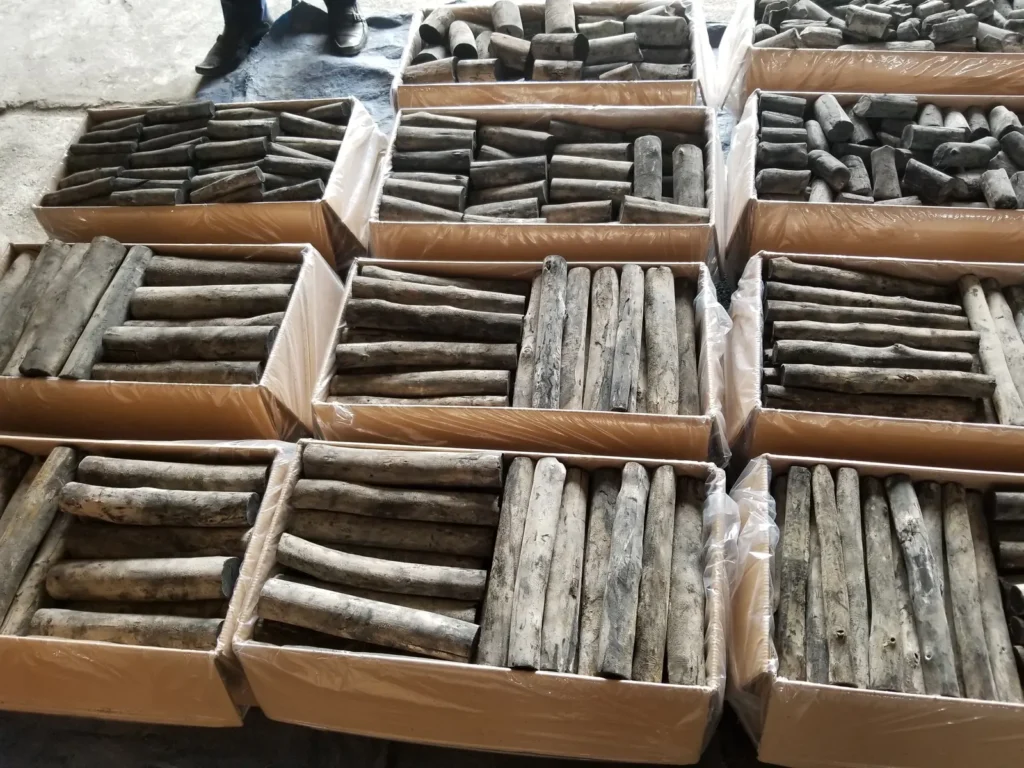
Binchotan is a Japanese-style white charcoal valued for dense structure, steady heat, and very low smoke and odor after it is properly lit. These characteristics make it attractive to yakitori restaurants, professional kitchens, hospitality buyers, and specialist grilling retailers.
For wholesale buyers, however, the name alone is not enough. The useful comparison is how a supplier’s Binchotan performs against regular hardwood charcoal in fixed carbon, ash, moisture, heat output, burn stability, piece size, and shipment consistency.
Why the Difference Matters to Buyers
Regular black hardwood charcoal is generally easier to ignite and can deliver strong initial heat. It can also produce visible smoke during ignition, especially when moisture or volatile matter remains. It is commonly used for outdoor restaurants, open grilling areas, and commercial kitchens with suitable ventilation.
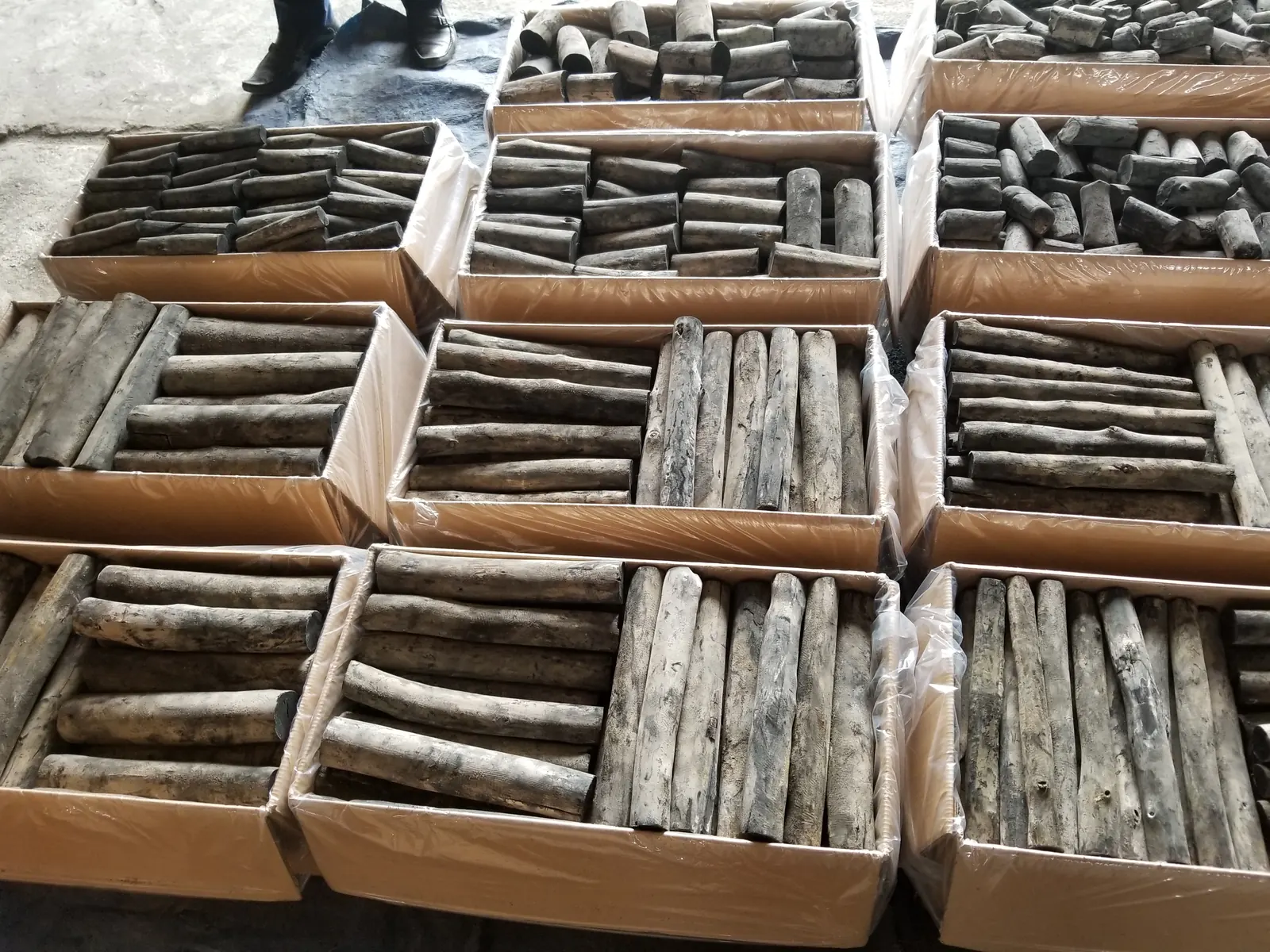
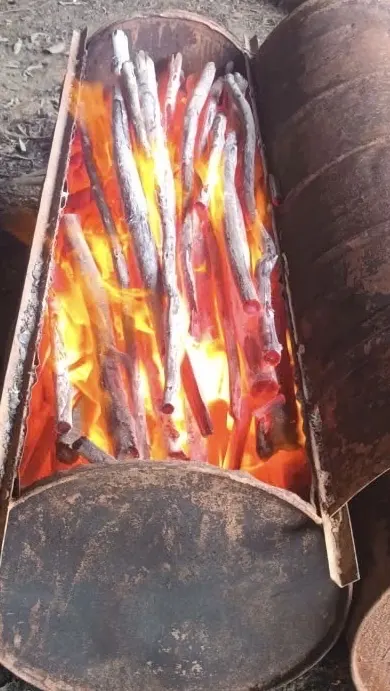
Binchotan is produced through a longer, higher-temperature carbonization process. Properly produced white charcoal develops a dense structure and a stable ember with minimal flame, smoke, sparks, and odor after ignition. This behavior is important for restaurant operators that need controlled heat, a clean cooking environment, and fewer refueling interruptions.
Buyers should therefore compare cost per useful hour of heat, not price per kilogram alone.
What Importers Should Check
- Fixed carbon: an important indicator of carbonization level and sustained ember performance.
- Ash: affects residue, airflow, cleaning frequency, and operating efficiency.
- Moisture and volatile matter: influence ignition, startup smoke, usable heat, and shipment weight.
- Burn behavior: assess heat stability, sparks, smoke after ignition, and usable burn duration under the buyer’s actual equipment.
- Piece size: the final size range, tolerance, and acceptable fines should be agreed for the destination market and grill type.
- Packaging: confirm carton strength, inner moisture barrier, labeling, net weight, and breakage controls.
- Testing basis: distinguish a declared commercial specification from a single sample result and a shipment-specific certificate of analysis.
See KAOLA’s Binchotan product and export program for the current product range and quotation process.
Technical Comparison
| Attribute | KAOLA Binchotan declared specification | Regular hardwood charcoal |
|---|---|---|
| Gross calorific value | 8,000-8,500 kcal/kg | Varies by wood and carbonization |
| Fixed carbon | 91.3% | Commonly lower; confirm by batch/test basis |
| Ash | 4% maximum | Often higher; confirm by product |
| Moisture | 4% | Varies with production and storage |
| Volatile matter | Under 4% | Commonly higher |
| Typical burn time | 4.5-5 hours | Generally shorter, depending on size and use |
| Smoke and odor | Minimal after proper ignition | More noticeable during ignition |
These are KAOLA’s declared Binchotan specifications. Final shipment requirements must be confirmed through an approved sample, the agreed inspection or testing method, and the sales contract. A result from one laboratory sample must not be represented as a permanent guarantee for every shipment.
How KAOLA Produces and Grades Binchotan
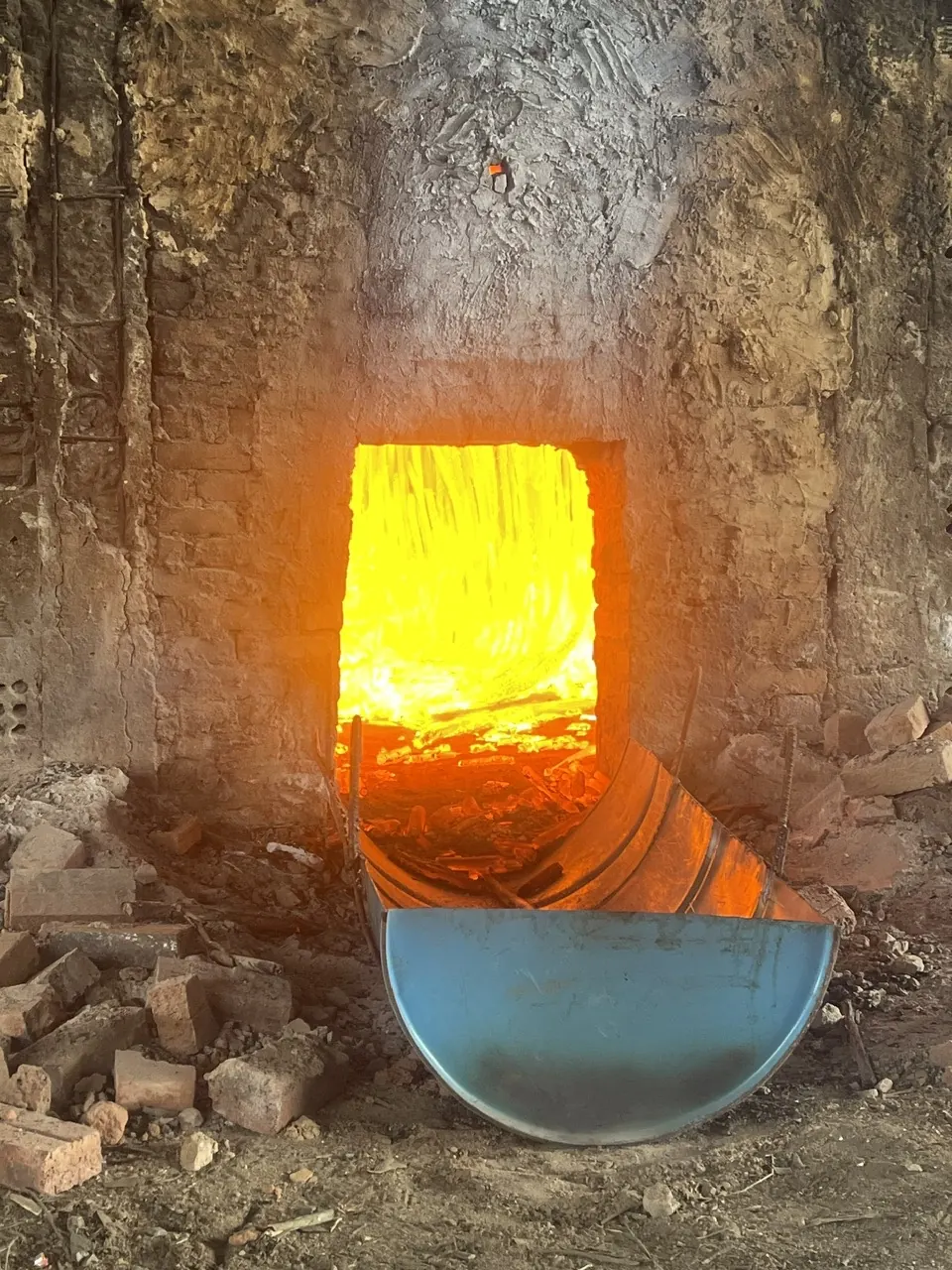
KAOLA’s Binchotan production facility is located at Tay Bac Dong Hoi Industrial Park, Dong Thuan Ward, Quang Tri Province, Vietnam. Dense hardwood, including eucalyptus, is prepared and carbonized using a traditional white-charcoal process, followed by controlled removal and cooling with an ash-and-sand mixture.
A typical white-charcoal production batch takes approximately 15-20 days before the charcoal is placed in metal containers or drums to cool. Actual timing varies with wood moisture, piece diameter, kiln loading, temperature control, and the required finished specification.
KAOLA supplies one primary Binchotan quality product, while commercial size sorting varies by destination market. Japan may use A-F size classifications, whereas other markets may purchase one product classification with an agreed size range. These letters describe market or size sorting and should not be presented as six different charcoal-quality grades.
Evidence, Testing, and Export Documents
Buyers should review the scope of every document rather than relying on a generic certification claim. KAOLA references applicable TCVN, ASTM, and ISO testing methods and can discuss shipment documentation such as test reports, MSDS, phytosanitary documentation, fumigation records, commercial invoice, packing list, bill of lading, and certificate of origin according to the product and destination.
The current evidence should be read as product-, sample-, batch-, or shipment-specific where applicable. Visit KAOLA’s Certifications and Verification page to understand the available company and product evidence.
KAOLA does not currently claim FSC certification. Buyers requiring FSC chain-of-custody documentation should raise that requirement before quotation.
Purchasing, Loading Quantity, and Export Route
KAOLA’s Binchotan is produced and prepared for dispatch at the company’s factory in Quang Tri Province, Vietnam, and exported through Hai Phong Port. The final terminal, vessel schedule, and shipping route are confirmed in the quotation and booking plan.
Loading quantities must be separated by product because White Charcoal/Binchotan and black charcoal have different density and packing configurations:
| Product | Container | KAOLA practical loading reference |
|---|---|---|
| White Charcoal/Binchotan | 20 ft | Approximately 9.5-10 metric tons |
| Black charcoal | 20 ft | Approximately 13-14 metric tons |
| Charcoal, subject to product and packing plan | 40 ft | Approximately 25 metric tons |
The 13-14 metric ton reference applies to black charcoal in a 20-foot container; it is not the loading figure for Binchotan. For KAOLA’s Binchotan program, the applicable 20-foot reference is approximately 9.5-10 metric tons. Final net weight depends on piece size, carton configuration, moisture protection, container payload limits, carrier approval, and the approved loading plan.
Production, packing, and loading schedules are confirmed for each order based on the approved product specification, quantity, packaging, factory plan, and destination. Sea-freight time from Hai Phong Port varies by destination country, destination port, vessel schedule, transshipment, and customs processing.
Final MOQ, payment terms, Incoterms, packaging, loading quantity, and documentation must be stated in KAOLA’s quotation and sales contract. Buyers considering OEM or private-label cartons can review the KAOLA wholesale and export program.
Frequently Asked Questions
What fixed carbon level does KAOLA declare for its Binchotan?
KAOLA currently publishes a fixed-carbon value of 91.3% for its Binchotan specification. Buyers should confirm the applicable test basis and shipment-acceptance terms before contracting.
Is Binchotan completely smokeless?
Properly produced Binchotan produces minimal smoke and odor after it is fully lit. Ignition method, moisture, airflow, and handling still affect real-world performance, so avoid treating the claim as independent of operating conditions.
Is Binchotan more expensive than regular charcoal?
It generally costs more per kilogram because of its longer production cycle and lower material yield. Commercial kitchens should compare usable heat duration, refueling frequency, ash handling, and consistency rather than kilogram price alone.
How much Binchotan fits in a 20-foot container?
KAOLA’s practical loading reference is approximately 9.5-10 metric tons of White Charcoal/Binchotan in a 20-foot container. Final net weight depends on grading, cartons, payload restrictions, route, and the approved loading plan.
Where is KAOLA Binchotan produced and shipped from?
KAOLA Binchotan is produced at the company’s factory in Quang Tri Province and exported through Hai Phong Port. The final terminal, vessel, and routing are confirmed in each quotation and shipping plan.
Can KAOLA provide private-label packaging?
Private-label and OEM packaging can be discussed subject to carton design, printing requirements, MOQ, and the commercial agreement.
Request a Binchotan Quote
Sourcing Binchotan for restaurants, distribution, retail resale, or an OEM program? Request a Binchotan quotation from KAOLA with the required size, packaging, quantity, destination country, and destination port.
