
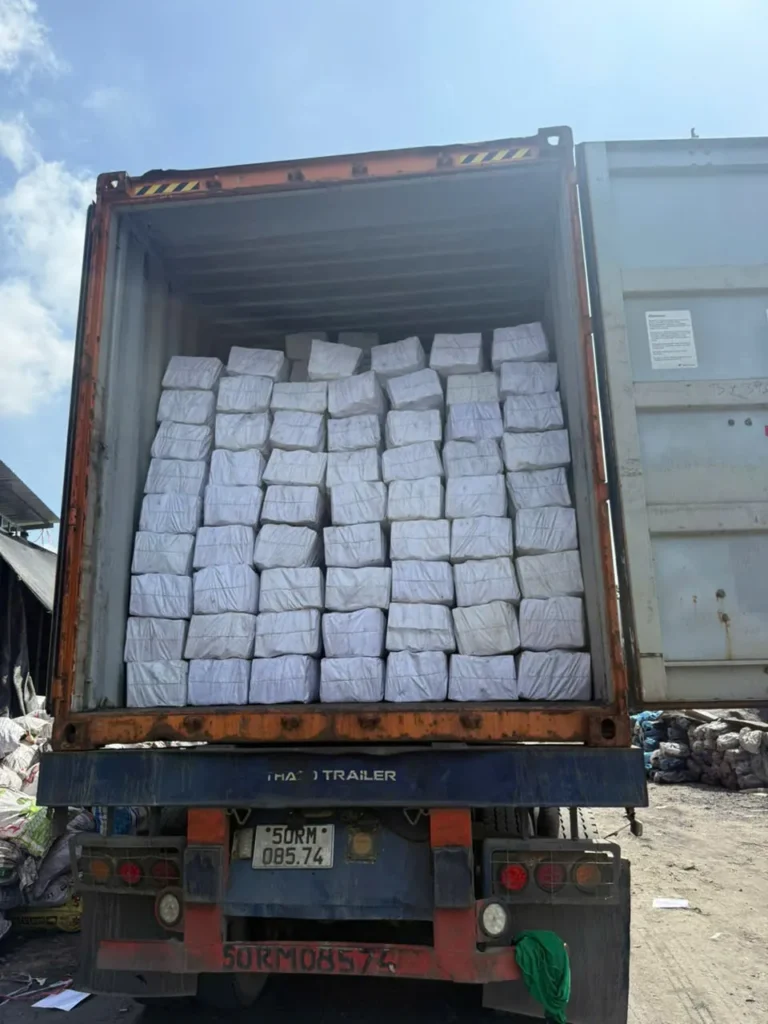
Charcoal container loading optimization for breakage prevention combines stable product condition, reinforced cartons, deliberate stacking, balanced weight distribution, and secured voids—practical considerations covered in this hardwood charcoal export logistics guide. These controls reduce crushing and movement without sacrificing practical container utilization, supporting the broader risk planning wholesalers need for international shipments. For importers, the result is more than fewer damaged cartons: it helps preserve valuable Binchotan sticks and uniform briquettes, protect downstream performance, and reduce avoidable handling risks during international transit when working with a Vietnam charcoal manufacturer.
What charcoal loading optimization means in practice
Charcoal loading optimization is the coordinated planning of product condition, carton strength, stacking pattern, weight placement, and container suitability to limit damage in transit. It is not simply a matter of fitting the maximum number of cartons into a container: the load must also remain stable under movement and pressure.
Why charcoal needs a product-specific loading plan
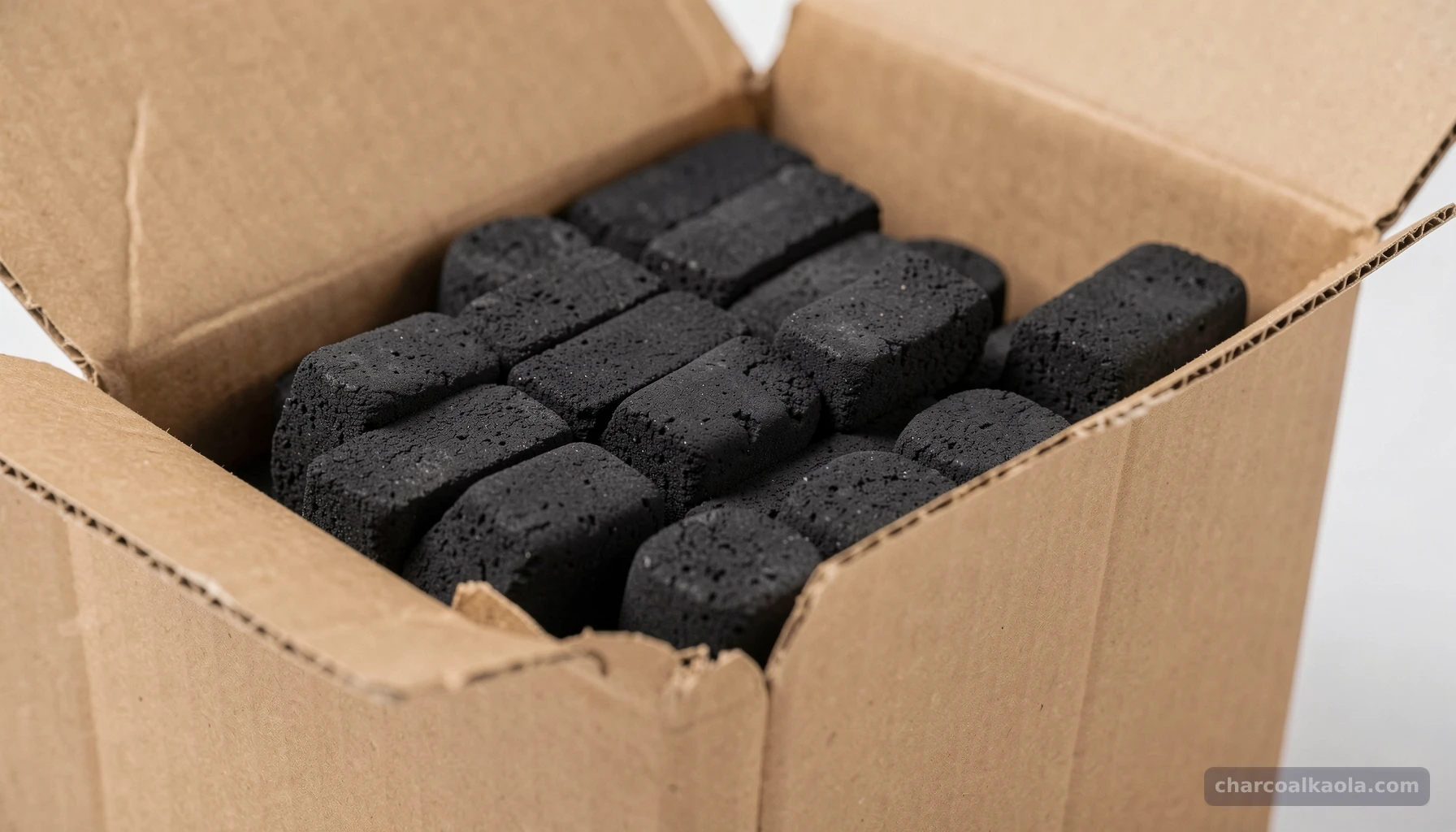
Charcoal is brittle. Vibration and shifting can cause pieces to strike one another or carton walls; excessive stacking pressure can crush the lower layers. The effects matter differently by product: broken long Binchotan sticks may lose their retail appeal, while crumbled sawdust briquettes can create dust and inconsistent airflow in a grill or shisha application.
A sound loading plan therefore balances container utilization with structural protection. Packing every available gap is not automatically optimal if doing so leaves cartons compressed, creates unstable stacks, or makes it difficult to secure the cargo. Product density, shape, carton design, and intended use all influence the appropriate arrangement.
From production condition to transit protection
Breakage prevention begins before the container is loaded. Charcoal must be fully refined and cooled to ambient temperature before packing. The stated refining process reaches 1,200°C; allowing the finished product to cool before packaging helps prevent internal moisture condensation that could weaken carton integrity.
The packaging and load plan then work as a system. High-ply corrugated cartons provide a rigid outer shell, while an interlocking arrangement helps limit lateral movement. Heavier, denser products belong at the base, with lighter or more fragile briquettes placed above them. Dunnage or air bags can secure remaining gaps between cargo and container walls.
Why logistics expertise matters to importers
A manufacturer’s loading role does not end when product is packed. Importers need a cargo plan that takes account of product type, carton dimensions, container condition, and customs readiness. KAOLA CO., LTD, a Vietnam-based manufacturer and exporter with a facility in Quang Tri Province, reports production capacity of 180 tons per month and more than ten years of export experience.
That operating context matters because a shipment can be damaged after loading if documentation problems lead to additional handling. MSDS, applicable test reports, and phytosanitary certificates support customs clearance and help reduce the risk of port-side inspection delays that may involve opening or restacking cargo.
Technical specifications that shape a safer load
Loading decisions should be based on the characteristics of the product and packaging, not on a single universal carton count. The figures below describe relevant product and operational context; they are not guarantees of a specific container capacity or breakage rate.
Product and packaging considerations
| Loading factor | Grounded specification or condition | Practical implication |
|---|---|---|
| Product condition | Refined at up to 1,200°C and cooled to ambient temperature before packing | Avoid packing while hot; confirm the product is cool before cartons are sealed |
| White charcoal / Binchotan | 85–95% fixed carbon; high-density charcoal | Place dense cartons at the base while protecting fragile stick shapes from crushing |
| Sawdust briquettes | Approximately 89% fixed carbon | Limit pressure on upper and lower cartons to reduce crumbling |
| Outer packaging | High-ply corrugated cardboard cartons | Use a rigid shell to resist external pressure during transit |
| Stacking pattern | Tight-pack, interlocking arrangement | Reduce lateral gaps and carton movement within the container |
| Weight distribution | Heavier, denser product at the base; lighter or more fragile briquettes higher | Reduce crushing pressure on more vulnerable cargo |
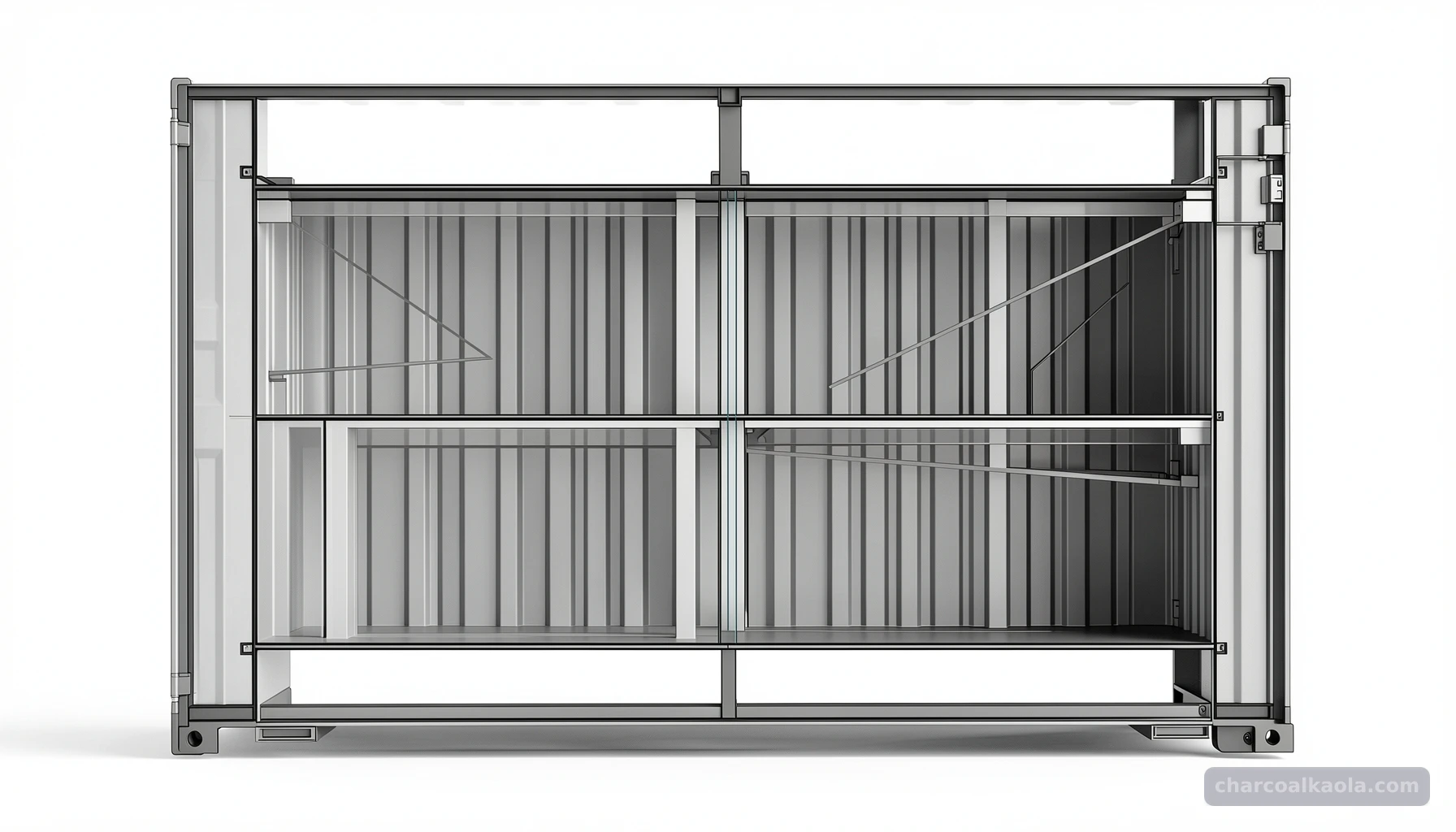
| Void management | Dunnage or air bags at gaps between cargo and container walls | Restrain movement without relying on carton friction alone |
| Container condition | Dry, odor-free, structurally sound, and without leaks | Reduce moisture-related softening and packaging damage |
| Shipment documentation | MSDS, TCVN/ASTM test reports, and phytosanitary certificates as applicable | Support customs readiness and reduce avoidable cargo handling |
| Example shipment scale | 850 cartons per container for specific Australian shipments | Treat as a shipment example, not a universal loading specification |
Reading the figures without overgeneralizing
The reported example of 850 cartons in a container demonstrates an achieved shipment scale for specific Australian shipments. It should not be treated as a standard capacity. Carton dimensions, product type, weight, and the arrangement needed to restrain the load all affect what can be safely loaded in a particular container.
Likewise, fixed-carbon figures describe product composition, not carton strength or a guaranteed resistance to breakage. A high-density charcoal may be suitable for placement at the bottom of the load, but the cartons still need appropriate reinforcement, and the stack must not exceed the pressure the packaging can withstand.
A practical way to compare product needs
| Product or load condition | Main damage concern | Loading response |
|---|---|---|
| Long Binchotan sticks | Breakage that reduces piece length and presentation quality | Use reinforced cartons and stable, interlocking placement; avoid crush pressure |
| Sawdust briquettes | Crumbling and dust that affect airflow and heat consistency | Protect from excessive compression; place lighter, more fragile cartons higher |
| Mixed-density cargo | Uneven pressure and unstable weight distribution | Put denser cartons at the base and plan the arrangement before loading |
| Cargo with residual voids | Lateral movement during sea transit | Fill gaps with suitable dunnage or air bags |
| Shipment in a questionable container | Moisture or structural damage | Inspect before loading; reject or resolve unsuitable conditions |
Step-by-step workflow for preparing and loading a container
A reliable loading workflow starts with product readiness and ends with a checked, documented load. Each step addresses a different failure mode: moisture, carton compression, shifting, uneven weight, or additional handling.
Step 1: Confirm product and packaging readiness
Before cartons are loaded, confirm that the charcoal has completed the refining process and cooled to ambient temperature. Packing hot product can contribute to internal moisture condensation, which may weaken the cartons. Check that packaging is intact and appropriate for the product being shipped.
Use high-ply corrugated cardboard cartons to provide a rigid outer shell. Carton dimensions can also be planned for standard 20-foot or 40-foot containers through OEM packaging options, but optimization should preserve room for a stable arrangement rather than focus only on filling every possible space.
Step 2: Inspect the container and map the load
Check that the container is dry, odor-free, structurally sound, and free of leaks. Moisture can soften charcoal packaging, while structural problems may compromise the cargo’s support during transit. Resolve any suitability concerns before loading begins.
Then identify which cartons contain denser products and which contain lighter or more fragile products. Plan the base-to-top arrangement accordingly. A simple load plan should account for the carton footprint, the interlocking pattern, and the location of potential gaps at the walls. Avoid improvising the full arrangement only after the container is nearly packed.
Step 3: Stack tightly, distribute weight, and restrain gaps
Place heavier, denser cartons, such as Binchotan, toward the base. Position lighter or more fragile briquettes toward the top, where they are less exposed to the weight of other cartons. Stack in an interlocking pattern to reduce lateral movement and help the load act as a more stable arrangement.
Use a tight-pack method, but do not confuse tight packing with excessive compression. The goal is to minimize movement while preserving carton integrity. Where gaps remain between the cargo and container walls, use dunnage or air bags to limit shifting during sea transit. Avoid leaving unsecured spaces that allow cartons to move freely.
Step 4: Complete a loading and documentation check
Before closing the container, review the stack for obvious instability, crushed cartons, unfilled gaps, and misplaced heavy products. Check that the container remains suitable and that packaging has not been compromised during loading. Record the condition of the cargo and container according to the shipment’s operating procedures.
Confirm customs documents are complete, including MSDS, relevant TCVN or ASTM test reports, and phytosanitary certificates as applicable. Documentation does not physically stop breakage, but customs readiness can help avoid inspections or delays that may expose cargo to additional opening, handling, or restacking.
Pro tips, common pitfalls, and practical examples
The most effective improvements usually come from addressing the cause of damage rather than responding only to the amount of breakage reported at destination. A carton crushed at the base points to a different problem than one that has shifted against a wall.
Common loading mistakes and how to correct them
Mistake: maximizing carton count at the expense of stability. A high carton count does not prove the load is well optimized. If the arrangement creates loose spaces or puts too much pressure on lower cartons, cargo can move or crush. Review the arrangement for both utilization and restraint.
Mistake: treating every charcoal type alike. Binchotan and sawdust briquettes have different forms and handling concerns. Plan placement by density and fragility, protecting long, presentation-sensitive sticks and avoiding excessive pressure on briquettes.
Mistake: loading before checking container condition. A wet, odorous, leaking, or structurally unsound container can put packaging and product at risk. Inspect before loading, not only after cartons are already inside.
Mistake: leaving customs documents until the shipment is ready to depart. Missing paperwork can contribute to clearance delays and extra cargo handling. Prepare and verify documents alongside the physical load plan.
Use cases: retail presentation and industrial consistency
For a buyer selling Binchotan for high-end Japanese-style grilling, intact long sticks are important because both piece size and appearance affect the product’s intended use. Reinforced cartons, sensible weight placement, and a stable interlocking arrangement help protect that presentation through transit.
For an industrial buyer receiving sawdust briquettes for commercial BBQ or shisha use, breakage can create dust and reduce product uniformity. That can affect airflow and contribute to inconsistent heat. Here, controlling stack pressure and preventing cargo movement are practical quality measures, not merely cosmetic concerns.
Packaging choices should support the load plan
Packaging must be considered together with carton arrangement, not as an isolated purchasing decision. The right box dimensions can make interlocking patterns easier and reduce unplanned gaps. For a deeper comparison of packaging options, importers can consult Charcoalkaola’s guide to charcoal packaging materials for export.
For private-label shipments, dimension planning can also support a more consistent loading arrangement across orders. Charcoalkaola’s overview of custom packaging and OEM solutions for BBQ charcoal wholesale buyers provides additional context on packaging customization. Any packaging change should still be checked against the product’s fragility and the intended container layout.
Enterprise planning and the 2026 outlook
In 2026, importers should treat charcoal loading as a repeatable quality-control process rather than a one-time packing task. The most useful operational indicators are practical and observable: product condition before packing, carton integrity, stack placement, container suitability, gap restraint, and document completeness.
Build a repeatable shipment standard
A shipment-level loading standard can help procurement, production, and logistics teams work from the same expectations. At minimum, it should define:
- Product readiness and cooling checks before packing.
- Carton type and condition requirements.
- The order for placing dense and fragile product.
- The intended interlocking pattern and treatment of wall gaps.
- Container inspection criteria.
- Required shipment documents and a final verification step.
This standard should distinguish product categories rather than impose a single stack plan across every charcoal type. Teams can review loading records alongside destination feedback to identify recurring issues, such as crushed lower cartons or shifted cargo, and revise the process accordingly.
Use evidence, not assumed breakage benchmarks
The available operating facts do not establish a universal breakage percentage, maximum stacking pressure, or guaranteed carton capacity. Importers should avoid relying on unsupported benchmarks. Instead, compare shipments using documented observations: carton condition on arrival, product breakage, visible movement, and any record of customs handling or restacking.
For example, if long Binchotan arrives broken while cartons show pressure damage near the base, review weight distribution and carton strength. If briquettes arrive dusty and cargo has shifted, examine interlocking placement and void filling. This cause-based approach helps teams make specific corrections rather than changing the entire loading plan without evidence.
Charcoalkaola’s logistics perspective
Charcoalkaola combines manufacturing knowledge with export operations across products including Binchotan, black hardwood charcoal, sawdust briquettes, and coconut shell charcoal. Its team’s perspective is grounded in more than ten years in Vietnam’s charcoal industry, with experience in product preparation, testing documentation, and international shipment requirements.
For importers, the practical lesson is that breakage prevention depends on coordination: product condition must match packaging, packaging must suit the loading pattern, and the cargo plan must align with the container and customs documents. A manufacturer that can discuss those connected details can help buyers evaluate logistics risks alongside product specifications—without assuming that a single carton count or loading pattern suits every shipment.
FAQ
What is the most important step for preventing charcoal breakage in a container?
There is no single step that replaces the full loading process. The most important controls work together: cool charcoal to ambient temperature before packing, use reinforced cartons, stack in an interlocking pattern, place denser products at the base, and secure gaps with dunnage or air bags. Inspecting the container and preparing customs documents also matter because moisture or additional cargo handling can introduce avoidable risks.
Should Binchotan and sawdust briquettes be loaded in the same way?
No. Loading should reflect product density and fragility. Dense Binchotan cartons are placed toward the base, while lighter or more fragile briquettes should be stacked higher to reduce crushing pressure. Both products need stable cartons and an arrangement that limits movement, but their different forms and damage concerns mean a single uniform placement plan may not be appropriate. Consider carton dimensions and the intended load pattern before packing.
Does loading 850 cartons per container provide a standard capacity?
No. The figure of 850 cartons applies to specific Australian shipments and is an example, not a universal capacity specification. The number that can be loaded depends on carton dimensions, product type, weight distribution, container size, and the space needed to create a stable, restrained arrangement. A safe plan should balance container utilization with carton integrity and protection against cargo movement.
How do customs documents help prevent breakage?
Documents do not physically protect charcoal, but customs readiness can reduce the likelihood of avoidable delays and cargo handling. MSDS, applicable TCVN or ASTM test reports, and phytosanitary certificates support shipment documentation requirements. If cargo is opened or restacked during inspection, additional handling can create breakage risks. Importers should verify document requirements for the destination and prepare the necessary paperwork before shipment.
