A Vietnam charcoal factory visit helps B2B buyers check whether a supplier’s production, grading and packing arrangements match the product they intend to order. Prepare a product-specific agenda, inspect the areas available during the visit, review relevant records and agree on follow-up actions before approving an order.
This guide focuses on planning an on-site visit to KAOLA—not on treating a factory tour as a certification or a guarantee of shipment quality.
Before your visit: define the charcoal you want to buy
Start with the intended application. Restaurant BBQ, wholesale distribution and private-label retail can require different sizes, packing formats and acceptance criteria. Do not assess every charcoal product against one generic specification.
Review KAOLA’s Vietnam charcoal manufacturing and supply overview, then identify the product you want to discuss. For example, buyers can prepare separate requirements for Mangrove charcoal for wholesale BBQ orders and Eucalyptus Binchotan white charcoal.
- Intended use and destination country.
- Product type, required size range and acceptable size distribution.
- Order quantity and preferred packaging, including private-label requirements.
- Performance targets and the test methods or sample trials your organization requires.
- Documents you need to review and questions that must be answered before ordering.
Arrange the appointment with KAOLA before booking travel. Confirm the meeting location, production areas available to visit, language arrangements and whether the relevant product will be in production or packing. A visit cannot guarantee that every process will be operating on the day.
Understand the scope of KAOLA’s facility information
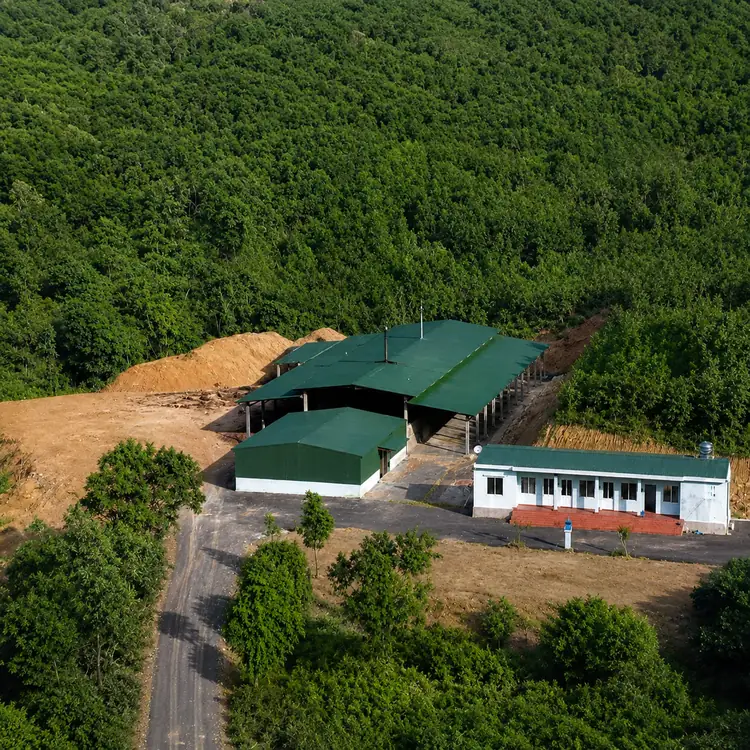
KAOLA’s locally documented white-charcoal facility in Quang Tri Province, Vietnam, has 40 traditional kilns and a declared capacity of 180 metric tonnes per month. These figures concern the white-charcoal facility; they are not a combined capacity figure for Mangrove charcoal, coconut shell products, briquettes or firewood.
Declared capacity is not a statement of current stock, actual output every month or capacity reserved for your order. Ask which facility and production arrangement apply to the product you intend to buy. Confirm available production slots and timing in the written quotation or order agreement.
During the visit: follow the product, not just the tour route
1. Identify the material and product
Ask which wood species or feedstock is used for the selected product, how the supplier identifies incoming materials and what origin records are available. Keep supplier explanations separate from records you have actually reviewed.
If traceability is essential for your market, send the required evidence list in advance. A photograph of wood or a factory visit alone does not establish legal origin, certification or compliance with destination requirements.
2. Review production within the correct scope
Ask which process stages relate to your selected charcoal and which can be observed. Do not assume a temperature or production method described for white charcoal applies to black charcoal or briquettes. If a process parameter matters to your approval, request its product-specific explanation and available supporting record.
3. Inspect sorting, grading and packing
Compare the grading process with your requested dimensions and tolerance for small pieces. Check how packing weight, bag or carton format, liners, labels and private-label artwork would be agreed. Discuss how finished goods will be protected from moisture and damage during storage and loading.
For commercial arrangements, see KAOLA’s charcoal wholesale and OEM enquiry information. Confirm availability of each packing option for your order rather than assuming a displayed example is a standard offer.
4. Agree on representative samples
Record the product, grade, dimensions and sample identification where available. Agree whether the sample represents a proposed specification or an identified production lot. A selected sample is not, by itself, proof of consistency across future shipments.
Test samples in the intended equipment and operating conditions. For a more detailed Binchotan review, use the Binchotan sample and quality checklist. KAOLA does not recommend its Binchotan as a substitute for purpose-made shisha charcoal.
Factory audit checklist: what evidence should buyers record?
| Review area | Questions to ask | Record for follow-up |
|---|---|---|
| Product identity | Which species, charcoal type and grade are being offered? | Product description and agreed size range. |
| Capacity and schedule | Which production arrangement serves this order? What timing can be confirmed? | Order-specific schedule, subject to written agreement. |
| Quality parameters | Which report or sample supports the proposed moisture, ash, fixed-carbon or calorific-value target? | Report date, method, units and sample or batch scope. |
| Packing | How are weight, packing format and labels agreed and checked? | Approved packing specification and artwork where applicable. |
| Documents | Which documents are relevant and available for this product and destination? | Document list, responsible party and outstanding evidence. |
| Approval | What remains unresolved before placing an order? | Action list with owners and agreed dates. |
Read laboratory and shipment documents accurately
A test result applies to the material and sample covered by that report. Do not transfer a result from one charcoal product to another, or treat a representative figure as a guarantee for every batch. Record the test method, units and reporting basis; calorific value, for example, needs a unit such as kcal/kg and a clearly identified product.
References to ISO, ASTM or TCVN methods do not establish that KAOLA is certified by those organizations. Ask which method is actually shown in the applicable report. Review the scope of KAOLA’s available documentation and testing information and confirm what can be supplied for your enquiry.
A safety data sheet, test report, certificate of origin and phytosanitary document serve different purposes. Their relevance and availability must be checked for the specific goods and destination. Do not assume every document is required, available or interchangeable.
AANZFTA is not a company quality certification. Where applicable, shipment-specific origin documentation supports an origin or preferential tariff claim subject to the relevant requirements. Do not describe KAOLA as an “AANZFTA-certified exporter.”
KAOLA has confirmed export experience with Australia and Taiwan. It has not yet exported to the EU. An EU enquiry therefore requires a separate assessment of product, origin and destination documentation; a factory visit or a buyer’s willingness to purchase does not replace applicable import obligations.
After the visit: turn observations into an order decision
Separate your notes into three groups: directly observed, supported by reviewed documents, and still awaiting confirmation. With permission, label photographs by process and product, and do not photograph confidential customer information.
- Confirm the product and buyer-approved specification.
- List sample trials or additional testing still required.
- Agree packing, labelling and inspection criteria.
- Confirm responsibilities for destination documentation and freight arrangements.
- Negotiate payment terms, production timing and shipment conditions for the individual order.
Neither a fixed payment split nor a universal delivery lead time should be assumed. Approve, conditionally approve or defer the purchase according to the evidence your procurement process requires.
Frequently asked questions
Can I arrange a visit to KAOLA’s charcoal facility?
Contact KAOLA to discuss an appointment, your product requirements and which location and processes are relevant. Confirm access and timing before making travel arrangements.
Does the 180-tonne monthly capacity apply to all KAOLA products?
No. It is the declared capacity associated with the documented white-charcoal facility. It does not establish current stock or output for other product categories.
Does a factory visit guarantee charcoal quality?
No. A visit helps assess production context and communication. Product approval should also consider representative samples, applicable test evidence, agreed specifications and any shipment inspection requirements.
What should I send before requesting a visit?
Send the product type, application, size range, packing, quantity, destination and documents or tests required. This allows both parties to prepare a focused agenda.
Plan a product-focused factory visit with KAOLA
Send your charcoal requirements and proposed visit dates. KAOLA can discuss the relevant production and packing arrangements and identify what information needs confirmation before a sample or wholesale order.
