
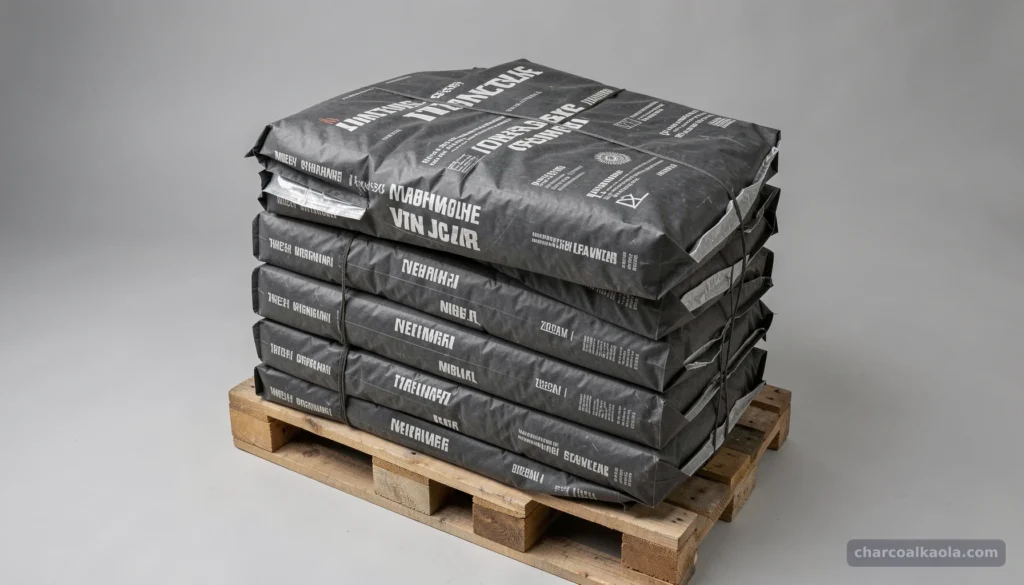
Charcoal packaging materials for export are the better choice for manufacturers, distributors, and retailers moving charcoal through direct BBQ charcoal wholesale imports; the generic Alternative is not a functional substitute because it is a comparative SaaS concept, not a packaging system. For export buyers, the real decision is between moisture-resistant plastic-based packaging and multi-wall paper, selected according to product type, transit conditions, EU charcoal labeling requirements, and retail requirements.
1. Design and Build: Paper, Plastic, or a Functional Alternative?
Export charcoal packaging is a physical containment system engineered to protect product quality during storage, container loading, ocean transit, unloading, and distribution. By contrast, “Alternative” commonly describes software that substitutes for an established SaaS product. It has no verified packaging design, material specification, or shipment-protection capability.
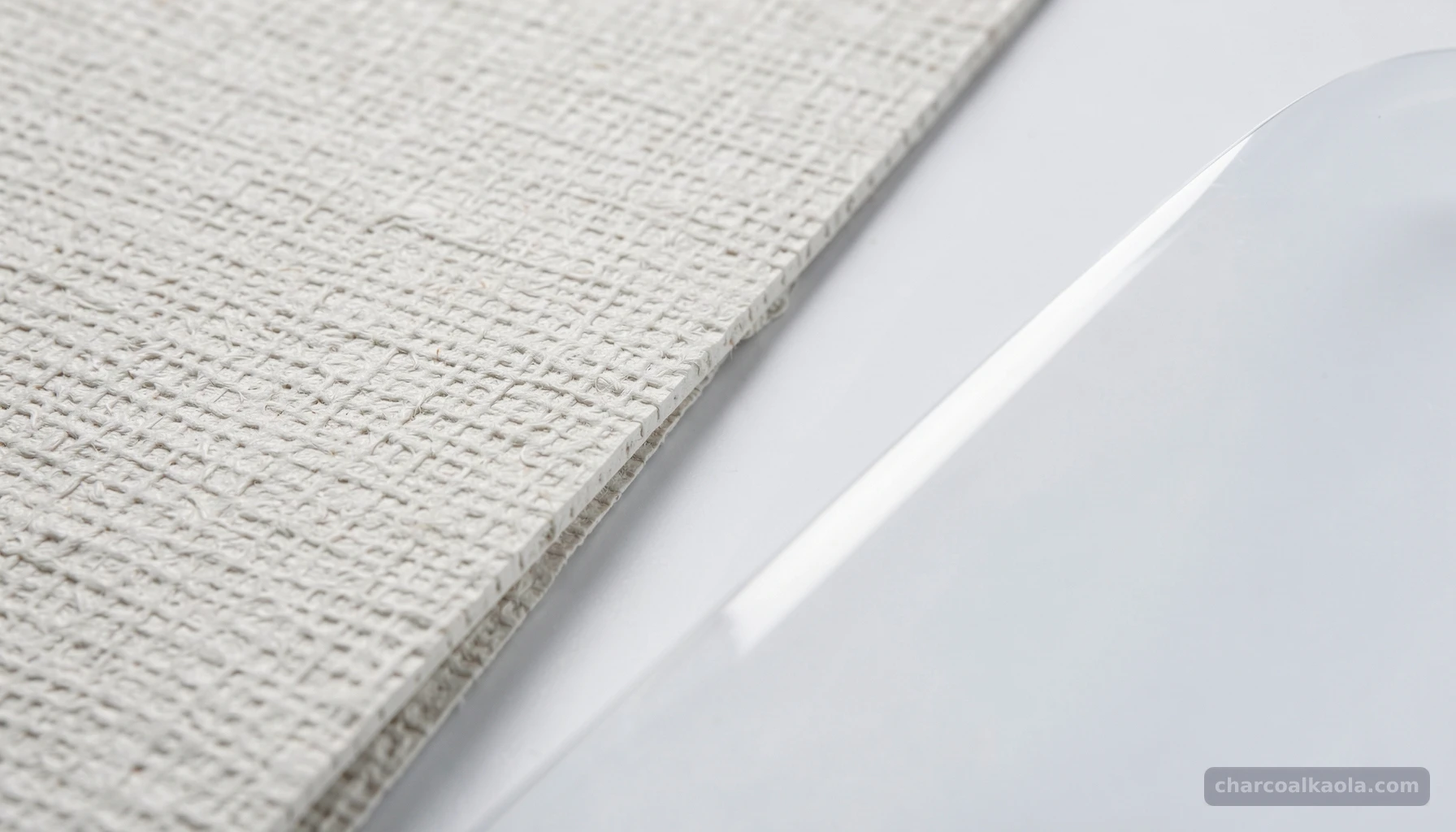
What charcoal packaging materials for export are designed to do
Charcoal packaging must address three practical risks:
- Moisture absorption: Charcoal is hygroscopic and can absorb humidity during storage or transit.
- Mechanical degradation: Lump charcoal and briquettes can crush, chip, or generate dust when bags shift during handling.
- Safety and stability: Properly cooled and stabilized charcoal must be packed and transported in accordance with applicable dangerous-goods procedures.
The most widely used bulk structure is a polypropylene (PP) woven bag, frequently laminated with BOPP to improve moisture resistance and printability. This construction is appropriate for larger commercial quantities, including 5 kg, 10 kg, and 20 kg formats.
For retail-ready presentation, two- or three-layer high-strength kraft paper can provide a more natural visual identity and support branded packaging. However, paper requires careful specification because ordinary paper can lose strength when exposed to condensation, warehouse humidity, or container rain.
What “Alternative” means in comparison
In software research, an alternative is assessed through feature parity, migration capability, API compatibility, pricing, and learning curve. Those criteria cannot replace:
- A moisture barrier
- A sealed or correctly vented bag
- Pallet stability
- ISPM-15-compliant export pallets
- Container dunnage and desiccants
- Dangerous-goods documentation
Therefore, the comparison is not between two equivalent products. Charcoal packaging materials for export are the relevant product category; “Alternative” is a mismatched classification unless the buyer is using the term to describe another packaging construction.
Head-to-head comparison matrix
| Comparison criterion in English | charcoal packaging materials for export | Alternative | Verdict in English |
|---|---|---|---|
| Product category | Physical packaging for lump charcoal, briquettes, and related charcoal products | Generic SaaS substitute concept; no defined packaging product | Charcoal packaging materials for export |
| Primary purpose | Protect moisture content, reduce crushing, and support compliant international logistics | Replace a software product through similar features or pricing | Charcoal packaging materials for export |
| Core construction | PP woven bags, BOPP-laminated bags, multi-wall kraft paper, stretch wrap, pallets | No physical construction specified | Charcoal packaging materials for export |
| Moisture protection | BOPP lamination, suitable seals, dry storage, container desiccants, and controlled loading | No moisture-control capability | Charcoal packaging materials for export |
| Ventilation | Micro-perforations or specialized venting may be required to manage off-gassing | No ventilation specification | Charcoal packaging materials for export |
| Export handling | Palletization, stretch wrapping, dunnage, dry-van containers, and documentation | No logistics workflow | Charcoal packaging materials for export |
| Regulatory relevance | Supports IMDG-related preparation for charcoal identified as UN 1361, subject to applicable requirements | SaaS comparison framework is not relevant | Charcoal packaging materials for export |
| Retail presentation | Kraft paper and printed PP/BOPP formats can support private-label presentation | No packaging or branding format | Charcoal packaging materials for export |
| Published pricing | Charcoalkaola’s supplied brand information does not publish packaging price tiers, free limits, credit allowances, or API costs | No verified product, price list, or API cost supplied | No defensible price winner |
| Value assessment | Evaluated through protection, breakage reduction, compliance, packaging format, and shipment volume | Cannot be evaluated for charcoal logistics | Charcoal packaging materials for export |
| Best buyer | Exporters, importers, wholesalers, BBQ retailers, and industrial users | Buyers comparing software tools | Charcoal packaging materials for export |
2. Key Features and Construction Specifications
The strongest packaging choice depends on whether the shipment prioritizes bulk efficiency, retail presentation, moisture resistance, or environmental positioning. No single material is ideal for every charcoal export order.
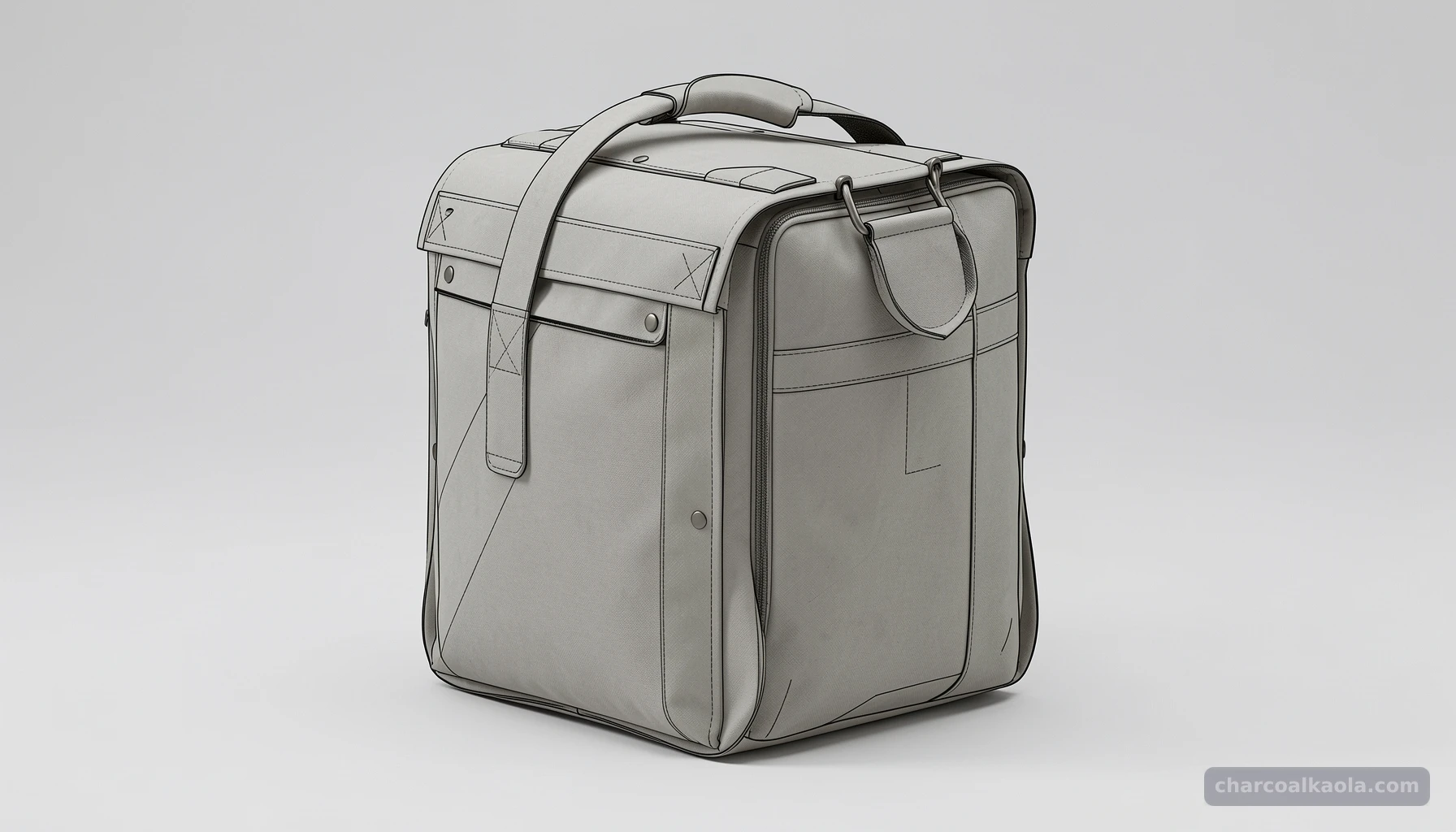
PP woven and BOPP-laminated bags
PP woven bags are the practical standard for bulk export because they combine strength, relatively efficient handling, and flexible capacity options. A BOPP laminate adds a moisture-resistant outer layer and creates a suitable surface for product information, branding, and handling instructions.
This format is particularly useful for:
- Commercial BBQ charcoal
- Industrial charcoal shipments
- Wholesale distribution
- Larger 5 kg, 10 kg, or 20 kg units
- Palletized ocean freight
The bag must still be selected and sealed correctly. A laminated outer layer does not eliminate the need for dry warehousing, appropriate closure, container desiccants, or careful loading.
Multi-wall kraft paper packaging
Multi-wall kraft paper is typically used when the product requires a retail-oriented appearance. Two or three high-strength layers can improve durability compared with single-layer paper, while the paper surface supports a premium, natural, or sustainability-led brand position.
Its limitations should be addressed honestly:
- Paper can weaken when exposed to moisture.
- Poor sealing may allow humidity ingress.
- Rough handling can create tears or corner damage.
- Container condensation can affect both the package and the charcoal.
For this reason, paper is best used as part of a controlled packaging system rather than as an assumption that “natural” automatically means export-safe.
Secondary and tertiary protection
Primary bags are only one part of export packaging. LLDPE stretch wrap is used to unitize pallets and reduce movement during maritime transport. Pallets should be ISPM-15-compliant heat-treated wood or suitable plastic pallets.
An interlocking stack pattern improves load stability. Stretch wrap should secure the pallet base as well as the upper layers, helping prevent sliding when the container experiences movement, braking, or repositioning.
For readers building a sustainability-led packaging program, Charcoalkaola’s discussion of eco-friendly charcoal packaging EU provides useful context on paper-based and lower-impact packaging trends.
3. Performance Benchmarks: Moisture, Breakage, and Safety
Packaging performance should be judged by what arrives at the destination—not simply by appearance at the factory. The critical benchmarks are moisture control, physical integrity, ventilation, and documentation readiness.
Moisture and product stability
The supplied export specification identifies a target charcoal moisture range below approximately 5–8% to help preserve calorific performance and reduce safety risks. Charcoal should be fully cooled and stabilized before bagging. Packing warm material can create internal heat buildup and compromise the shipment.
A robust moisture-control workflow includes:
- Confirm that charcoal is fully cooled and cured.
- Measure and document product condition before filling.
- Select a moisture-resistant bag structure.
- Use consistent weighing and secure sealing.
- Store finished bags in a dry, controlled warehouse.
- Load into dry-van containers with suitable dunnage and desiccant bags.
- Minimize exposure to rain and humid air during loading.
The packaging material cannot compensate for charcoal that was packed before stabilization or stored in a damp warehouse.
Breakage and dust control
Lump charcoal is vulnerable to impact and compression. Briquettes can chip at corners or fracture when pallets are unstable. The packaging system should therefore be evaluated across the full handling chain:
- Filling
- Stitching or heat sealing
- Pallet stacking
- Forklift movement
- Container loading
- Port handling
- Import unloading
- Retail replenishment
Appropriate bag strength, controlled filling, interlocking pallet patterns, and stretch wrapping work together to reduce damage. E-commerce orders require an additional layer of consideration because last-mile parcels face repeated drops and sorting impacts. Drop-test-certified packaging may be appropriate for direct-to-consumer fulfillment.
Ventilation and regulatory handling
Charcoal can off-gas after production, so certain packaging configurations may require micro-perforations or specialized venting valves. The objective is to reduce pressure buildup while maintaining protection against external moisture.
Charcoal is identified in the supplied fact set as UN 1361, Carbon, animal or vegetable origin, under international maritime dangerous-goods procedures. Exporters must confirm current requirements with their carrier, forwarder, and relevant authority because packaging, labeling, declarations, and transport conditions can depend on the shipment.
Labels may need to show:
- UN number
- Proper shipping name
- Net or gross weight as applicable
- Country of origin
- “Keep Dry” pictogram
- “Handle with Care” pictogram
- Other carrier or destination-market information
Charcoalkaola also provides practical guidance on charcoal safety warning labels EU for buyers preparing European shipments.
4. Real-World Usability and Export Workflow
The best material is the one that fits the customer’s operational reality. A technically strong bag can still fail commercially if it is difficult to palletize, unsuitable for the destination climate, or inconsistent with retail expectations.
Which format works best for different buyers?
Bulk importers and wholesalers generally benefit from PP woven or BOPP-laminated bags. These formats provide a practical balance between strength, moisture resistance, printability, and handling efficiency.
Retail chains may prefer multi-wall kraft paper when shelf appearance, private labeling, and a natural brand identity are important. The buyer should confirm whether the paper structure includes adequate moisture resistance and whether the product will remain in a controlled indoor environment after arrival.
Industrial users often prioritize consistent weights, low dust, predictable handling, and pallet efficiency. In these cases, packaging should be specified around the loading equipment, warehouse system, and expected storage period.
E-commerce sellers need stronger transit protection than a standard retail bag may provide. Outer cartons, drop-test validation, and additional cushioning may be necessary for parcel distribution, although these requirements are outside the core bulk-export configuration.
A practical export packaging workflow
Step 1: Confirm the charcoal condition.
Verify that the charcoal is cooled, cured, and stable before bagging. Record relevant quality information and prevent premature packing.
Step 2: Select the primary bag.
Choose PP woven, BOPP-laminated PP, or multi-wall kraft paper according to moisture exposure, product type, retail requirements, and order size.
Step 3: Set the fill weight.
Common export capacities include 5 kg, 10 kg, and 20 kg. Consistent weighing reduces disputes and improves pallet planning.
Step 4: Seal correctly.
Use heat sealing or another suitable closure method. Inspect seams and closures for leakage, tearing, or inconsistent workmanship.
Step 5: Build the pallet.
Use an interlocking stack pattern on an ISPM-15 heat-treated wood pallet or a suitable plastic pallet.
Step 6: Apply stretch wrap.
Use high-gauge LLDPE stretch film and secure the lower layers to the pallet to limit shifting during sea transport.
Step 7: Prepare the container.
Use a dry-van container, inspect for water ingress, position dunnage correctly, and add desiccant bags to reduce condensation risk.
Step 8: Complete documentation.
Prepare packing lists, certificates of origin, and dangerous-goods declarations where required. Attach necessary documents to the pallet or shipment documentation set.
Usability limitations to plan for
Paper packaging may require stricter humidity control than laminated plastic packaging. Plastic-based formats can provide stronger moisture resistance, but buyers should also consider their environmental objectives, destination-market expectations, and recycling infrastructure.
Packaging should be tested against the actual route. A short regional shipment and a long maritime voyage do not impose the same humidity, condensation, vibration, and handling risks.
5. Pros, Cons, Value Economics, and Buyer Decision
There is no responsible universal claim that paper is always better than plastic. The correct decision depends on the product, route, storage conditions, customer expectations, and compliance plan.
Pros and cons of charcoal packaging materials for export
Pros
- Purpose-built for physical logistics: Designed to contain and protect charcoal rather than perform a digital function.
- Multiple material options: PP woven, BOPP-laminated bags, and multi-wall kraft paper support different commercial needs.
- Moisture-management potential: Laminated structures, dry storage, desiccants, and controlled loading help protect product quality.
- Scalable formats: 5 kg, 10 kg, and 20 kg capacities support wholesale and export distribution.
- Improved pallet stability: Stretch wrap and interlocking patterns reduce movement and handling damage.
- Branding flexibility: BOPP and kraft paper surfaces can support private-label presentation.
- Documentation alignment: The workflow accommodates packing lists, origin certificates, and dangerous-goods documentation.
Cons
- Material selection is not automatic: Paper can be vulnerable to moisture, while plastic-based materials may not suit every sustainability objective.
- Packaging does not solve poor production control: Warm, wet, or unstable charcoal can remain a shipment risk.
- Additional logistics are required: Pallets, stretch wrap, dunnage, and desiccants add handling steps and cost.
- Compliance is route-dependent: Buyers must verify current carrier and destination requirements.
- No universal published price: Charcoalkaola’s supplied brand information does not include packaging price tiers, minimum-order pricing, free limits, credit allowances, or API costs.
Pros and cons of “Alternative”
Pros
- Useful in software research: The concept helps buyers compare feature parity, migration, integrations, pricing, and learning curves.
- Can reveal lower-cost tools: In SaaS, alternatives may offer freemium access, open-source deployment, or lower recurring fees.
- Supports structured comparison: Buyers can identify must-have features and test migration before switching.
- Relevant to digital procurement: The framework can help evaluate workflow tools, cloud services, and AI platforms.
Cons
- Not a packaging product: It has no bag, barrier, pallet, seal, or ventilation specification.
- Cannot protect charcoal: It does not address moisture, crushing, dust, container rain, or off-gassing.
- No export documentation workflow: It cannot provide a dangerous-goods declaration, packing list, or certificate of origin.
- No verified pricing for this comparison: No specific alternative supplier, product, price plan, quota, or API schedule was supplied.
- High risk of search-intent mismatch: Treating a SaaS “alternative” as a packaging substitute could lead to an unsuitable procurement decision.
Pricing and total-cost-of-ownership reality
A valid commercial comparison requires actual quotations. The supplied Charcoalkaola information confirms production capability, product categories, export experience, testing support, OEM/private-label services, and documentation availability, but it does not publish exact packaging price tiers or fixed unit prices.
Accordingly, it would be inaccurate to invent a per-bag price, free tier, credit allowance, or API cost. Those metrics belong to software and audio tools, not to physical charcoal packaging. Export buyers should request a quotation based on:
- Charcoal type and grade
- Bag material and dimensions
- Fill weight
- Printing and private-label requirements
- Order quantity
- Pallet configuration
- Destination port
- Incoterms
- Required certificates and testing
- Moisture-control and container-loading requirements
The correct economic calculation is not simply the lowest bag price. It is the total delivered cost after considering breakage, moisture damage, rejected pallets, relabeling, storage losses, customs delays, and retail complaints.
Buyer decision framework
Choose charcoal packaging materials for export when:
- You are exporting lump charcoal, briquettes, or related charcoal products.
- The shipment will travel by sea or through multiple logistics stages.
- Moisture protection and physical integrity are commercial priorities.
- You need PP, BOPP, kraft paper, stretch wrap, pallet, and loading guidance.
- You require private-label or OEM packaging.
- You need export documentation and practical supplier coordination.
- You want to compare paper and plastic according to the actual route.
Choose the Alternative framework only when:
- You are comparing software products or digital services.
- You need to assess feature parity, data migration, integrations, or subscription cost.
- The word “alternative” refers to a specific, verifiable packaging supplier or material—not a generic SaaS concept.
- You have confirmed that the proposed substitute includes measurable packaging specifications.
For a purchase-ready export program, contact Charcoalkaola for a packaging discussion linked to charcoal type, order format, destination, OEM requirements, testing, and shipment documentation. With more than 10 years of Vietnamese charcoal export experience, Charcoalkaola combines traditional production knowledge with TCVN, ASTM, MSDS, phytosanitary, and international logistics support.
FAQ
What is the best packaging material for charcoal export?
For many bulk shipments, BOPP-laminated PP woven bags provide a practical balance of strength, moisture resistance, handling efficiency, and branding capability. Multi-wall kraft paper can be appropriate for retail-ready products when the buyer prioritizes natural presentation and has strong humidity control. The best choice depends on charcoal type, fill weight, route, storage conditions, destination requirements, and whether the shipment is wholesale or direct-to-consumer.
Is paper packaging better than plastic for exported charcoal?
Paper is not automatically better than plastic. Multi-wall kraft paper can support a premium or sustainability-focused retail identity, but it may be more vulnerable to humidity, condensation, and rough handling. PP woven and BOPP-laminated bags generally provide stronger moisture resistance for bulk logistics. Buyers should compare the complete system—including sealing, palletization, stretch wrap, warehouse conditions, and container desiccants—rather than judging the primary material alone.
What export protections are needed besides the charcoal bag?
Export protection normally includes fully cooled and stabilized charcoal, suitable primary bags, correct filling and sealing, interlocking palletization, ISPM-15-compliant heat-treated wood or plastic pallets, LLDPE stretch wrap, container dunnage, and desiccant bags. Shipments should use dry-van containers and include appropriate documentation, such as packing lists, certificates of origin, and dangerous-goods declarations where required. Labeling should be checked for UN information and handling pictograms.
Can an “Alternative” replace charcoal packaging materials for export?
A generic “Alternative” cannot replace charcoal packaging materials because it is normally a SaaS comparison term rather than a physical packaging specification. It does not provide a moisture barrier, ventilation design, sealing method, pallet stability, or export documentation. If a supplier uses “Alternative” to describe another packaging material, request verifiable details on construction, moisture resistance, weight capacity, testing, compliance, and transport performance before making a purchasing decision.
