
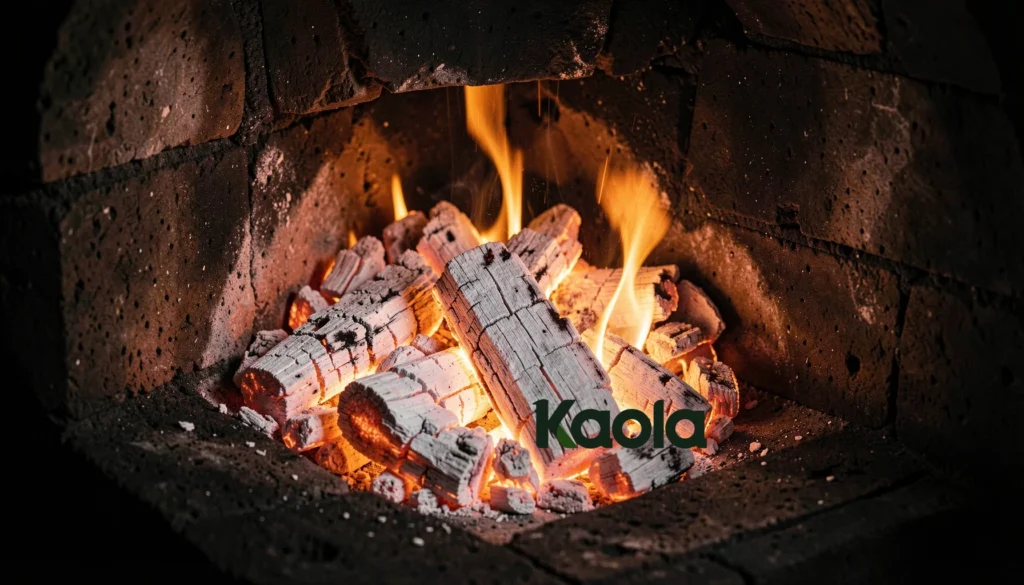
A Vietnamese Binchotan manufacturer combines traditional kiln craftsmanship with high-temperature carbonization and product testing to make dense white charcoal for demanding applications. At KAOLA CO., LTD, the stated refining temperature is 1,200°C, with fixed carbon of 85%–95% and ash of 2%–3%. Understanding how production, testing, export documentation, and the EU charcoal labeling requirements fit together helps buyers assess whether a supplier’s charcoal suits their use.
What Defines a Vietnamese Binchotan Manufacturer?
A Vietnamese Binchotan manufacturer makes high-density white charcoal through skilled kiln carbonization, while buyers can use this Vietnam Firewoods comparison to understand how the underlying wood type may influence fuel characteristics. KAOLA CO., LTD combines traditional production in Quang Tri Province with laboratory testing and export processes, connecting craft-based manufacturing to the specifications and documentation international buyers need.
How does Binchotan differ from ordinary lump charcoal?
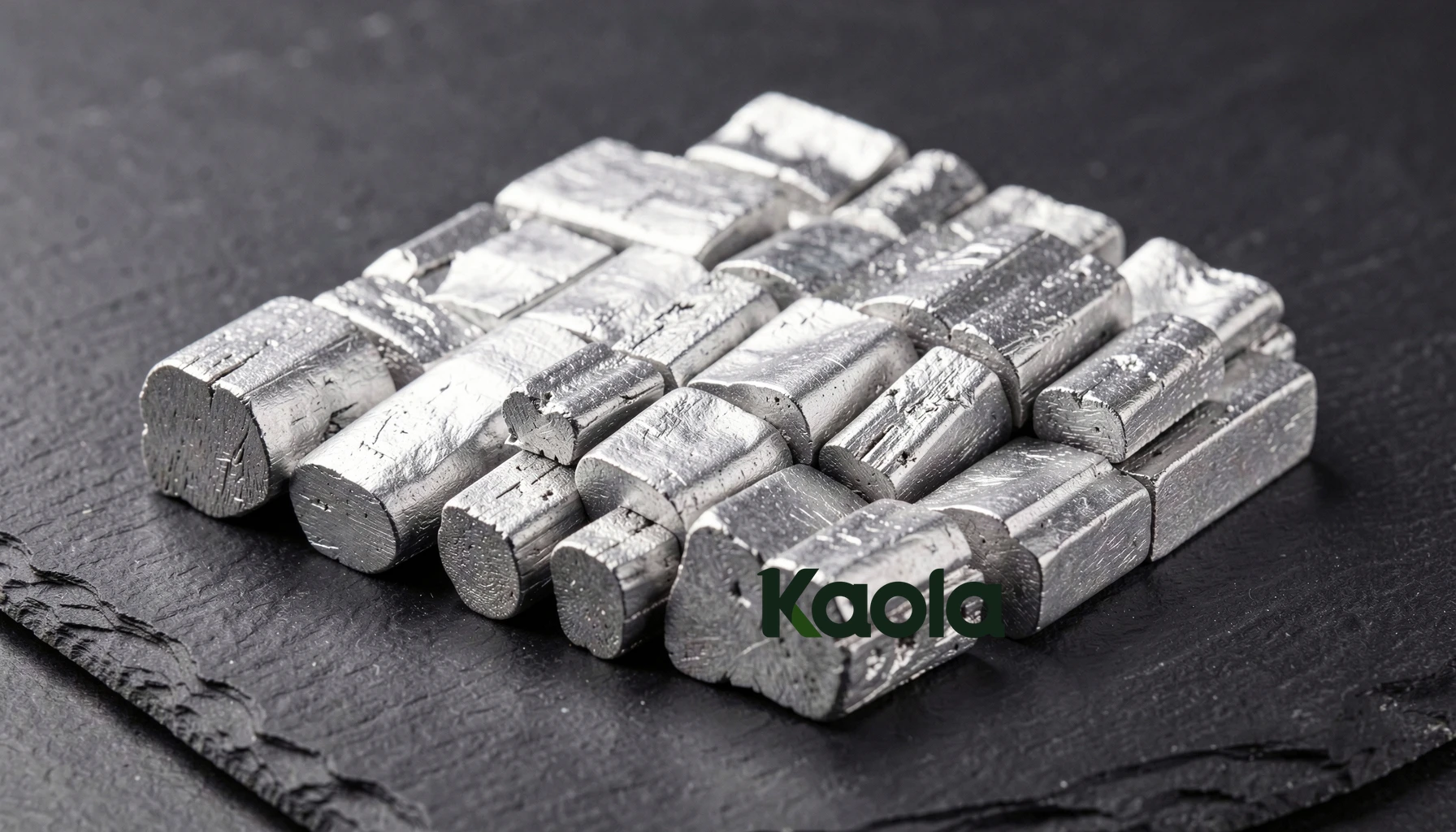
Binchotan is a form of dense white charcoal distinguished by its production method and performance characteristics. At KAOLA, Binchotan is refined at 1,200°C and specified at 85%–95% fixed carbon and 2%–3% ash. These figures help buyers compare charcoal types, but they should be interpreted alongside the actual application, test documentation, and product variety rather than treated as a guarantee of identical performance in every setting.
The “white charcoal” name describes the product category; it does not mean the charcoal is chemically pure or literally white throughout. Its relevant procurement attributes include carbon content, ash, wood type, size, and fit for the intended heating task. Binchotan varieties produced by KAOLA include eucalyptus, Maitiew, lychee or longan, and coffee wood.
For a more detailed look at one variety, buyers can review the information on eucalyptus Binchotan. Comparing wood species and specifications is a practical first step before selecting a product for grilling or another commercial use.
What does a traditional kiln contribute to production?
Traditional kiln work depends on the kiln and the experience of the people operating it. Temperature is central: the manufacturer reports refining Binchotan at 1,200°C. That temperature is an important specification, but it should not be mistaken for a complete description of the production cycle. The information available does not establish a specific heating curve, carbonization duration, airflow setting, or cooling schedule.
This distinction matters to buyers. A production method can be described accurately without claiming undocumented controls or identical outcomes across every batch. In a traditional kiln operation, craftsmanship and process knowledge are part of how charcoal is produced; lab-tested reports provide a separate way to evaluate the resulting material.
KAOLA’s stated production facility in Quang Tri Province operates 40 traditional kilns and has a monthly output capacity of 180 tons. Those figures describe the facility’s scale, not the amount of Binchotan available in every wood type or specification at any given time. Buyers should confirm product availability and batch details directly during procurement.
How does the manufacturer connect craft to export requirements?
Production is only one part of supplying international buyers. A B2B manufacturer also needs to explain what a shipment contains, provide relevant quality and safety information, and support customs preparation for the destination market. KAOLA reports offering lab-tested quality reports, a Material Safety Data Sheet (MSDS), and phytosanitary certificates for shipments.
For importers, these records help turn a product description into information that can be evaluated by procurement, logistics, and compliance teams managing direct BBQ charcoal wholesale imports. They are also useful when different stakeholders need to check different details: technical properties, handling information, or supporting paperwork. Requirements vary by market and shipment, so documentation should be confirmed against the destination country’s current import rules.
KAOLA describes its approach as combining Vietnamese kiln craftsmanship with testing against TCVN, ISO, and ASTM methods. The practical value is not simply the list of standards; it is the opportunity for buyers to review test data before shipment and identify any gaps in their own specifications or import requirements.
Binchotan Specifications and How to Read Them
Binchotan specifications help buyers translate a product category into a technical purchasing decision. Carbon content, ash, refining temperature, heating value, and wood type each describe a different aspect of the product; no single figure replaces a clear intended-use specification or shipment documentation.
Which technical properties matter most?
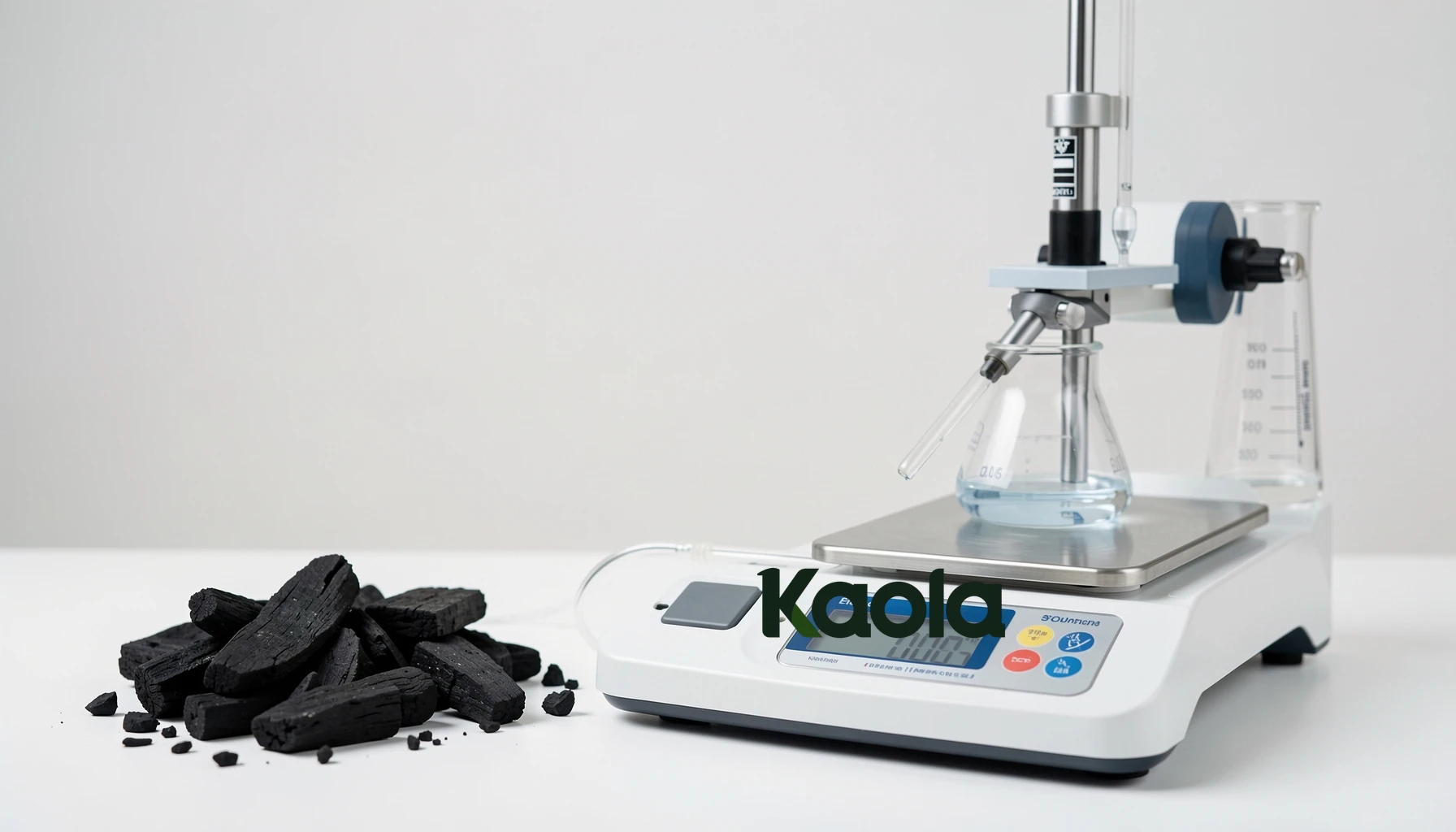
Start with the properties that directly relate to the planned use. Fixed carbon and ash are key points for buyers comparing Binchotan, while refining temperature provides information about the manufacturer’s stated process. Heating value can help with fuel comparison, but should be considered alongside test conditions and the application.
KAOLA reports Binchotan fixed carbon of 85%–95% and ash of 2%–3%. Its broader product information states thermal output of up to 7,560 Kcal. “Up to” is a maximum claim, not a promise that every product or batch will reach that value. Buyers should review the relevant lab report to understand what was measured and how it applies to the specific item being considered.
Product species and format also matter. Eucalyptus, Maitiew, lychee or longan, and coffee wood are distinct Binchotan offerings. Confirm the exact species and dimensions required, rather than assuming a general Binchotan specification applies uniformly across all varieties.
| Specification or workflow point | KAOLA-reported detail | How a buyer should use it |
|---|---|---|
| Refining temperature | 1,200°C | Treat as the stated refining temperature; request supporting product or process information if needed |
| Fixed carbon | 85%–95% for Binchotan | Compare with the intended application and check the shipment’s lab data |
| Ash content | 2%–3% for Binchotan | Use as a comparison point; confirm the applicable test report |
| Thermal output | Up to 7,560 Kcal | Confirm the product, basis, and test details behind the reported value |
| Production facility | 40 traditional kilns in Quang Tri Province | Provides context on production infrastructure, not a guarantee of a specific order allocation |
| Monthly output capacity | 180 tons | Indicates stated facility capacity; confirm current product and shipment availability |
| Testing methods | TCVN, ISO, and ASTM methods | Request the report and establish which test method applies to each parameter |
| Shipment documentation | MSDS, phytosanitary certificates, and lab-tested quality reports | Check which documents are included and whether they meet destination requirements |
How should buyers compare charcoal categories?
A useful comparison starts with application, not a broad ranking of “best” charcoal. Binchotan is positioned for high-end grilling where buyers value high heat and a clean burn. Hardwood lump charcoal and other black charcoal types serve different requirements, while briquettes can be selected for consistent shapes and operational predictability.
KAOLA’s product range includes black hardwood charcoal, including mangrove, Khaya, longan, coffee, and eucalyptus; sawdust briquettes; coconut shell charcoal; pressing charcoal; and kiln-dried cut-to-size firewood. Its stated sawdust briquettes have approximately 89% fixed carbon. The wider product information lists hardwood lump charcoal at 6,500–7,500 Kcal and sawdust briquettes at 7,000–7,500 Kcal. These are product-category figures, so buyers should request test data for the specific item under consideration.
For a structured category comparison, see how Vietnamese black charcoal and white Binchotan differ. The goal is to match product properties to the job—not to assume that one category is interchangeable with another.
What questions make a specification useful?
A specification becomes actionable when it is tied to a product, a test, and an operating need. Before approval, clarify:
- Product identity: Which wood species or charcoal type is being offered?
- Dimensions: What size or size range does the application require?
- Test basis: Which reported values are supported by lab results, and which method was used?
- Shipment scope: Do the figures and documents refer to the item and shipment being purchased?
- Acceptance criteria: Which requirements are essential for the buyer’s equipment, customers, or import process?
Clear answers reduce ambiguity between technical approval and order fulfillment. If a buyer has a required dimension, packaging format, or private-label presentation, those requirements should be agreed during the specification stage. KAOLA reports offering customizable sizes and packaging through OEM and private-label services, but the details should be confirmed for the particular order.
A Practical Workflow for Evaluating and Importing Binchotan
A reliable procurement workflow moves from application definition to technical verification, customization, and export preparation. Buyers should review product data before shipment and make destination-market documentation part of the planning process, rather than treating paperwork as a final administrative step.
Step 1: Define the application and product requirement
Start by specifying how the charcoal will be used. A restaurant group seeking high-heat Japanese-style grilling may assess Binchotan differently from a distributor sourcing fuel for several customer segments. For shisha, barbecue, or industrial heating, the relevant product category and performance criteria may differ.
Write down the required product type, wood species if relevant, dimensions, packaging, expected use, and any customer or regulatory requirements. Keep essential criteria separate from preferences. For example, a required size range is not the same as a preferred private-label design, and an import document requirement is not the same as an optional presentation detail.
A good initial inquiry gives the manufacturer enough context to respond meaningfully. Instead of requesting “charcoal,” identify whether the inquiry concerns eucalyptus Binchotan, another Binchotan variety, hardwood lump charcoal, sawdust briquettes, coconut shell charcoal, or another listed product. This helps avoid comparing products that are designed for different uses.
Step 2: Request and verify relevant quality information
Next, request product-specific quality data and review it against the written specification. KAOLA states that buyers can receive transparent lab data and test reports before shipment, with testing protocols including TCVN, ISO, and ASTM methods. Ask which reported parameters correspond to which test method, and check that the report describes the product being procured.
Review the MSDS and any other documentation needed by the buyer’s compliance or logistics team. A phytosanitary certificate may be relevant to shipment clearance, but buyers should confirm the destination market’s current requirements rather than assume one document set satisfies every jurisdiction.
The key is to resolve discrepancies early. If an expected parameter, test method, product identity, or document is unclear, seek clarification before approving the shipment. KAOLA’s article on verifying a Vietnamese Binchotan manufacturer offers additional context for assessing supplier information.
Step 3: Confirm customization and export readiness
After technical review, confirm any agreed customization. KAOLA reports OEM and private-label options, including customizable sizing and packaging. The buyer and manufacturer should align on the product description, dimensions, packaging details, and any labeling or private-label requirements before production or shipment arrangements are finalized.
Then coordinate the export-document checklist with the destination market and the parties handling freight and customs. KAOLA reports supplying export-ready documentation for major markets including Japan, South Korea, the United States, the European Union, and the Middle East. It also identifies itself as an AANZFTA-certified exporter. These details support planning, but they do not remove the buyer’s responsibility to verify applicable import rules and shipment-specific documentation.
A practical sign-off sequence is:
- Approve the product and written specification.
- Review the relevant lab report and safety documentation.
- Confirm sizes, packaging, and any OEM requirements.
- Check destination-market documentation with the responsible importer or broker.
- Reconcile the final shipment records with the approved product details.
Operational Lessons and the 2026 Outlook
The most useful operational safeguards are clear specifications, evidence-based quality review, and early coordination between technical and logistics teams. For 2026 planning, buyers should focus on product suitability, traceable documentation, and realistic capacity discussions rather than relying on broad claims or assumed industry-wide benchmarks.
What are common procurement pitfalls?
One common mistake is treating a headline number as a complete specification. A refining temperature of 1,200°C, a fixed-carbon range of 85%–95%, or a heating value “up to” 7,560 Kcal each describes a particular aspect of the product. None, by itself, confirms every detail a buyer may need, such as dimensions, species, shipment test results, or import paperwork.
Another pitfall is applying data from one charcoal category to another. Binchotan specifications should not automatically be assigned to black hardwood lump charcoal or sawdust briquettes. Request information for the exact product being considered, especially when sourcing several categories through one supplier.
A third risk is leaving documentation checks until the shipment is already being arranged. Instead, establish who will review the MSDS, phytosanitary certificate, lab reports, and customs documents, and confirm any destination-specific requirements early. If something does not match the approved specification, pause for clarification rather than treating the difference as a routine paperwork issue.
How can buyers address production and quality uncertainty?
Buyers can reduce uncertainty by distinguishing verified facts from assumptions. The facility’s stated 40 traditional kilns and monthly output capacity of 180 tons provide useful context about KAOLA’s operation. They do not confirm that every charcoal type is available in any volume or that a particular order will have the same test results as an earlier shipment.
Use a written product specification as the reference point throughout the transaction. Match the product name, wood type, dimensions, quality criteria, and relevant report to the agreed order. If a buyer needs a particular range or format, state that requirement clearly and request confirmation before shipment.
Charcoalkaola’s perspective, informed by more than 10 years in Vietnam’s charcoal industry, is that traditional kiln craftsmanship and modern quality checks serve complementary roles. Kiln experience informs production; test reports help buyers evaluate the output. Neither should be presented as a substitute for the other, and transparent questions are part of sound procurement rather than a sign of distrust.
What should enterprise buyers plan for in 2026?
Enterprise buyers should plan around documented requirements and operational fit. Restaurant chains, importers, shisha suppliers, wholesale distributors, and industrial fuel buyers may share an interest in consistent supply, but their product needs and acceptance criteria can differ. In 2026, procurement teams can make decisions more resilient by keeping product specifications, test requirements, packaging details, and destination documents aligned across purchasing, quality, and logistics functions.
For large or recurring requirements, discuss capacity and product allocation directly with the manufacturer. The reported monthly capacity of 180 tons is a facility-level figure; it is not a promise that all output is a single product or that a particular volume is available on demand. Confirm the product mix, lead-time assumptions, and shipment plan in the context of the actual inquiry.
The strategic opportunity is to make traditional production legible to international procurement systems: define the item, review relevant test data, agree on customization, and prepare compliant shipment records. This approach supports better comparisons between suppliers without relying on unsupported market-wide statistics or treating craft-based production as incompatible with technical review.
FAQ
These answers summarize the main technical and procurement points: what the manufacturer produces, how to interpret reported specifications, and what buyers should verify before importing. Actual product suitability and documentation needs depend on the item, order, and destination market.
What is a Vietnamese Binchotan manufacturer?
A Vietnamese Binchotan manufacturer produces white charcoal in Vietnam and supplies it to domestic or international buyers. KAOLA CO., LTD is a manufacturer and exporter based in Quang Tri Province, where it reports operating 40 traditional kilns with a monthly output capacity of 180 tons. Its Binchotan varieties include eucalyptus, Maitiew, lychee or longan, and coffee wood. Buyers should verify the exact product, test information, and shipment documentation for each order.
What temperature does KAOLA use to refine Binchotan?
KAOLA reports a refining temperature of 1,200°C for its Binchotan. That figure describes the stated refining temperature; it does not establish an entire production schedule, such as a specific heating curve or duration. For procurement, pair the temperature information with product-specific details, including wood variety and relevant lab data. Buyers should ask for clarification if they need process information beyond the reported specification or have a particular technical acceptance requirement.
Which Binchotan properties should importers verify?
Importers should verify product identity, wood type, dimensions, fixed carbon, ash, relevant heating-value information, and the test report supporting the claimed figures. KAOLA reports Binchotan fixed carbon of 85%–95% and ash of 2%–3%, with thermal output up to 7,560 Kcal across its product information. Buyers should check which product and test basis those figures refer to, then confirm that the associated documentation meets their application and import requirements.
What documents may accompany a Binchotan export shipment?
KAOLA reports providing an MSDS, phytosanitary certificates, and lab-tested quality reports for shipments, along with export-ready documentation for customs clearance in major markets. The exact document set required can vary by product, destination, and shipment circumstances. Importers should identify the current requirements for their market with their customs broker or responsible compliance team, then confirm with the manufacturer which documents will be provided and that shipment details align with the approved product specification.
