
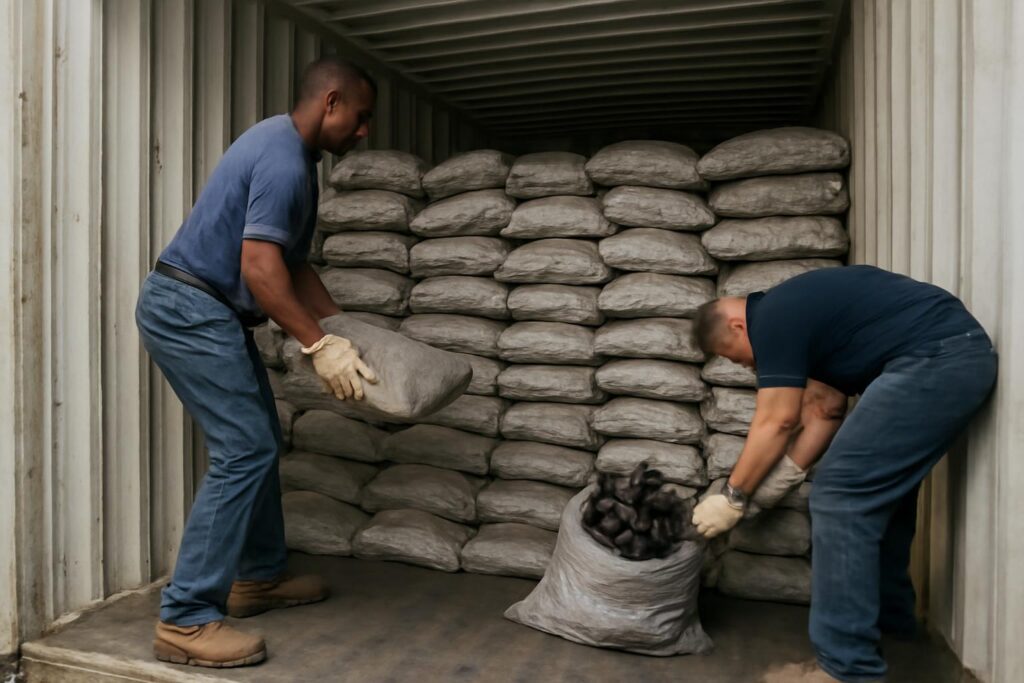
Vietnam Mangrove Charcoal container loading should protect dry, graded charcoal from moisture, crushing, contamination, and shipment delays from the warehouse to the destination port. A disciplined loading plan—using a clean dry container, verified packaging, stable weight distribution, and complete export documents—reduces claims and preserves product quality. If you need dependable results, this guide explains the checks, loading sequence, moisture controls, and paperwork that buyers and suppliers should confirm before sealing a container.
Why Container Loading Matters for Vietnam Mangrove Charcoal
Mangrove charcoal is a high-value natural fuel that can lose marketability when exposed to rain, condensation, rough handling, or foreign odors. Even excellent charcoal can arrive with excessive fines or elevated moisture if the charcoal export container loading process is poorly controlled. Loading quality is therefore part of product quality, not merely a logistics task.
Protecting calorific value and physical condition
Buyers commonly assess fixed carbon, ash, moisture, size distribution, burn time, and visible condition on arrival. Moisture absorption can reduce ignition performance and add unnecessary shipment weight, while unstable stacking creates broken pieces and charcoal dust. Understanding the broader Vietnam mangrove charcoal quality standards helps procurement teams set practical acceptance criteria before the cargo enters the container.
For premium grades, consistent packing density and careful manual handling are essential. Bags should be lifted and placed rather than thrown, especially when the specification requires large, uniform lumps for grilling, restaurants, or specialty retail channels.
Managing buyer expectations and freight efficiency
A properly planned load maximizes usable container space without exceeding payload limits or compromising airflow and stability. The target is not simply to load the greatest possible volume; it is to deliver the agreed quantity in sound condition, with traceable packing details and an intact seal.
Clear instructions should define bag type, net weight per bag, total bag count, permitted breakage, pallet use where applicable, and whether desiccants or moisture barriers are required. These points create a shared standard for suppliers, freight forwarders, and receiving teams.
Reducing claims after arrival
Most avoidable claims involve wet bags, odor contamination, torn packaging, shortages, or excessive fines. Pre-loading photos, lot records, container inspection reports, and a documented loading pattern provide evidence that the cargo was handled correctly at origin. This documentation also supports faster resolution if a problem occurs during transit.
Pre-Loading Inspection and Export Preparation
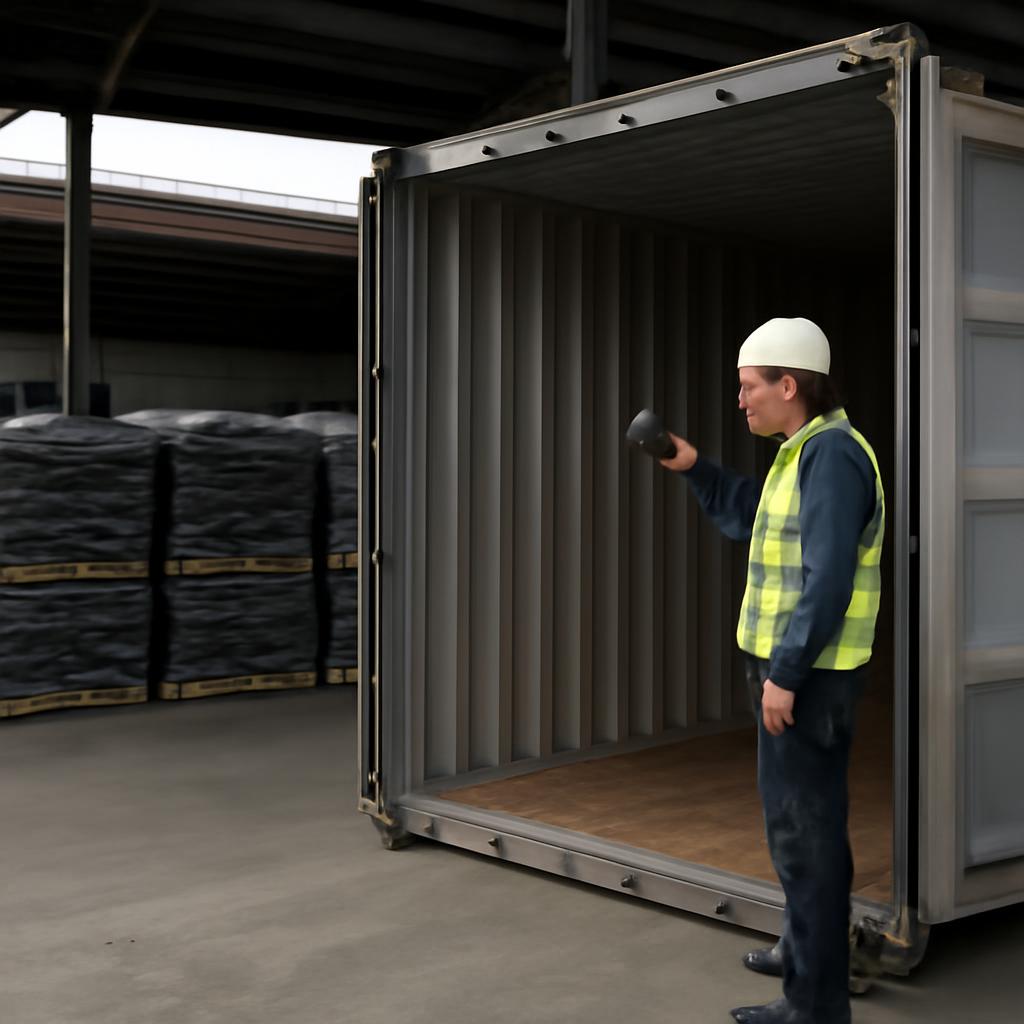
Preparation begins before the empty container reaches the loading site. The supplier should confirm that the product is fully cooled after carbonization, dry enough for the contract specification, screened to the agreed size, and stored away from rain and ground moisture. These controls are fundamental to reliable mangrove charcoal shipping.
Inspect the container before cargo enters
Inspect the floor, walls, roof, doors, seals, and vents under good lighting. The container must be dry, clean, odor-free, watertight, and free from rust flakes, protruding nails, chemical residue, pests, or prior-cargo debris. Look for pinholes by closing the doors and checking for visible daylight inside.
Do not load charcoal into a container with a moldy odor, damp wooden floor, damaged door gasket, or signs of leakage. Photograph the empty container, note its identification number, and record any defects before loading begins. A rejected container is far less costly than a rejected shipment.
Confirm packaging and charcoal condition
Use durable, dry bags suitable for the destination market, such as woven polypropylene bags, kraft paper bags, or retail-ready cartons with protective outer packaging. Every unit should be securely closed, free from tears, and marked only according to the buyer’s approved packing instructions. Packaging must withstand stacking, forklift contact where used, and sea transit vibration.
Before loading, take representative samples to verify moisture, lump size, dust level, and visible contaminants. Buyers seeking a complete view of mangrove charcoal uses and buying factors should align these checks with the intended application, because restaurant charcoal, barbecue charcoal, and industrial fuel may require different size and packing specifications.
Prepare the loading area and records
The loading zone should be covered, swept clean, and positioned to minimize exposure to rain, wind, and vehicle exhaust. Keep finished bags on pallets or raised flooring until loading starts. Avoid leaving product outdoors while waiting for a truck or container arrival.
- Prepare the packing list, purchase order, and product specification.
- Record lot numbers, bag counts, gross and net weights, and sampling results.
- Keep the container inspection checklist, loading photos, and seal record.
- Confirm the approved container payload and road transport weight limits.
Step-by-Step Container Loading Process
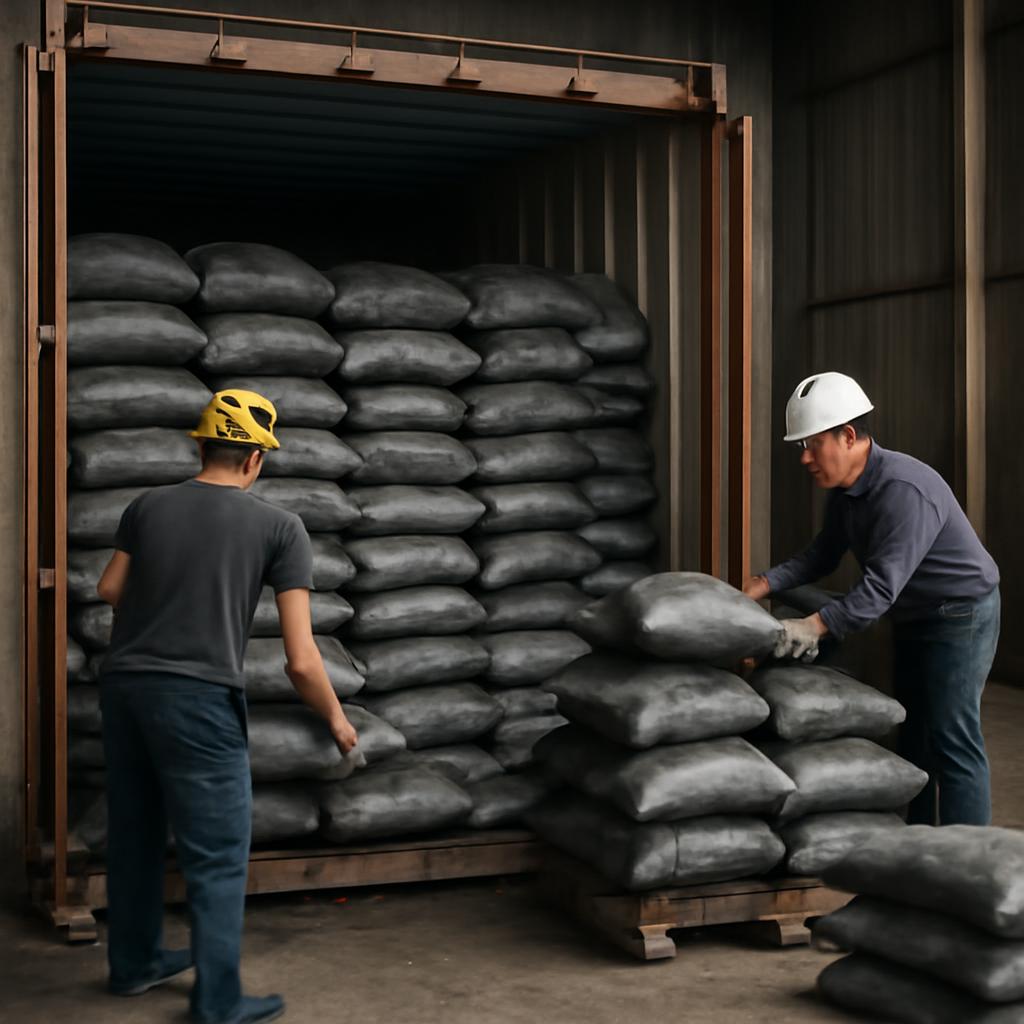
A repeatable loading sequence prevents uneven weight, collapsed stacks, and wasted space. Whether using loose bags or palletized cargo, the team should follow one documented method and count every unit as it enters the container. This is especially important for full-container orders where the buyer relies on accurate charcoal container stuffing records.
Build a stable loading pattern
Start at the front wall of the container and work toward the doors. Place the heaviest, most stable bags on the bottom layer, then build level rows with interlocking joints where the bag shape allows. Keep the load centered from left to right to distribute weight evenly across the floor.
Do not create tall unsupported columns or leave large voids between rows. If gaps cannot be avoided, use clean dunnage, corrugated separators, or approved bracing material to stop cargo movement. Avoid materials with strong odors, dampness, oil, or loose splinters that could damage bags.
Control loading speed and bag integrity
Load at a controlled pace and inspect bags continuously. Replace torn or damp bags immediately rather than placing them deep inside the load. Track the running bag count and total weight so the team can verify the final quantity without reopening the shipment later.
When pallets are required, use sound, dry pallets sized to fit the container efficiently and secured according to the freight plan. Palletized loads may improve handling at destination, but they can reduce payload and cube utilization. The correct option depends on buyer receiving equipment, packaging strength, and transport requirements.
Finish, secure, and seal the container
Leave enough clearance near the doors for safe closure and use load bars, straps, netting, or bracing when necessary to prevent the last rows from shifting. Close the doors carefully, confirm that no bag is caught in the door frame, and apply the designated high-security seal.
Take final photographs showing the completed load, door area, container number, and seal number. The shipping documents must match the physical shipment exactly. For sourcing teams, a detailed Vietnam mangrove charcoal buying guide can help connect loading requirements with product specifications, supplier evaluation, and destination-market expectations.
Moisture Control, Safety, and Documentation
Sea freight exposes charcoal to changing temperatures and humidity, which can create container condensation. Moisture prevention must begin with dry cargo and a dry container, then continue through appropriate ventilation choices, desiccant planning, protected trucking, and rapid transfer from warehouse to port.
Prevent moisture damage during transit
Never load charcoal that is warm from production or wet from rain. Allow sufficient cooling time, store bags in a dry covered area, and avoid loading during heavy rainfall unless the entire transfer route is fully protected. Depending on destination climate and transit duration, use properly positioned desiccants or container liners as part of the agreed container moisture control plan.
Desiccants reduce humidity but cannot rescue wet cargo or a leaking container. They should be used as a supporting measure after product dryness, package integrity, and container condition have been verified. Keep bags away from direct contact with wet surfaces and do not block door closures or damage the load with hanging products.
Follow fire and handling safety procedures
Charcoal must be fully extinguished and cooled before packing and loading. Follow applicable carrier, port, and destination rules for charcoal classification, declarations, labeling, and dangerous goods requirements where relevant. A qualified freight forwarder should confirm the current requirements for the route and shipping line.
Workers should use gloves, dust protection, protective footwear, and safe lifting techniques. Keep ignition sources away from the loading zone, maintain good housekeeping, and ensure the team knows the emergency procedure for dust, fire, or vehicle incidents.
Complete the final document check
Before dispatch, reconcile the commercial invoice, packing list, booking details, bill of lading instructions, certificate requirements, container number, and seal number. Inconsistent weights or incorrect seal details can delay customs clearance or make cargo tracing difficult at destination.
A reliable final file should include product test results when required, fumigation or phytosanitary documents if applicable, origin documentation, cargo photos, and the signed loading checklist. These records demonstrate control over every stage of Vietnam Mangrove Charcoal container loading and give both seller and buyer a practical audit trail.
Frequently Asked Questions
What should be checked before loading mangrove charcoal?
What should be checked before loading mangrove charcoal? Verify that the charcoal is cool, dry, graded, and securely packed, then inspect the container for cleanliness, dryness, leaks, odors, damage, and pests.
How can moisture be prevented in a charcoal container?
How can moisture be prevented in a charcoal container? Load only dry cargo into a dry, watertight container, protect cargo during transfer, and use desiccants or liners when the freight plan calls for them.
Should charcoal bags be loaded on pallets?
Should charcoal bags be loaded on pallets? Pallets are useful when destination handling requires them, but loose loading may provide better container utilization. Select the method based on buyer needs, bag strength, and payload limits.
What documents are needed for charcoal container loading?
What documents are needed for charcoal container loading? Typical records include the commercial invoice, packing list, purchase order, container inspection report, loading photos, seal record, and any route-specific certificates or declarations.
Why is the container seal number important?
Why is the container seal number important? It links the loaded cargo to the shipping documents and helps confirm that the container has not been opened after dispatch from the loading site.
